
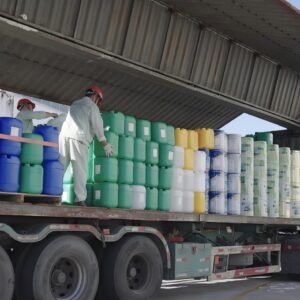
M78H-41 Polyurethane Conformal Coating for PCBs
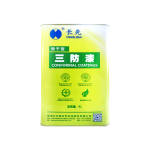
M78H-41 is a single-component polyurethane conformal coating for moisture protection of PCBs, electronic components, and metal surfaces. It forms a transparent, glossy, water-repellent film with strong adhesion and high insulation resistance. The coating supports room-temperature drying or accelerated drying at 80°C and has a stated use-temperature range of −40°C to +120°C.
- Description
- Technical Data
- FAQ
Description
Product Overview:
M78H-41 is a solvent-based PCB conformal coating formulated with modified polyurethane, water-repellent additives, and specialty additives. It is designed to protect compatible surfaces against moisture and water exposure while providing electrical insulation.
After drying, M78H-41 forms a transparent, glossy film with strong adhesion. Its hydrophobic surface helps limit wetting, making the coating relevant to electronic assemblies exposed to humidity and temperature changes. Actual protection depends on surface preparation, continuous coverage, coating thickness, and complete drying.
Provides insulation resistance above 2.5 × 10¹² Ω and retains at least 5 × 10⁹ Ω after moisture-resistance testing. The coating resists acids, alkalis and water containing impurities, and passes anti-sulfurization testing.
M78H-41 can be used as supplied or adjusted with the dedicated X-4H thinner. Its single-component format and choice of ambient or oven drying support straightforward integration into a validated coating process.
Key Features and Benefits:
· Hydrophobic Surface Protection: Forms a water-repellent film designed to limit surface wetting and support moisture protection.
· High Insulation Resistance: Insulation resistance of >2.5 × 10¹² Ω, providing a reference for electrical insulation performance.
· Moisture Resistance: A reported moisture-test resistance of ≥5 × 10⁹ Ω supports evaluation for humidity-exposed assemblies.
· Single-Component Polyurethane Formulation: Simplifies preparation without mixing separate resin and hardener components.
· Transparent, Glossy Finish: Allows underlying surfaces and markings to remain visible while providing a protective film.
· Strong Adhesion: Bonds to compatible, properly prepared surfaces to support coating continuity.
· Ambient or Oven Drying: Reaches surface dryness in ≤30 minutes at room temperature and 55% RH, with an alternative full-drying schedule of 2 hours at 80°C.
· Anti-Sulfurization Performance: Reports a passing result. Suitability for a particular sulfur-containing atmosphere requires application-specific testing.
· Chemical Resistance: Described as resistant to acids, alkalis, and impurity-containing water. Confirm resistance to the actual chemicals, concentrations, temperatures, and exposure periods involved.
· Defined Application Thickness: Specifies a coating thickness of 30–50 μm for process development.
Typical Applications:
M78H-41 conformal coating is intended for:
· Printed Circuit Boards: Moisture protection and electrical insulation of compatible PCB assemblies.
· Electronic Components: Protective coating of suitable component surfaces and associated circuitry.
· Metal Surfaces: Water-repellent and moisture-protective surface treatment.
· Humidity-Exposed Electrical Assemblies: Applications requiring a transparent protective film with high insulation resistance.
· Assemblies Requiring Anti-Sulfurization Evaluation: Applications where the reported passing result can serve as a starting point for qualification.
Suitable for use in both high- and low-voltage equipment. The coating’s withstand voltage describes its insulation performance; the finished equipment’s voltage rating depends on the complete electrical design.
Physical Properties:
| Item | Specification | Test Method |
| Appearance | Yellow transparent liquid | Visual |
| Viscosity | 20-50 mPa·s | — |
| Solid Content | 40±2% | — |
| Film-Forming Time — RT, 55%RH | Surface dry: ≤30 min; full dry: 24 h | — |
| Film-Forming Time — 80℃ | Surface dry: 5-10 min; full dry: 2 h | — |
| Film Thickness | 30-50 μm | — |
| Dielectric Withstand Voltage | >1500 V | — |
| Insulation Resistance | >2.5×10¹²Ω | — |
| Moisture Resistance | ≥5×10⁹Ω | — |
| Sulfurization Resistance | PASS | — |
| Operating Range | -40 to 120℃ | — |
Technical Notes:
· Viscosity is expressed as cup flow time in seconds.
· Dielectric withstand voltage in V is different from dielectric strength in kV/mm.
· Insulation resistance in Ω is different from volume resistivity in Ω·m or Ω·cm.
· Touch dryness does not indicate completion of curing or development of optimum properties.
Application Guidance:
· Surface Preparation
Ensure surfaces are dry and free from oil, dust, and contamination that could affect adhesion, wetting, or electrical performance.
Assess flux residues and other soldering contaminants before coating. Remove residues where their compatibility or electrical behavior has not been established.
Mask contacts, connectors, test points, and other areas that must remain uncoated.
· Preparation and Thinning
M78H-41 may be used as supplied. When viscosity adjustment is required, use only the dedicated X-4H thinner according to our TDS instructions.
The warns that unsuitable thinners may cause precipitation, separation, or unwanted polymerization. Determine the dilution ratio through application trials rather than using a general-purpose solvent.
· Application and Thickness Control
Apply by brush or spray. Adjust and verify the process to suit the board layout and application equipment.
For brushing, dispense small amounts frequently to limit exposure of the working material to air and moisture.
Use the stated 30–50 μm coating thickness as a starting point, after confirming whether it refers to wet or dry film. Inspect for continuous coverage, missed areas, pooling, and unwanted penetration into sensitive components.
· Drying Conditions
| Drying Route | Surface-Dry Time | Full-Drying Time |
|---|---|---|
| Room temperature, 55% RH | ≤30 min | 24 h |
| 80°C | 5–10 min | 2 h |
These are reference conditions. Actual drying depends on coating thickness, retained solvent, airflow, assembly geometry, and oven loading.
Confirm component compatibility with the selected baking temperature. Allow the assembly to dry completely before final electrical testing, packaging, or service.
· Working-Material Control
Solvent evaporation from an open container can increase viscosity and relative density, making application less consistent and affecting film formation.
Monitor the coating during use and add X-4H thinner as needed to maintain the working viscosity. Keep moisture out to prevent gelation or clumping.
During extended interruptions, transfer working material to a suitable sealed container rather than leaving it exposed.
· Use with Soldering Residues
Suitable for limited remedial use over certain low-rosin or low-solids flux residues following compatibility testing. This does not replace routine cleaning.
Confirm compatibility with the exact flux and validate adhesion and electrical reliability before adoption. Clean surfaces with heavier flux residues before coating.
· Inspection and Rework
Inspect coating continuity, thickness, adhesion, and drying. No cured-film removal procedure is provided. Confirm a compatible rework method with our technical team; do not assume that X-4H thinner is suitable for removing fully dried coating from every assembly.
Precautions:
· Workplace control: good ventilation; temperature 10-30℃; humidity <75%.
· Board cleaning: generally no special cleaning is required; ensure the coated surface is dry, clean, and free of oil and impurities.
· Suitable for brushing, dipping and spraying. A single coat is generally 30-50 μm; adjust viscosity and film thickness with thinner to best suit your process.
· Keep the container sealed during use to prevent moisture ingress. Do not blow air directly at the open container, to avoid solvent evaporation or surface whitening.
· If production pauses, seal the container and soak the nozzle in cleaning agent to prevent clogging.
· Baking temperature depends on component heat resistance and process, max 100℃. Do not touch freshly baked products until cooled, to avoid burns or film damage.
· Unused coating should be stored sealed in a dedicated container; do not mix it with fresh coating.
· If unused for long, clean pipes and nozzles; pour the coating out and store sealed; do not return used product to the original pail.
· Used containers, pipes and nozzles can be cleaned with thinner.
Packaging, Storage/Transport & Shelf Life:
· Packaging
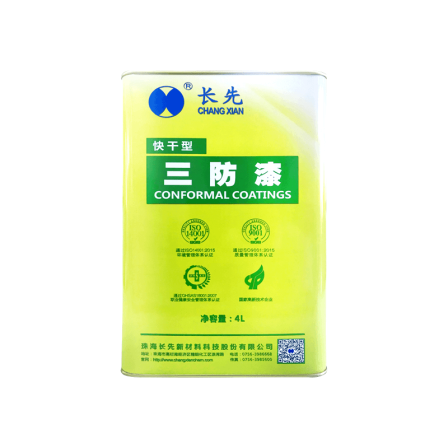
4 L/pail, 20 L/drum
· Storage and Transportation:
Keep away from ignition sources and heat. Handle and transport in accordance with applicable regulations.
Protect the varnish from sunlight and ultraviolet light during storage and use. Store in a cool, well-ventilated area below 25°C.
· Shelf Life:
Six months when stored in sealed containers at temperatures below 25°C.
Please Note:
· As our products are continuously improved, the information in this manual may be updated from time to time without prior notice. Please feel free to contact our sales team for the latest version.
· Do not mix this product with other products.
· We strictly control product quality and supply products in accordance with applicable product standards. Custom products are supplied according to mutually agreed specifications. Application conditions vary and are beyond our control. You should therefore test and evaluate the product and the information provided in this manual, together with the recommended application procedures, to determine suitability for your specific use.
Conformal Coatings:
Thinner:
Frequently Asked Questions About M78H-41 Conformal Coating
1. What is M78H-41 conformal coating used for?
M78H-41 is a solvent-based, modified polyurethane conformal coating designed for moisture protection and electrical insulation of printed circuit boards, electronic components, and compatible metal surfaces.
It forms a transparent, glossy, water-repellent film after drying. Typical applications include humidity-exposed electrical assemblies and components requiring evaluation for sulfur-containing environments.
2. Does M78H-41 make a circuit board waterproof?
M78H-41 forms a hydrophobic surface that helps limit wetting and supports moisture protection. Its TDS reports a moisture-resistance result of at least 5 × 10⁹ Ω.
This does not establish a waterproof rating, continuous underwater suitability, or an ingress-protection rating for the finished equipment. Protection depends on surface cleanliness, continuous coverage, coating thickness, complete drying, and assembly design.
3. How long does M78H-41 take to dry?
At room temperature and 55% relative humidity, M78H-41 reaches surface dryness within 30 minutes and has a reference full-drying time of 24 hours.
At 80°C, the reported surface-dry time is 5–10 minutes, with full drying in two hours. Actual drying depends on film thickness, retained solvent, airflow, board geometry, and oven loading. Surface dryness alone does not confirm complete drying.
4. Can M78H-41 be oven-dried?
Yes. The TDS provides an oven-drying schedule of two hours at 80°C. Confirm that all components, plastics, adhesives, and markings can tolerate the selected process.
The supplied precautions specify a maximum baking temperature of 100°C. Allow heated assemblies to cool before handling, and confirm complete drying before final electrical testing, packaging, or service.
5. Does M78H-41 require a hardener or thinner?
M78H-41 is a single-component coating and does not require a separate resin-to-hardener mixing step. It may be used as supplied.
When viscosity adjustment is needed, use only the dedicated X-4H thinner. The TDS warns that unsuitable thinners may cause precipitation, separation, or unwanted polymerization. Establish the dilution ratio through application trials.
6. What coating thickness should be used for M78H-41?
The TDS specifies a coating thickness of 30–50 μm.
7. How should M78H-41 be applied?
Brush coating is described in the TDS, and spray application is identified in the supplied safety information. Validate the selected method using the actual board geometry and equipment. Confirm dip-process requirements with our technical team before production use.
For brushing, dispense small amounts frequently and protect the remaining material from air and moisture. Mask contacts, connectors, test points, and other areas that must remain uncoated.
8. Can M78H-41 be applied over flux residues?
Only after compatibility with the exact flux residue has been established. The TDS describes limited use with certain low-rosin or low-solids residues; this is not a general substitute for cleaning.
Remove higher-residue contamination and any residues whose compatibility or electrical behavior is unverified. Confirm adhesion, wetting, and electrical reliability on representative boards before adopting a no-clean process.
9. What electrical insulation performance does M78H-41 provide?
The TDS reports insulation resistance greater than 2.5 × 10¹² Ω, dielectric withstand voltage greater than 1,500 V, and a moisture-resistance result of at least 5 × 10⁹ Ω.
Insulation resistance is different from volume resistivity, and the withstand-voltage result is not dielectric strength in kV/mm. These values do not independently establish the operating-voltage rating of a finished assembly.
10. Does M78H-41 provide anti-sulfurization protection?
The M78H-41 TDS reports a passing anti-sulfurization test result. This provides a starting point for evaluating assemblies exposed to sulfur-containing environments.
The supplied information does not specify the test atmosphere, concentration, duration, or acceptance criteria. Request the test details and validate performance under the intended service conditions before making application-specific claims.
11. Is M78H-41 resistant to acids, alkalis, and contaminated water?
The TDS describes M78H-41 as resistant to acids, alkalis, and impurity-containing water. It does not provide a detailed chemical-resistance table.
Confirm compatibility with the actual chemical, concentration, temperature, and exposure duration. The general description should not be treated as resistance to every chemical or unlimited immersion.
12. What is the operating temperature range of M78H-41?
The stated operating range is −40°C to +120°C.
Validate suitability for the actual assembly, exposure duration, and thermal cycling conditions. This service-temperature range is separate from the processing temperature used to dry the coating.
13. Why can M78H-41 thicken or form clumps during use?
Solvent evaporation from an open container can increase viscosity and relative density. The TDS also identifies moisture contamination as a cause of gelation or clumping.
Keep working material protected from moisture and monitor its condition. Use X-4H adjustment only according to the validated procedure; do not assume that adding thinner will restore material that has gelled or separated. Keep used material separate from fresh stock.
14. Does M78H-41 support fluorescent inspection or PCB rework?
Fluorescent inspection capability is not specified in the supplied documents. Use a validated method to inspect coating continuity, thickness, adhesion, and drying.
A cured-film removal procedure is also not provided. Confirm a compatible rework method with our technical team rather than assuming X-4H thinner will safely remove fully dried coating from every assembly.
15. What safety and compliance documents are available for M78H-41?
The Conformal Coatings downloads section lists an MSDS, RoHS documentation, REACH documentation, and UL documentation. Request the documents applicable to M78H-41 and review their product coverage, dates, and stated scope.
Refer to the UL document for the exact recognition or classification and conditions of use. The Thinners section separately lists RoHS documentation and a halogen content test report; request the documents applicable to X-4H.
16. How is M78H-41 packaged and stored?
M78H-41 is supplied in 4 L and 20 L pails. Its stated shelf life is six months when stored sealed at 5–25°C.
Store it in a cool, dark, dry location away from fire and heat sources, following the current MSDS. Do not return used coating to the original container or mix it with fresh stock.
17. What information should I provide when requesting an M78H-41 quotation?
Include your assembly type, application method, target coating thickness, available drying conditions, and electrical requirements. Describe any humidity, sulfur, or chemical exposure the coating must withstand.
For pricing and delivery, provide the required quantity, preferred pack size, destination, target delivery date, and any requirements for X-4H thinner, trial material, or supporting documents.