M78-3068UV Dual-Cure UV Conformal Coating for PCBs
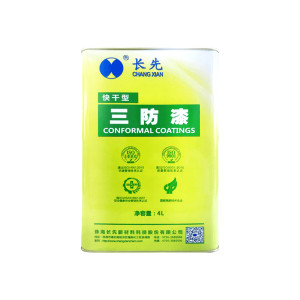
M78-3068UV is a single-component UV/moisture dual-cure conformal coating for printed circuit boards, thick-film circuits, and porous substrates. It combines rapid UV curing on exposed surfaces with secondary moisture curing in shadowed areas. The coating features fluorescent inspection capability and forms a tough, abrasion-resistant film with documented electrical insulation and environmental resistance.
- Description
- Technical Data
- FAQ
Description
Product Overview:
M78-3068UV is a UV conformal coating designed to protect electronic assemblies against moisture, contamination, and environmental exposure. Its dual-cure system addresses a common challenge on populated circuit boards: components can block UV light from reaching all coated surfaces.
Directly exposed coating cures under suitable UV irradiation, while material in shadowed areas continues to cure through a secondary moisture reaction. This combination supports fast processing of accessible surfaces while providing a curing mechanism for areas beyond direct light exposure.
The product is a colorless to pale yellow transparent liquid with 100% non-volatile content. Fluorescent tracking helps operators inspect coating coverage and identify missed areas or uneven application.
After curing, M78-3068UV forms a hard, tough protective film that resists salt spray, high-temperature and high-humidity aging, and thermal shock. The cured coating provides a volume resistivity of 2.6 × 10¹⁶ Ω·cm and a dielectric strength of 75 kV/mm.
The stated typical operating range of the cured material is −55°C to +125°C. Application suitability should be verified on the actual assembly, including coating thickness, component compatibility, and completion of shadow-area curing.
Key Features and Benefits:
· UV/Moisture Dual Cure: Combines UV curing of exposed surfaces with secondary moisture curing in areas shaded by components.
· Rapid Primary Cure: Supports fast processing under a validated UV exposure. Final release criteria must also account for the slower moisture cure in shadowed areas.
· 100% Non-Volatile Content: Supporting high film build without relying on conventional solvent evaporation as the main drying mechanism.
· Fluorescent Inspection: Helps operators check coating coverage under suitable inspection lighting. Fluorescence indicates coverage, not proof of complete cure.
· Electrical Insulation: Dielectric strength of 75 kV/mm and volume resistivity of 2.6 × 10¹⁶ Ω·cm.
· Salt Spray Resistance: After 172 hours at 35°C using 5% NaCl solution, the reported result shows no blistering, peeling, or wrinkling, and no substrate corrosion.
· High-Temperature/High-Humidity Resistance: After 10 days at 85°C and 85% RH, the film showed no wrinkling, chalking, peeling, or reversion to a liquid state.
· Thermal Shock Resistance: The film showed no delamination, wrinkling, blistering, peeling, or cracking after 100 cycles between −45°C and +135°C under the specified test conditions.
· Tough, Abrasion-Resistant Film: Cures to a hard protective surface, with a reported Shore D hardness of 75–90.
· Strong Adhesion: Achieves a reported cross-cut adhesion classification of Grade 0 under GB/T 9286-1998.
Typical Applications:
M78-3068UV conformal coating is intended for:
· Populated Printed Circuit Boards: Protective coating of assemblies containing components that create UV shadow areas.
· Thick-Film Circuit Systems: Environmental protection of compatible circuit substrates and assemblies.
· Porous Substrates: Coating applications where substrate compatibility, penetration, and cure can be validated.
· Electronic Assemblies Exposed to Humidity or Salt-Laden Environments: Applications requiring protection supported by assembly-level testing.
· Production Lines Using UV Curing: Coating processes that benefit from rapid primary cure and fluorescent coverage inspection.
The coating does not replace an enclosure or establish an ingress-protection rating. Confirm compatibility with connectors, sensors, optics, plastics, and other sensitive components before use.
Physical Properties:
| Item | Unit | Value | Test Method |
| Appearance | —— | Colorless to pale yellow transparent liquid | Visual |
| Non-volatile content | % | 100 | – |
| Density | g/cm3 | 1.0~1.1 | GB/T 13354-92 |
| Viscosity | mPa.s | 180±30 | GB/T 1723-1993 |
| UV curing condition | mJ/cm2 | 1000-2000 | 320-405nm |
| Moisture curing condition | h | 24~72 | 25℃, 50%RH |
| Storage time | month | 6 | 0-30℃ |
Post-Cure Properties:
| Hardness | Shore D | 75-90 | GB/T 531.1 |
| Tensile Strength | MPa | 22 | GB/T 528 |
| Elongation at Break | % | 4 | GB/T 528 |
| Water Absorption | % | ≤0.3 | – |
| Volume Resistivity | Ω·cm | 2.6×10¹⁶ | GB/T 1692 |
| Dielectric Strength | kV/mm | 75 | GB/T 1693 |
| Dielectric Constant | 1MHz | 3.25 | GB/T 1693 |
| Dissipation Factor | 1MHz | 0.01 | GB/T 1693 |
| Adhesion
| Cross-cut test | Grade 0 | GB/T9286-1998 Cross-cut test for paints and varnishes |
| Salt Spray Resistance | 35℃, 5% NaCl, 172 h | No blistering, peeling, wrinkling or other defects; no substrate corrosion. | GB/T 2423.17-2008, Test Ka: Salt mist |
| High Temp & Humidity Aging | 85℃, 85%RH, 10 days | No wrinkling, chalking, peeling or reversion to liquid of the film | Enterprise standard |
| High/Low Temp Shock Test | -45℃/30 min, 135℃/30 min, 100 cycles | No delamination, wrinkling, blistering, peeling or cracking of the film | IPC-CC-830B-2002 Qualification & Performance of Insulating Compound for PCB Assemblies |
Technical Notes:
· UV dose in mJ/cm² and irradiance in mW/cm² are different parameters.
· The viscosity is dynamic viscosity, not cup flow time.
· The dielectric dissipation factor of 0.01 is dimensionless.
· The short-duration thermal shock test at +135°C does not extend the stated typical use range above +125°C.
Application Guidance:
· Surface cleaning
For the best bonding performance, the surface to be bonded must be dry and free of dust, grease and other contaminants;
· Application
Any of spraying, dip coating or brushing may be chosen; carry out application tests before use for more convenient application.
· Curing
The UV curing rate depends on lamp intensity, distance between light source and coating, required curing depth or coating gap, and substrate light transmittance;
Use UV or visible light with a wavelength range of 320-420 nm;
| Lamp Type | UV Curing Lamp | |||
| λ [nm] | 320 | 365 | 395 | 405 |
| Suitability | – | ++ | + | – |
(- unsuitable + suitable ++ very suitable)
| Typical Curing Performance | |
| Recommended UV curing condition (s) High-pressure Hg lamp, intensity (30-50 mW/cm²) | 20-25 |
| Recommended moisture curing condition (h) 70% RH @ 25℃ | 72 |
The above are recommended curing conditions. Actual conditions may vary with user experience, application requirements and curing equipment.
· Tack-free curing of exposed surfaces needs high UV intensity (min. 500 mW/cm²); a 1000 mW/cm² mercury/electrodeless lamp usually gives better surface drying.
· Shadowed areas moisture-cure; ≥2-3 days recommended (25℃/50%RH). Higher temperature/humidity shortens curing; lower prolongs it.
UV vs. Conventional Conformal Coating Advantages and Limitations:
In this comparison, “conventional conformal coating” means non-UV systems that dry or cure through solvent evaporation, moisture, heat, or a chemical reaction. These include acrylic, polyurethane, silicone, and other formulations.
UV describes a curing mechanism, not a single resin chemistry. Protection, flexibility, and reworkability therefore depend on the individual formulation as well as the curing method.
| Comparison Factor | UV Conformal Coating | Conventional Non-UV Conformal Coating |
|---|---|---|
| Primary cure speed | Exposed areas can cure rapidly under the correct UV conditions, supporting fast production. | Drying or curing can take minutes, hours, or days, depending on the formulation and process. |
| Shadowed areas | UV alone cannot cure material shielded from light. Dual-cure products require a secondary mechanism and additional time. | Does not require optical access, but solvent escape, moisture access, or heat transfer may still limit curing beneath components. |
| Equipment investment | Requires a suitable UV source, shielding, exposure measurement, and process controls. | Some air-drying systems need relatively simple equipment; bake-curing systems require ovens and appropriate ventilation. |
| Process control | Lamp spectrum, irradiance, dose, distance, line speed, and thickness must be controlled. | Depending on chemistry, key variables include evaporation, humidity, temperature, mixing ratio, and pot life. |
| Throughput and holding time | Can shorten primary curing time, but shadow-area cure may still require a holding stage. | May require longer drying or curing space, particularly for ambient-cure production. |
| VOC and odor | Many formulations have high solids content and reduced reliance on evaporating solvents. This does not automatically mean zero emissions. | Solvent-based products can release substantial solvent vapor; water-based and other low-solvent systems are also available. |
| Protection and durability | Crosslinked formulations can provide strong chemical and abrasion resistance, subject to product testing. | Offers a broad range of properties, from reworkable acrylics to chemically resistant urethanes and flexible silicones. |
| Flexibility and stress | Some grades cure to hard films; others are formulated for flexibility. Validate stress on sensitive components. | Chemistry offers different flexibility options. Non-UV coatings are not universally softer or more flexible. |
| Removal and repair | Highly crosslinked UV coatings can require specialized removal methods and greater care during rework. | Many acrylic coatings are easier to remove, while some urethanes and other crosslinked systems are also difficult to rework. |
| Total cost | Equipment and maintenance costs may be offset by throughput improvements at suitable production volumes. | Can be economical for smaller batches or existing lines, but curing time, floor space, energy, and solvent controls contribute to cost. |
UV-cured conformal coatings are used in high-throughput manufacturing, while dual-cure products add a secondary curing mechanism for shadowed regions. These regions must be included in the production release criteria.
Main Advantages of UV Conformal Coating
· Rapid primary cure on directly exposed surfaces.
· Good fit for repeatable, automated production.
· High-solids options that reduce reliance on solvent evaporation.
· Formulations offering strong abrasion and chemical resistance.
· Dual-cure options for populated boards with shadowed areas.
Main Limitations of UV Conformal Coating
· Requires suitable UV equipment and exposure monitoring.
· Shadowed areas cannot be assumed fully cured after UV exposure.
· Secondary curing may add hours or days before final release.
· Highly crosslinked films can complicate removal and repair.
· Board geometry and coating thickness require careful validation.
Main Advantages of Conventional Conformal Coating
· Broad choice of resin chemistries and application properties.
· Some grades offer simple processing with limited curing equipment.
· No dependence on direct UV access.
· Reworkable acrylic grades can suit repair-intensive applications.
· Often practical for prototypes, small batches, and existing coating lines.
Main Limitations of Conventional Conformal Coating
· Drying or curing may require longer production time.
· Solvent-based grades introduce vapor, odor, and flammability considerations.
· Moisture-cure systems depend on environmental conditions.
· Heat-cure systems require a compatible assembly and controlled oven cycle.
· Reworkability and environmental resistance vary widely by chemistry.
Removal procedures must be selected for the actual coating. Manufacturer guidance for UV coatings includes specialized mechanical or thermal methods, with care needed to avoid damaging solder mask and components.
Precautions:
· This product is UV-sensitive; avoid exposure to daylight, UV and artificial light sources during storage and handling.
· After application, immediately tighten the cap of any unused product and store it sealed. On re-use, if slight skinning has formed at the seal, simply remove it — normal use is not affected.
Packaging, Storage/Transport & Shelf Life:
· Packaging
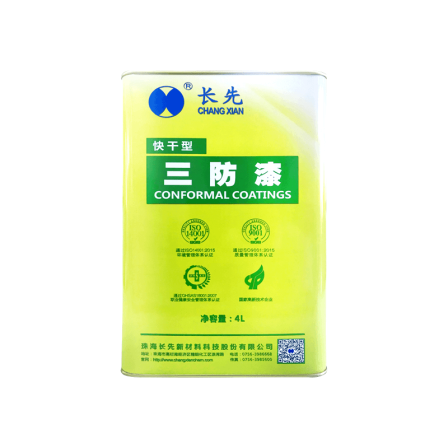
1 L/pail, 4 L/pail
· Storage and Transportation:
Keep away from ignition sources and heat. Handle and transport in accordance with applicable regulations.
Protect the varnish from sunlight and ultraviolet light during storage and use. Store in a cool, well-ventilated area below 30°C.
· Shelf Life:
Six months when stored in sealed containers at temperatures below 30°C.
Please Note:
· As our products are continuously improved, the information in this manual may be updated from time to time without prior notice. Please feel free to contact our sales team for the latest version.
· Do not mix this product with other products.
· We strictly control product quality and supply products in accordance with applicable product standards. Custom products are supplied according to mutually agreed specifications. Application conditions vary and are beyond our control. You should therefore test and evaluate the product and the information provided in this manual, together with the recommended application procedures, to determine suitability for your specific use.
Frequently Asked Questions About M78-3068UV Conformal Coating
1. What is M78-3068UV conformal coating used for?
M78-3068UV is a UV/moisture dual-cure conformal coating designed to protect populated printed circuit boards and compatible electronic assemblies against moisture, contamination, and environmental exposure.
It forms a hard, tough protective film after curing. Typical applications include assemblies with components that create UV shadow areas, compatible thick-film circuits, and electronics requiring validated humidity or salt-spray resistance.
2. How does the UV/moisture dual-cure system work?
M78-3068UV cures through UV exposure on directly illuminated surfaces. Coating shaded by components continues curing through a secondary moisture reaction.
This allows rapid primary curing where light reaches the coating while providing a curing mechanism for shadowed areas. Final release criteria must account for both mechanisms.
3. How long does M78-3068UV take to cure?
UV-exposed areas can cure rapidly under a validated lamp and exposure setup. The TDS lists a reference UV dose of 1,000–2,000 mJ/cm², but exposure time depends on lamp output, spectrum, distance, and coating thickness.
Shadowed areas require a longer moisture-curing period. The application guidance recommends allowing at least two to three days at 25°C and 50% relative humidity, with actual completion verified on the assembly. Do not treat a dry exposed surface as proof that the entire board is cured.
4. Which UV lamp should be used with M78-3068UV?
The lamp suitability table identifies 365 nm as very suitable and 395 nm as suitable. Confirm the recommended lamp spectrum, irradiance, and dose with our technical team before selecting equipment, as the supplied documents contain differing wavelength and intensity guidance.
Measure exposure at the coating surface and validate the process on the actual board. UV dose in mJ/cm² and irradiance in mW/cm² are different parameters and should not be used interchangeably.
5. How can M78-3068UV be applied to circuit boards?
M78-3068UV can be applied by spraying, dip coating, or brushing. Surfaces should be dry and free of dust, grease, and other contaminants before coating.
Validate coverage, coating thickness, and curing on representative assemblies. Identify connectors, contacts, sensors, optics, and other areas that must remain uncoated before selecting the application process.
6. Does fluorescent inspection confirm complete curing?
No. M78-3068UV contains fluorescent tracking material that helps operators inspect coating coverage under suitable lighting. It can help identify missed areas and application inconsistencies.
Fluorescence indicates the presence of coating, not complete cure. Use separate acceptance checks for UV-exposed surfaces and moisture-cured shadow areas.
7. What electrical insulation performance does M78-3068UV provide?
The TDS reports dielectric strength of 75 kV/mm and volume resistivity of 2.6 × 10¹⁶ Ω·cm for the cured material.
It also reports a dielectric constant of 3.25 and a dissipation factor of 0.01 at 1 MHz. These material properties do not directly establish a finished circuit board’s allowable operating voltage, which also depends on design, coating coverage, thickness, and curing quality.
8. How does M78-3068UV perform in humid or salt-exposed environments?
In the reported salt-spray test, M78-3068UV showed no blistering, peeling, wrinkling, or substrate corrosion after 172 hours at 35°C using a 5% NaCl solution.
After ten days at 85°C and 85% relative humidity, the film showed no wrinkling, chalking, peeling, or reversion to a liquid state.
9. What is the operating temperature range of M78-3068UV?
The stated typical operating range of the cured coating is −55°C to +125°C. Validate suitability for the actual assembly, exposure duration, and thermal cycling conditions.
The TDS separately reports 100 thermal-shock cycles between −45°C and +135°C without the listed film defects. This short-duration test does not extend the typical operating range above +125°C.
10. Does M78-3068UV form a hard or flexible coating?
M78-3068UV forms a hard, tough film with reported Shore D hardness of 75–90, tensile strength of 22 MPa, and elongation at break of 4%.
For sensitive components or assemblies exposed to repeated temperature changes, evaluate coating thickness, adhesion, and mechanical stress on the actual board before production use.
11. Does 100% non-volatile content mean M78-3068UV has zero emissions?
The TDS reports 100% non-volatile content, indicating that conventional solvent evaporation is not the main curing mechanism.
Follow the current MSDS and supplier guidance when setting handling, ventilation, and curing controls.
12. Can M78-3068UV replace a conventional non-UV conformal coating?
M78-3068UV can be evaluated where rapid primary curing, fluorescent coverage inspection, and a secondary shadow-cure mechanism suit the production process.
Before switching, compare material compatibility, UV access, shadow-area curing time, environmental performance, and repair requirements. Faster exposed-surface curing does not necessarily mean immediate release of the complete assembly.
13. Can a board coated with M78-3068UV be reworked?
Confirm a suitable removal and repair procedure with our technical team before reworking M78-3068UV. Its hard, cured film should not be assumed removable using the same method as an air-drying acrylic coating.
Validate removal, cleaning, recoating, and curing on representative boards to avoid damage to solder mask, components, and adjacent coating.
14. What technical, safety, and compliance documents are available?
The product’s Technical Data section lists an MSDS, RoHS documentation, REACH documentation, UL documentation, and California Proposition 65 documentation.
15. How is M78-3068UV packaged and stored?
M78-3068UV is supplied in 1 L and 4 L pails. The product has a stated shelf life of six months when kept sealed and stored below 40°C.
Keep the container tightly sealed in a dark, cool, dry, ventilated location. Protect the material from daylight, UV, and other light exposure during storage and handling, and reseal unused product promptly.
16. What information should I provide when requesting an M78-3068UV quotation?
Include your board dimensions, component layout, application method, target coating thickness, UV equipment, and available holding conditions for moisture curing. Specify environmental, electrical, and rework requirements.
For pricing and delivery, provide the required quantity, preferred pack size, delivery destination, target delivery date, and any trial-material or documentation requirements.