
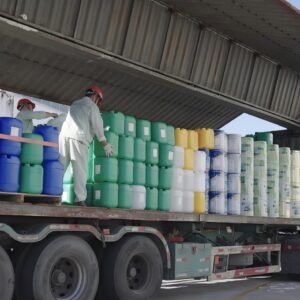
M988 Silicone-Modified Acrylic Conformal Coating for PCBs
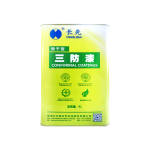
M988 is a single-component, low-odor, silicone-modified acrylic conformal coating for PCBs and electronic components. Designed for moisture protection, it is particularly suitable for assemblies that combine silicone potting with conformal coating, helping prevent incomplete drying at the interface between the materials. M988 supports brush, dip and spray application and contains a fluorescent tracer for UV inspection.
- Description
- Technical Data
- FAQ
Description
Product Overview:
M988 is a solvent-based conformal coating made with silicone-modified acrylic resin, alcohol and glycol ether solvents, and specialty additives. It forms a transparent protective film for electronic and electrical components requiring moisture resistance and electrical insulation.
A key application is electronic assembly using both silicone potting and conformal coating. M988 helps address incomplete drying at the interface caused by differences between the two material systems, making it a practical choice for assemblies that need both types of protection.
The single-component formulation requires no separate hardener and supports brushing, dipping and spraying. At 30°C and 55% relative humidity, it becomes touch-dry in 30–40 minutes and through-dry in 24 hours. Oven drying at 80°C provides a through-drying time of 2–4 hours.
M988 provides dielectric strength of at least 40 kV/mm and volume resistivity of at least 1 × 10¹³ Ω·cm. It shows no corrosion after 72 hours of neutral salt spray testing and achieves Grade 0 mold resistance.
The low-odor formulation contains no aromatic solvents or acetone. Fluorescent tracing makes the coating visible under UV light for coverage inspection. M988 meets RoHS, REACH and halogen-free requirements.
Key Features and Benefits:
· Silicone-Modified Acrylic Resin: Combines an acrylic coating system with silicone modification for electronic component protection.
· Suitable for Use Alongside Silicone Potting: Helps prevent incomplete drying where conformal coating meets silicone potting material.
· Single-Component Formulation: Requires no separate hardener mixing, simplifying preparation and application.
· Brush, Dip and Spray Application: Supports several coating methods to suit assembly geometry and production requirements.
· Low-Odor Solvent System: Formulated without aromatic solvents or acetone.
· Fluorescent Coverage Inspection: Allows operators to check coating distribution under UV light.
· Electrical Insulation: Provides dielectric strength of ≥40 kV/mm and volume resistivity of ≥1 × 10¹³ Ω·cm.
· Moisture Resistance: Maintains insulation resistance of ≥5 × 10⁹ Ω after moisture-resistance testing, with MIL-46058C as the test reference.
· Salt Spray Resistance: Shows no corrosion after 72 hours in 5% NaCl neutral salt spray at 35 ± 2°C.
· Mold Resistance: Achieves Grade 0 in mold-resistance testing, with MIL-46058C as the test reference.
· Temperature Resistance: Suitable for service temperatures from −40°C to +120°C.
· RoHS, REACH and Halogen-Free: Meets requirements for restricted substances and halogen-free material selection.
Typical Applications:
M988 conformal coating is intended for:
· Printed Circuit Boards: Moisture protection and electrical insulation for assembled circuit boards.
· Electronic and Electrical Components: Protective coating for component surfaces, connections and associated circuitry.
· Assemblies Combining Silicone Potting and Conformal Coating: Protection of assemblies using both materials, helping prevent incomplete drying at the interface.
· Industrial Control Electronics: Protective coating for control boards and electronic modules exposed to humidity and environmental contamination.
· Power Supply and Appliance Electronics: Moisture protection for power supply boards and appliance control assemblies, including designs with selected silicone-potted areas.
· Electronics Exposed to Humidity and Salt Spray: Applications requiring moisture resistance, salt spray resistance and electrical insulation.
Assemblies Requiring Fluorescent Inspection: PCB protection with UV-visible tracing to support inspection of coating coverage and uniformity.
Physical Properties:
| Item | Specification | Test Conditions / Reference |
|---|---|---|
| Resin Type | Silicone-modified acrylic | — |
| Appearance | Yellow transparent liquid | — |
| Specific Gravity | 0.88 ± 0.02 | 25°C |
| Viscosity | 12–18 s | Tu-4 cup, 25°C |
| Non-Volatile Content | 28.5 ± 2% | — |
| Flash Point | 14°C | — |
| Touch-Drying Time — Ambient | 30–40 min | Copper panel, 30°C, 55% RH |
| Through-Drying Time — Ambient | 24 h | Copper panel, 30°C, 55% RH |
| Touch-Drying Time — Oven | 3–10 min | Copper panel, 80°C |
| Through-Drying Time — Oven | 2–4 h | Copper panel, 80°C |
| Recommended Heat-Assisted Drying | 60–80°C for 3–5 min, followed by room-temperature curing | — |
| Time to Optimum Performance — Room Temperature | 7 days | — |
| Recommended Coating Thickness | 25–50 μm | — |
| Dielectric Strength | ≥40 kV/mm | — |
| Volume Resistivity | ≥1 × 10¹³ Ω·cm | — |
| Neutral Salt Spray Resistance | No corrosion | 5% NaCl, 35 ± 2°C, 72 h |
| Insulation Resistance After Moisture Testing | ≥5 × 10⁹ Ω | MIL-46058C |
| Corrosion to Copper | None | — |
| Mold Resistance | Grade 0 | MIL-46058C |
| Operating Temperature | −40°C to +120°C | — |
| Fluorescent Tracer | Present | — |
| Recommended Thinner | X-98 | — |
Technical Notes:
· Viscosity is expressed as cup flow time in seconds.
· Dielectric withstand voltage in V is different from dielectric strength in kV/mm.
· Insulation resistance in Ω is different from volume resistivity in Ω·m or Ω·cm.
· Touch dryness does not indicate completion of curing or development of optimum properties.
Application Guidance:
· Production Environment
Provide adequate ventilation and local exhaust during coating and drying. Keep the product away from flames, sparks and heat sources.
Keep the coating area clean and protect the working material from moisture. High humidity can cause whitening during application, particularly when material remains in an open container.
· Surface Preparation
Clean assembled circuit boards to remove dust, oil and soldering residues. Clean surfaces improve adhesion and help prevent corrosion of components and solder joints.
Remove heavy flux residues before coating. Mask connectors, electrical contacts, test points and other areas that must remain uncoated.
For assemblies combining silicone potting and conformal coating, check drying and adhesion at the interface using the selected silicone material and application sequence.
· Application and Thinning
Apply M988 by brush, dip or spray. The recommended coating thickness is 25–50 μm.
Use X-98 thinner to adjust viscosity and coating thickness to suit the process. During use, solvent evaporation can increase viscosity and specific gravity, especially in open containers. Monitor the working coating and replenish X-98 as needed to maintain consistent application.
For brushing or dipping, dispense small quantities at a time and replenish frequently to limit prolonged exposure to air and moisture.
· Drying and Curing
| Drying Route | Temperature / Conditions | Reference Drying Time |
|---|---|---|
| Ambient Drying | 30°C, 55% RH | Touch-dry: 30–40 min; through-dry: 24 h |
| Oven Drying | 80°C | Touch-dry: 3–10 min; through-dry: 2–4 h |
| Heat-Assisted Drying | 60–80°C | Heat for 3–5 min, then continue curing at room temperature |
Optimum room-temperature performance develops after seven days.
The short heat-assisted drying stage must be followed by room-temperature curing. Select the drying route according to component heat resistance, coating thickness and production requirements.
If moisture-related whitening occurs during humid weather, baking will generally clear it without affecting product performance. Inspect the film after drying before accepting the assembly.
· Container and Equipment Management
Keep stock containers tightly sealed. During extended interruptions, transfer coating from open working containers into a separate sealed container to reduce solvent evaporation and moisture absorption.
Do not return used coating to the original container. Keep working material separate from fresh stock to protect product stability.
Monitor viscosity during production and use X-98 thinner for adjustment. Keep application equipment clean and protect the coating supply from contamination.
· Inspection and Rework
Use UV light to inspect fluorescent coating coverage. Check for missed areas, pooling, whitening and uneven film formation.
On assemblies using silicone potting, inspect the interface for drying, tackiness and adhesion.
Select a rework method compatible with the coating, substrate and components. Reinspect repaired areas and verify the required electrical performance before use.
Precautions:
· M988 is a flammable solvent-based coating. Keep it away from ignition sources and provide effective ventilation during application and drying.
· Avoid inhaling vapors and prevent contact with skin and eyes. Wear suitable protective equipment and follow the MSDS.
· Use X-98 thinner for viscosity adjustment. Do not mix the coating with other products.
· Limit exposure of the working material to humid air. Keep containers sealed during storage and production interruptions.
· Clean surfaces with heavy flux residues before coating. For assemblies using silicone potting, evaluate the complete material combination and application sequence before production.
Packaging, Storage/Transport & Shelf Life:
· Packaging
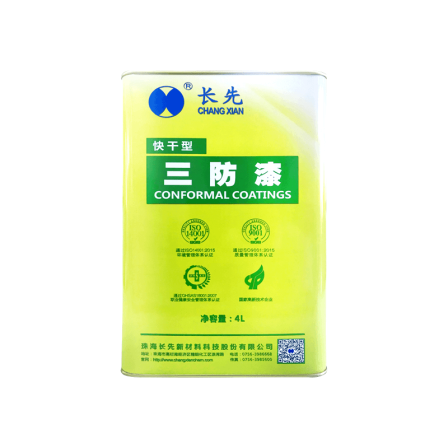
4 L/pail, 20 L/drum
· Storage and Transportation:
Keep away from ignition sources and heat. Handle and transport in accordance with applicable regulations.
Protect the varnish from sunlight and ultraviolet light during storage and use. Store in a cool, well-ventilated area below 25°C.
· Shelf Life:
Six months when stored in sealed containers at temperatures below 25°C.
Please Note:
· As our products are continuously improved, the information in this manual may be updated from time to time without prior notice. Please feel free to contact our sales team for the latest version.
· Do not mix this product with other products.
· We strictly control product quality and supply products in accordance with applicable product standards. Custom products are supplied according to mutually agreed specifications. Application conditions vary and are beyond our control. You should therefore test and evaluate the product and the information provided in this manual, together with the recommended application procedures, to determine suitability for your specific use.
Conformal Coatings:
Thinner:
Frequently Asked Questions About M988 Conformal Coating
1. What is M988 conformal coating used for?
M988 is a single-component, silicone-modified acrylic conformal coating designed for moisture protection and electrical insulation of printed circuit boards and electronic components.
Typical applications include industrial control boards, power supply electronics, appliance control assemblies, and designs that combine silicone potting with conformal coating. It forms a transparent protective film and contains a fluorescent tracer for coverage inspection.
2. Can M988 be used alongside silicone potting compounds?
Yes. M988 is designed for assemblies that use both silicone potting and conformal coating. It helps address incomplete drying where the two material systems meet.
Evaluate the selected silicone compound, application sequence, and interface on representative assemblies. Check drying, tackiness, and adhesion before approving the combination for production.
3. Is M988 a silicone or acrylic conformal coating?
M988 is a silicone-modified acrylic conformal coating. Its resin system combines an acrylic coating formulation with silicone modification.
It is a solvent-based coating that uses alcohol and glycol ether solvents. It should not be treated as interchangeable with every silicone coating or silicone potting compound.
4. Does M988 require a separate hardener?
No. M988 is supplied as a single-component coating and requires no separate resin-and-hardener mixing step.
Use the specified X-98 thinner when viscosity adjustment is needed. Establish the addition ratio according to the application method, required coverage, and drying process.
5. How long does M988 take to dry at room temperature?
On the reference copper-panel test at 30°C and 55% relative humidity, M988 becomes touch-dry in 30–40 minutes and through-dry in 24 hours. Optimum room-temperature performance develops after seven days.
Actual drying depends on coating thickness, airflow, humidity, and assembly geometry. Touch dryness does not mean the coating has reached its final properties.
6. Can M988 be oven-dried to shorten processing time?
Yes. At 80°C, the reference copper-panel test gives a touch-drying time of 3–10 minutes and a through-drying time of two to four hours.
The product guidance also describes heating at 60–80°C for three to five minutes, followed by continued room-temperature curing. This short heating step is an initial drying stage, not a complete curing cycle.
7. Can M988 be brushed, dipped, or sprayed?
Yes. M988 supports brush, dip, and spray application. The recommended coating thickness is 25–50 μm.
Select the application method according to board geometry, masking requirements, and production equipment. Check coverage around component leads and board edges, and avoid pooling or unwanted penetration into connectors and sensitive components.
8. Which thinner should be used with M988?
Use X-98 thinner to adjust M988’s working viscosity and coating thickness. The supplied coating has a specified flow time of 12–18 seconds at 25°C, measured with a Tu-4 cup.
Solvent evaporation can increase viscosity during use, particularly in open containers. Monitor the working material and adjust it according to the validated process. Do not mix M988 with other coating products.
9. Do circuit boards need cleaning before M988 is applied?
Yes. Clean assembled boards to remove dust, oil, and soldering residues, particularly heavy flux deposits. Ensure surfaces are dry before coating.
Mask connectors, electrical contacts, test points, and other areas that must remain uncoated. For assemblies containing silicone potting, include the coating–potting interface in adhesion and drying checks.
10. Does M988 support UV inspection?
Yes. M988 contains a fluorescent tracer that makes the coating visible under UV light. This helps operators inspect distribution and identify missed areas around components and connections.
Fluorescence indicates coating presence, not complete drying. M988 dries through the specified ambient or heat-assisted process; the inspection light is not a UV-curing mechanism.
11. What electrical insulation performance does M988 provide?
M988 has specified dielectric strength of at least 40 kV/mm and volume resistivity of at least 1 × 10¹³ Ω·cm.
After moisture-resistance testing, its specified insulation resistance is at least 5 × 10⁹ Ω. These material properties support insulation selection but do not independently establish the operating-voltage rating of a finished board.
12. How does M988 perform in humid, salt-exposed, or mold-prone environments?
The TDS reports no corrosion after 72 hours of neutral salt-spray testing using 5% NaCl at 35 ± 2°C. It also reports Grade 0 mold resistance and retained insulation resistance after moisture testing.
These results support evaluation for environmentally exposed electronics. Protection still depends on surface preparation, continuous coverage, and complete drying; the coating does not independently establish waterproofing or an enclosure ingress-protection rating.
13. What is the operating temperature range of M988?
The stated operating temperature range is −40°C to +120°C.
Evaluate the coated assembly under its intended temperature exposure and cycling conditions. The service-temperature range is separate from the drying temperatures used during production.
14. Why can M988 turn white during humid weather?
M988 can absorb moisture during application, particularly when working material remains exposed in an open container. This may cause whitening.
Keep containers closed whenever possible and dispense smaller working quantities for brushing or dipping. The product guidance states that baking generally clears moisture-related whitening without affecting performance. Inspect the dried film before accepting the assembly.
15. Is M988 low odor, aromatic-free, and acetone-free?
Yes. M988 uses a low-odor solvent system formulated without aromatic solvents or acetone.
It remains a flammable solvent-based coating, with a reported flash point of 14°C. Provide effective ventilation, keep it away from ignition sources, and follow the current MSDS.
16. Does M988 meet RoHS, REACH, and halogen-free requirements?
The product information states that M988 meets RoHS, REACH, and halogen-free requirements.
Request the supporting documents applicable to M988 for your customer and market requirements. Include any specific substance restrictions or reporting requirements in your enquiry.
17. How is M988 packaged and stored?
M988 is supplied in 4 L pails and 20 L drums. Its stated shelf life is six months when stored in sealed containers below 25°C.
Store it in a cool, well-ventilated location, protected from sunlight and ultraviolet light. Keep used working material separate from fresh stock and do not return it to the original container.
18. What information should I provide when requesting an M988 quotation?
Include your assembly type, application method, required coating thickness, available drying conditions, and electrical and environmental requirements. If silicone potting is used, specify the potting material and application sequence.
For pricing and delivery, provide the required quantity, preferred pack size, destination, target delivery date, and any requirements for X-98 thinner, trial material, or supporting documents.