M888 Water-Based Polyurethane Conformal Coating for PCBs
M888 is a single-component, water-based polyurethane conformal coating for protecting electronic and electrical assemblies against moisture, mold, and corrosion. Its self-crosslinking formulation has very low odor and forms a glossy, flexible film with strong adhesion and solvent resistance. Designed for brush and dip coating, M888 supports air drying or heat-assisted drying.
- Description
- Technical Data
- FAQ
Description
Product Overview:
M888 is a waterborne polyurethane conformal coating formulated with aqueous polyurethane resin, water-based additives, and deionized water. It is designed for manufacturers seeking a very-low-odor coating process with deionized-water viscosity adjustment.
After drying and crosslinking, M888 forms a glossy protective film that combines adhesion, flexibility, and solvent resistance. The coating is intended to protect electronic assemblies against moisture, mold, and corrosion when applied to properly cleaned surfaces and allowed to dry completely.
The single-component formulation eliminates the need to mix separate resin and hardener components. It can air-dry at room temperature, while heating provides an alternative processing route. Touch dryness in approximately 60 minutes at 25°C, with optimum room-temperature performance reached after seven days.
M888 does not contain a fluorescent tracer. Coverage inspection should therefore use a validated method suitable for a non-fluorescent coating.
Key Features and Benefits:
· Water-Based Polyurethane Formulation: Uses water as the main carrier and permits adjustment with deionized water, reducing reliance on organic solvent thinners during application.
· Very Low Odor: Described in the supplied documents as having very low to nearly imperceptible odor, making it relevant where workplace odor is a selection consideration.
· Single-Component Self-Crosslinking: Simplifies preparation without a separate resin-to-hardener mixing ratio.
· Moisture, Mold, and Corrosion Protection: Intended to protect electronic and electrical assemblies from these environmental influences.
· Strong Adhesion: Bonds to appropriately prepared surfaces, supporting a continuous protective coating.
· Flexible, Glossy Film: Combines a high-gloss finish with flexibility after drying and crosslinking.
· Solvent Resistance: Offers good solvent resistance. Check compatibility with specific chemicals under the intended exposure conditions.
· Electrical Insulation Performance: Reports insulation resistance of >2 × 10¹² Ω and dielectric withstand voltage of >1,500 V under the stated reference conditions.
· Air-Drying or Heat-Assisted Processing: Offers a choice of drying routes according to assembly requirements and production capability.
· Non-Fluorescent Formulation: Suitable where a fluorescent tracer is not required; inspection must be planned accordingly.
Typical Applications:
M888 conformal coating is intended for:
· Printed Circuit Boards: Protective coating of cleaned PCB assemblies.
· Electronic Assemblies: Moisture, mold, and corrosion protection of compatible electronic components and circuitry.
· Electrical Products: Protective coating of suitable surfaces requiring electrical insulation and environmental resistance.
· Brush-Coating Processes: Controlled application to selected areas or assemblies.
· Dip-Coating Processes: Coating of compatible assemblies with appropriate masking and drainage control.
Verify compatibility with solder mask, component markings, plastics, connectors, and other materials before production use. The supplied documents do not establish an operating-temperature range, thermal class, or ingress-protection rating.
Physical Properties:
| Color / Appearance | Translucent liquid | |
| Viscosity | 120±30CP | |
| Thinner | Deionized water | |
| Drying Time | 25℃ | Tack-free: 60 min; best at RT: 7 days |
| 80℃ | Tack-free: ≤10 min; full dry: 3-5 h | |
| Recommended cure | 80℃ 3-10 min + RT standing | |
| Non-Volatile Content (%) | 30±2 | |
Electrical Properties:
| Dielectric Withstand Voltage | >1500V |
| Dielectric Constant | 2.6 |
Properties:
| Insulation Resistance (MIL-46058C) | >2*1012Ω |
| Moisture Resistance (MIL-46058C) | >5*109Ω |
Technical Notes:
· Performance data were measured after seven days of conditioning at room temperature.
· Viscosity is dynamic viscosity: 1 cP = 1 mPa·s.
· Insulation resistance in Ω is different from volume resistivity in Ω·m or Ω·cm.
· The >1,500 V value is a withstand-voltage result, not dielectric strength in kV/mm or a finished-product voltage rating.
Application Guidance:
· Surface Preparation
Clean the assembly before coating to remove dust, oil, grease, and soldering residues. Specifically requires cleaning PCB surfaces to support adhesion and wetting.
Confirm that surfaces are dry before application. Mask contacts, connectors, test points, and other areas that must remain uncoated.
· Viscosity Adjustment
Use deionized water to adjust viscosity and coating thickness according to the application process.
Adjust the dilution ratio to suit the application requirements. Establish the ratio through trials, taking into account coverage, film build, wetting, and drying. Additional water reduces working solids content and changes the amount of water that must be removed.
· Application Methods
M888 is specified for brush coating and dip coating.
Apply a controlled, even coating and inspect for missed areas, pooling, and unwanted penetration into sensitive components. Validate wet and dry film thickness on the actual assembly; no recommended thickness range is supplied.
Spray or selective-spray suitability should be confirmed separately with our technical team.
· Drying Options
| Process Route | Reference Conditions | Interpretation |
|---|---|---|
| Room-temperature drying | 25°C; touch dry in approximately 60 min | Allow seven days for the reported optimum room-temperature performance |
| Extended oven drying | 80°C for 3–5 h | TDS reference through-drying condition |
| Short heat-assisted drying | 80°C for 3–10 min, followed by room-temperature holding | Initial heating is followed by further drying and property development |
Do not treat the short 80°C heating step as complete curing. Adjust the final holding time at room temperature to ensure complete curing.
Determine the production schedule through trials based on coating thickness, board geometry, airflow, ambient humidity, and assembly temperature limits. Test performance only after the film has dried completely.
· Inspection and Rework
M888 contains no fluorescent tracer. Use suitable lighting, magnification, thickness measurement, or another validated method to check coverage.
Select a removal or rework method suited to the coating and substrate. Confirm a compatible method before production; water dilution of the liquid product does not mean the cured coating can be removed with water.
· Material Management
Do not return used coating to the original container. Keep containers tightly sealed to prevent contamination.
Advises against mixing with cationic materials or other paints. Use clean, compatible dispensing and application equipment.
Water-Based vs. Conventional Solvent-Based Conformal Coating:
For this comparison, “conventional conformal coating” refers to coatings that use organic solvents as the main liquid carrier. It does not include every non-waterborne technology: UV-curable and other solvent-free systems are separate options.
Water-based and solvent-based coatings can both protect electronic assemblies. Their performance depends on resin chemistry, cleanliness, coverage, film thickness, and complete drying or curing—not simply on whether the carrier is water or solvent. Surface contamination and incomplete coverage can undermine either system.
| Comparison Factor | Water-Based Conformal Coating | Conventional Solvent-Based Conformal Coating |
|---|---|---|
| Odor and organic-solvent use | Can reduce reliance on organic solvents and provide a lower-odor process. M888 is described as very low odor; | Often produces more solvent vapor and odor. Actual emissions depend on the formulation and amount applied. |
| Liquid-handling fire risk | Water-rich formulations can reduce fire risk. M888 is described as nonflammable in its supplied documents. | Many formulations are flammable and require controls for ignition sources, vapor accumulation, and static electricity. |
| Dilution | Uses water when specified; M888 requires deionized water. Water quality and dilution consistency matter. | Requires a compatible organic thinner. Incorrect solvent selection can affect stability, wetting, and drying. |
| Drying | Requires effective water removal. Temperature, humidity, airflow, and pooling beneath components influence drying time. | Solvent evaporation may provide rapid touch drying, but complete drying or curing remains formulation-dependent. |
| Adhesion and protection | Can provide strong adhesion and environmental protection when correctly formulated and processed. M888 forms a flexible, solvent-resistant film. | Offers a broad range of protective properties. Performance varies between acrylic, polyurethane, silicone, and other systems. |
| Moisture resistance after curing | Water as the carrier does not mean the cured coating dissolves in water. Resistance must be verified on the fully dried film. | A solvent carrier does not automatically provide better moisture resistance. Coverage and formulation remain important. |
| Material compatibility | Water exposure and wetting must be checked on sensitive assemblies. Cleanliness is essential. | Organic solvents may affect plastics, markings, adhesives, or other components. Compatibility testing is essential. |
| Rework | Depends on the cured resin. Self-crosslinking polyurethane should not be assumed easy to remove or water-washable. | Many acrylic grades permit solvent removal; crosslinked polyurethane and other resistant coatings may be more difficult to remove. |
| Storage and handling | Some grades require protection from freezing and careful contamination control. M888 must not freeze. | Requires control of solvent loss, ignition sources, viscosity drift, and product-specific storage conditions. |
| Cleanup and waste | May reduce cleaning-solvent use, but wash water containing coating residue still requires treatment. | Cleaning frequently uses compatible solvents, adding solvent handling and waste requirements. |
| Production cost | May reduce organic thinner use, but drying time, water quality, inspection, and wastewater treatment must be included. | May fit an established line with fewer changes, but solvent purchase, ventilation, fire controls, and waste handling contribute to cost. |
Waterborne coating processes can be sensitive to temperature and relative humidity, so drying performance should be checked under the factory’s actual conditions. U.S. EPA: Pollution Prevention in the Paints and Coatings Industry
Main Advantages of Water-Based Conformal Coating
· Potentially lower odor and reduced organic-solvent use.
· Potentially lower liquid-handling fire risk.
· Water dilution when permitted by the formulation.
· Suitable resin systems can provide flexibility, adhesion, and environmental protection.
Main Limitations of Water-Based Conformal Coating
· Water removal can require close control of airflow, temperature, and humidity.
· Full property development may take longer than touch drying.
· Some products require strict freeze protection and contamination control.
· Water-based does not automatically mean easy rework, zero VOC, or untreated wastewater disposal.
Main Advantages of Conventional Solvent-Based Conformal Coating
· Broad choice of established resin chemistries.
· Some grades offer fast touch drying and familiar production methods.
· Reworkable acrylic formulations can suit repair-intensive assemblies.
· May fit an existing solvent-based line with limited process changes.
Main Limitations of Conventional Solvent-Based Conformal Coating
· Many products introduce flammable vapors and stronger odor.
· Requires compatible solvents and appropriate exposure controls.
· Solvents can affect sensitive assembly materials.
· Solvent evaporation, replenishment, and waste management add operating requirements.
Removal methods must match the cured chemistry. For example, manufacturers provide specific solvent-removal methods for acrylic coatings, which should not be assumed suitable for crosslinked polyurethane.
Where M888 Fits
M888 is a candidate for brush- or dip-coating processes that prioritize very low odor, deionized-water adjustment, and a flexible polyurethane protective film. Its suitability is strongest where the production process can accommodate full drying and where fluorescent inspection is not required.
Before converting from a solvent-based coating, compare coverage, adhesion, insulation resistance, humidity performance, drying time, reworkability, and cost per accepted board on the same assembly. Include M888’s seven-day room-temperature property-development period in the evaluation rather than comparing touch-dry times alone.
Precautions:
· Cleaning: the surface to be coated must be cleaned to remove dust, oil and post-solder residues, which effectively improves adhesion and prevents corrosion of components and solder joints.
· M888 is suitable for brushing and dipping processes. Users can adjust viscosity and film thickness with deionized water to achieve the best results for their own process requirements.
· M888 cures by self-crosslinking; do not pour used product back into the original pail, so as not to affect product stability.
· Performance tests must be conducted after the film is completely dry; room-temperature drying requires 7 days.
Note: when used on circuit boards, clean the board first and then apply the coating, so as not to affect adhesion and wetting performance.
Packaging, Storage/Transport & Shelf Life:
· Packaging
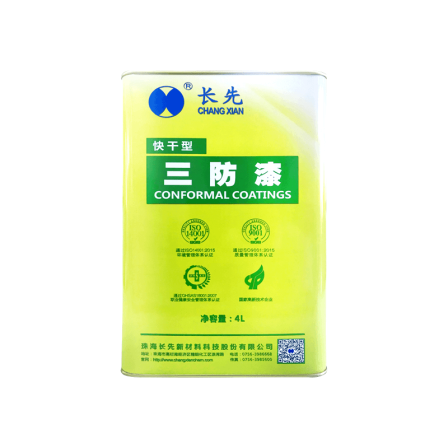
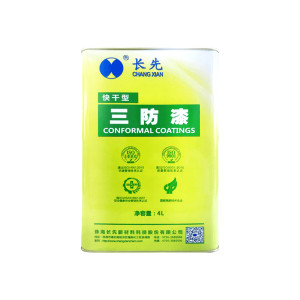
4 L/pail, 20 L/drum
· Storage and Transportation:
Keep away from ignition sources and heat. Handle and transport in accordance with applicable regulations.
Protect the varnish from sunlight and ultraviolet light during storage and use. Store in a cool, well-ventilated area below 25°C.
· Shelf Life:
Six months when stored in sealed containers at temperatures below 25°C.
Please Note:
· As our products are continuously improved, the information in this manual may be updated from time to time without prior notice. Please feel free to contact our sales team for the latest version.
· Do not mix this product with other products.
· We strictly control product quality and supply products in accordance with applicable product standards. Custom products are supplied according to mutually agreed specifications. Application conditions vary and are beyond our control. You should therefore test and evaluate the product and the information provided in this manual, together with the recommended application procedures, to determine suitability for your specific use.
Frequently Asked Questions About M888 Water-Based Conformal Coating
1. What is M888 conformal coating used for?
M888 is a waterborne polyurethane conformal coating designed to protect printed circuit boards and compatible electronic assemblies against moisture, mold, and corrosion.
After complete drying and crosslinking, it forms a glossy, flexible protective film with strong adhesion and solvent resistance. It is intended for brush- and dip-coating processes on properly cleaned assemblies.
2. Does M888 require a separate hardener?
No. M888 is a single-component, self-crosslinking polyurethane coating. It does not require a separate resin-to-hardener mixing ratio.
When application viscosity needs adjustment, use deionized water and validate the dilution on the actual assembly. Do not mix M888 with other paints or unapproved materials.
3. How long does M888 take to dry at room temperature?
At 25°C, M888 reaches touch dryness in approximately 60 minutes. The TDS states that optimum room-temperature performance is reached after seven days, and the reported performance data were measured after this conditioning period.
Touch dryness does not mean the coating has developed its final properties. Actual drying depends on film thickness, airflow, humidity, and water retained around or beneath components.
4. Can M888 be oven-dried?
Yes. The TDS gives an extended oven-drying condition of 80°C for three to five hours. It also describes a short heat-assisted route of 80°C for three to ten minutes followed by room-temperature holding.
The short heating step is not a complete curing cycle. Its final holding period is not specified, so validate the production schedule and confirm complete drying before performance testing or service.
5. How should M888 be diluted?
Use deionized water to adjust M888’s viscosity and coating thickness. The supplied coating has a reported dynamic viscosity of 120 ± 30 cP, equivalent to 120 ± 30 mPa·s.
The TDS does not specify a fixed dilution ratio. Establish the ratio through trials that check wetting, coverage, film build, and drying. Additional water reduces working solids content and increases the water that must be removed.
6. Can M888 be brushed, dipped, or sprayed?
M888 is specified for brushing and dipping. Spray or selective-spray suitability should be confirmed separately with our technical team before selecting equipment.
Apply an even coating and inspect for missed areas, pooling, and unwanted entry into sensitive components. The supplied data does not provide a recommended coating-thickness range; establish it through application trials.
7. Do circuit boards need cleaning before M888 is applied?
Yes. The TDS requires PCB surfaces to be cleaned before coating to support adhesion and wetting. Remove dust, oil, grease, and soldering residues, and ensure the assembly is dry.
Mask contacts, connectors, test points, and other areas that must remain uncoated. Verify compatibility with solder mask, component markings, plastics, and adhesives before production use.
8. Does M888 contain a fluorescent tracer?
No. M888 does not contain a fluorescent tracer, so fluorescent coverage inspection should not be assumed suitable.
Use a validated inspection method such as appropriate lighting, magnification, or thickness measurement. Check for continuous coverage, missed areas, pooling, and coating on surfaces that should remain uncoated.
9. What electrical insulation performance does M888 provide?
The TDS reports insulation resistance greater than 2 × 10¹² Ω, dielectric withstand voltage greater than 1,500 V, and a dielectric constant of 2.6. The reported data were measured after seven days of room-temperature conditioning.
Insulation resistance in ohms is different from volume resistivity. Likewise, the withstand-voltage result is not dielectric strength in kV/mm or an operating-voltage rating for a finished board.
10. Does M888 provide moisture protection after drying?
M888 is intended to protect electronic assemblies against moisture, mold, and corrosion after complete drying and crosslinking. The TDS reports a moisture-resistance result greater than 5 × 10⁹ Ω under the referenced test.
Water as the liquid carrier does not mean the cured coating is water-soluble. However, the supplied data does not establish waterproofing, continuous immersion suitability, or an ingress-protection rating for finished equipment.
11. What is the operating temperature range of M888?
The supplied M888 documents do not specify an operating-temperature range or thermal class. Request supporting temperature-performance data before selecting it for an application with defined thermal requirements.
The 80°C drying condition should not be used as the continuous operating-temperature rating of the coating or finished assembly.
12. Can cured M888 be removed with water for PCB repair?
Water dilution of liquid M888 does not mean the cured coating can be removed with water. M888 forms a self-crosslinked polyurethane film with reported solvent resistance.
The TDS does not specify a removal procedure. Confirm a compatible rework method with our technical team and validate removal, cleaning, recoating, and drying on representative boards.
13. Can M888 replace a solvent-based conformal coating?
M888 can be evaluated for brush- or dip-coating processes that prioritize very low odor, deionized-water adjustment, and a flexible polyurethane film.
Before switching, compare material compatibility, coverage, adhesion, electrical performance, drying time, inspection, and rework requirements on the same assembly. Include the seven-day room-temperature property-development period in the evaluation rather than comparing touch-dry times alone.
14. Are RoHS and REACH documents available for M888?
The product’s Technical Data section lists RoHS documentation, REACH documentation, and an MSDS.
15. How is M888 packaged and stored?
M888 is supplied in 4 L and 20 L metal pails. Its stated shelf life is six months when stored sealed at 5–25°C.
Protect the coating from freezing and contamination, and keep stock containers tightly closed in a cool, dark, dry location. Do not return used coating to the original container, as this may affect product stability.
16. What information should I provide when requesting an M888 quotation?
Include your assembly type, brush- or dip-coating process, target film thickness, available drying conditions, and environmental and electrical requirements. Specify any inspection or rework needs.
For pricing and delivery, provide the required quantity, preferred pack size, delivery destination, target delivery date, and any trial-material or documentation requirements.