UV Adhesive Guide
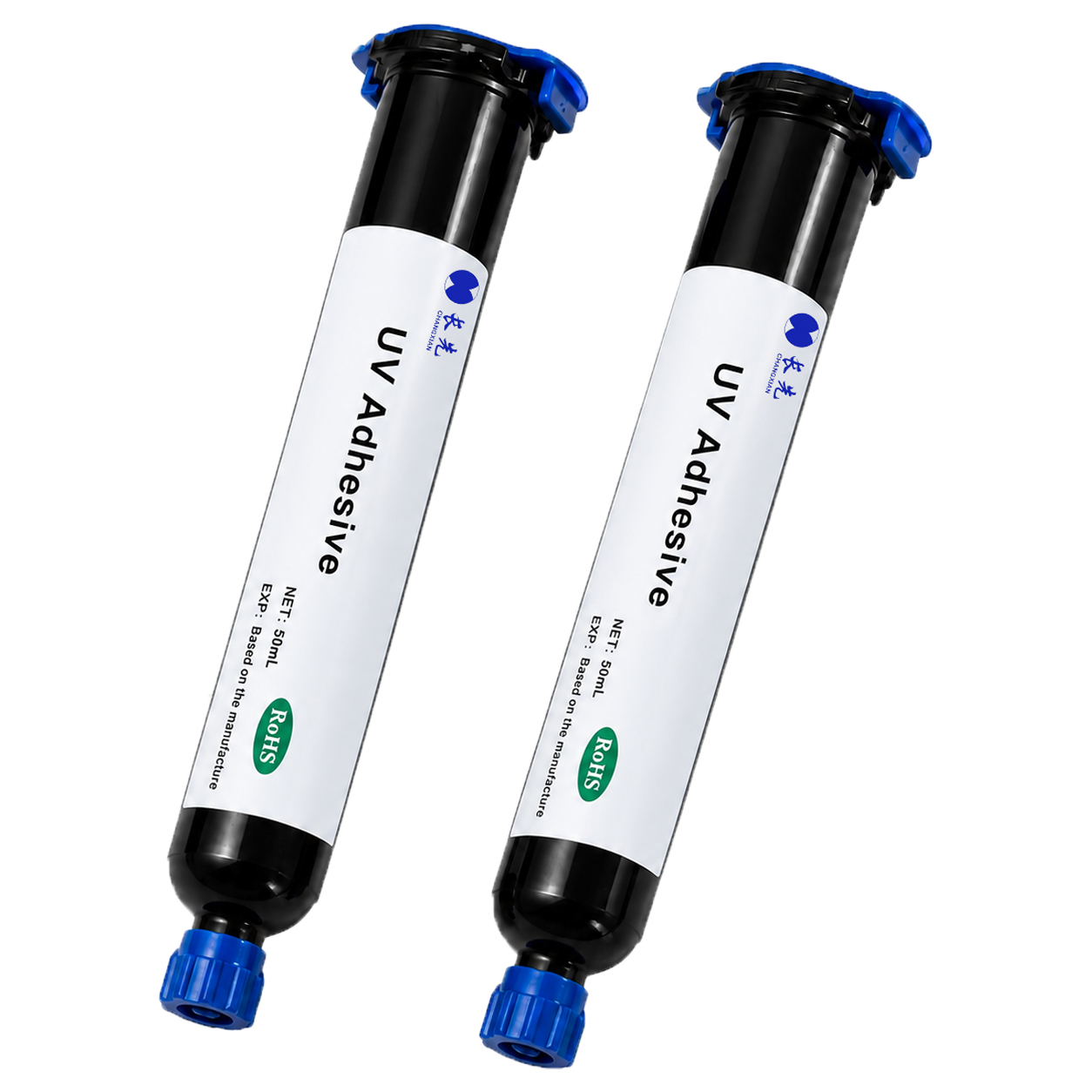
UV Adhesive Guide for Electronics Assembly: One-Part UV Curable Adhesive
This UV adhesive guide helps you select the right one-part UV-curable adhesive by substrate, application and curing process.
Plastic bonding, electronic component fixing — choosing the right UV adhesive starts with your application.
Plastic & Dissimilar Material Bonding Selection guidance for hard-to-bond plastics such as PC, PMMA and ABS
Electronic Component Fixing & Protection Solder joint reinforcement and component coating, with fast curing to match your production line
UV Adhesive Manufacturer in China | In-House Resin Synthesis | Free Samples for Testing
Use this UV adhesive guide as a starting point, then confirm the final grade against the product TDS and your actual bonding and curing process.
Not Sure It Fits Your Application? Ask Us First
Not sure it fits your application? You don’t have to read the whole guide. Tell us your parts and bonding process — our engineers will confirm fit and get back to you within 24 hours. Want the details first? Just keep reading.
Selection Guide by Application
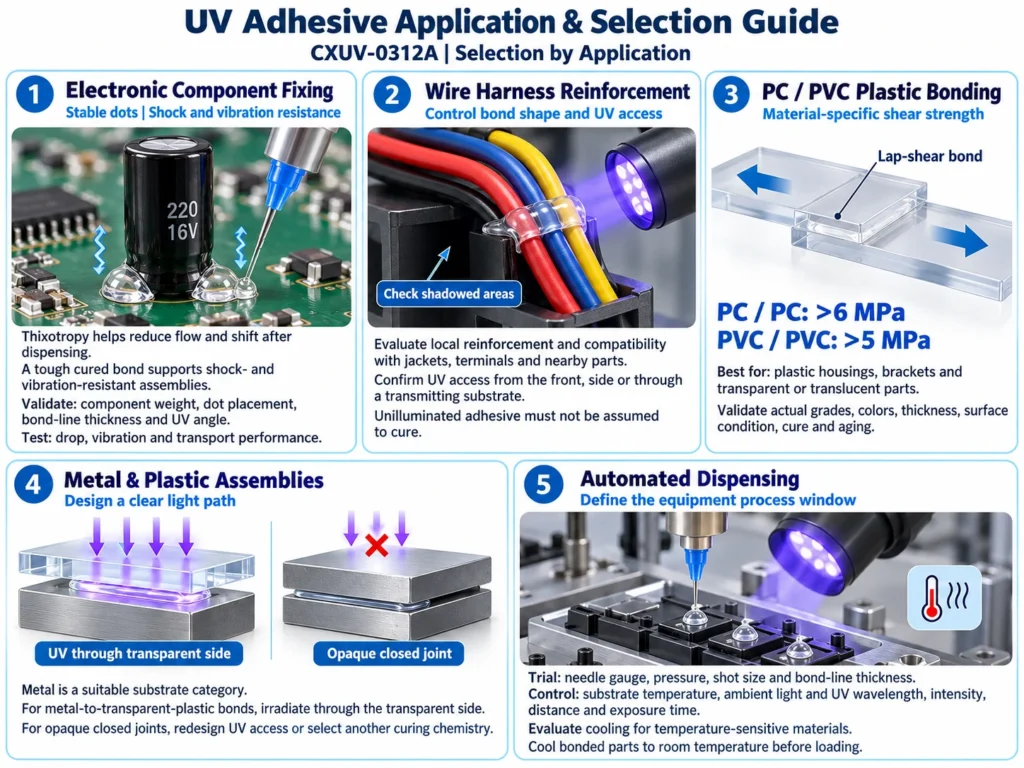
1. Electronic Component Fixing: Local Positioning, Impact and Vibration Resistance
Component fixing usually focuses on stable dot placement, cure cycle time, bond-line toughness and long-term vibration resistance. The thixotropy of CXUV-0312A helps reduce flow and shift after dispensing, and the tough cured layer suits assemblies that must resist shock and vibration. During introduction, confirm component weight, dispensing height, bond-line thickness, irradiation angle, and whether the cured assembly must pass drop, vibration or transport simulation tests.
2. Wire Harness Reinforcement: Control the Bond Shape, Protect Downstream Assembly
Harness reinforcement requires the adhesive to stay where you place it, while remaining compatible with wire jackets, terminals, plastic parts and adjacent metal parts. CXUV-0312A can be evaluated for local harness reinforcement. Because harness structures easily create shadowed areas, you need to confirm whether UV light can reach the entire bond line from the front, the side, or through the substrate; if any area cannot be illuminated, do not assume CXUV-0312A will cure there by itself.
3. PC/PVC Plastic Bonding: Shear Strength Above 5 MPa
The TDS reports PC/PC shear strength >6 MPa and PVC/PVC shear strength >5 MPa, suitable for bonding evaluation of plastic housings, brackets and transparent or translucent parts. Different PC and PVC grades, additives, colors, thicknesses, surface treatments and mold-release residues affect bonding and light transmission — before use, always validate bonding, curing and aging with your actual materials and structures.
4. Metal and Plastic Assemblies: Do Not Ignore the Light Path
Metal is listed as a suitable substrate category for CXUV-0312A. For metal-to-transparent-plastic combinations, you can irradiate through the transparent side; for metal-to-metal or metal-to-dark-plastic opaque closed structures, re-evaluate the structure, the light path, or switch to another curing chemistry.
5. Automated Dispensing: Define Needle, Pressure and Bond Line by Equipment Trials
CXUV-0312A suits machine dispensing, but automation decisions should not be based on viscosity alone. We recommend confirming needle gauge, dispensing pressure, shot size, bond-line thickness, substrate temperature, ambient light, source wavelength, intensity, distance and exposure time together. For temperature-sensitive materials, evaluate cooling measures first as the TDS suggests; let bonded parts cool to room temperature before loading.
Changxian New Material UV Adhesive Specifications and Application Fit
| Model | Chemistry | Appearance / Viscosity | Cure Reference | Bonding & Mechanical Properties | Best-Fit Applications |
| CXUV-0312A | One-part urethane acrylate UV/visible light curing adhesive | Amber transparent liquid; 10,000±1,500 mPa·s (25°C); specific gravity 1.17; refractive index 1.48 | TDS provides reference conditions for 365 nm and 395 nm UV LED area sources; actual curing must be validated against lamp intensity, distance, spectrum, exposure time, bond-line thickness and substrate transparency | Shore D 58±3; PC/PC shear strength >6 MPa; PVC/PVC shear strength >5 MPa; tough cured layer with impact and vibration resistance | Electronic component fixing, wire harness reinforcement, PC/PVC plastic bonding, local sealing and automated dispensing; metal can be evaluated as a substrate category, but confirm the light path and test actual metal combinations |
CXUV-0312A Cure Reference Conditions
| Item | 365 nm UV LED Area Source | 395 nm UV LED Area Source |
| TDS reference intensity | 800 mW/cm² | 1,500 mW/cm² |
| TDS reference time | 10 s | 5 s |
| TDS reference energy | 4,000 mJ/cm² | 2,000 mJ/cm² |
UV Adhesive Comparison Considerations
Choosing a UV adhesive is not simply comparing “how fast it cures” — it is confirming whether your product structure, materials, equipment, reliability targets and total cost fit together. When your purchasing and engineering teams evaluate options, prioritize these questions: Can UV light reach the entire bond line? Is the substrate transparent? Is there bond-strength data for your material combination? Is the curing equipment stable? How will shadowed areas be handled? Will the product face shock, vibration, temperature-humidity, chemical or electrical requirements?
If your application is electronic component fixing, wire harness reinforcement, PC/PVC plastic bonding or local sealing, and the bond line can be reached by UV/visible light, the one-part, thixotropic, fast-curing character of CXUV-0312A is worth introducing. If the structure is fully opaque, needs deep-section cure, long-term high-temperature resistance or a defined waterproof rating, do not choose on “UV cures fast” alone — re-confirm the chemistry or add application testing.
In total-cost terms, the value of a UV adhesive comes not only from the unit material price, but also from eliminating mixing, shortening waits, reducing work-in-process, raising automation throughput and cutting rework. Changxian New Material in-house resin synthesis, 20,000-ton annual capacity and factory-direct model help you balance material purchasing, sample validation, volume delivery and technical support at a better overall cost.
How Are UV Adhesives Used?
UV adhesives cure when exposed to ultraviolet or visible light, and are commonly used in manufacturing steps that need fast positioning, local bonding, sealing or reinforcement. In electronics manufacturing, typical uses include component fixing, wire harness reinforcement, plastic bracket bonding, transparent part positioning and local sealing. The basic process: clean and dry the bonding surfaces; control shot size and shape; position the parts; irradiate with a matched-wavelength source; confirm cure completeness; let parts cool to room temperature before loading.
Unlike conformal coating, a UV adhesive is mainly used for local bonding, fixing, reinforcement or sealing — not full-board surface protection. If you need PCB moisture, mold, salt-spray or insulation protection, evaluate conformal coating separately.
What Are UV Adhesives?
A UV adhesive — also called UV glue, UV light adhesive or UV curable adhesive — is an adhesive that cures when exposed to light of a matched wavelength. Common advantages include one-part packaging, no weighing or mixing, fast cure cycles, and suitability for automated dispensing and precise local positioning. Its core limitation is equally clear: light must reach the bond line. Bond-line thickness, substrate color and transparency, source wavelength, intensity, distance and exposure time all affect the result.
So the accurate statement is: when a matched light source can reach the bond line and the energy and time have been validated in practice, a UV adhesive can significantly shorten fixturing and curing waits. For shadowed areas, dark substrates, thick bond lines or opaque metal structures, you need an engineered light path or a different curing mechanism.
UV Adhesive Material Types
| Type | Strengths | Limitations & Confirmation Points |
| Urethane acrylate UV adhesive | Balances toughness, adhesion, impact and vibration resistance; suits electronic component fixing, wire harness reinforcement, plastic bonding and local sealing. Changxian New Material CXUV-0312A belongs to this chemistry. | Requires light of a suitable wavelength to reach the bond line; fully opaque closed structures need a redesigned light path or another curing mechanism. |
| UV dual-cure systems | Suit applications with shadowed areas, deep grooves or partially unreachable locations, combining moisture, heat or other secondary cure mechanisms. | Changxian New Material M78-3068UV belongs to this category, as part of our conformal coating series. |
| Low-viscosity / high-thixotropy dispensing systems | Low viscosity favors flow and filling; high thixotropy favors positioning, shape control and less stringing. CXUV-0312A focuses on thixotropic dispensing and local fixing. | Viscosity is not the only criterion — validate needle, pressure, temperature, bond-line thickness, substrate wetting and cure energy on your equipment. |
If you have specific viscosity requirements, talk to our engineers — we can customize production for you.
UV Adhesive vs. Other Curing Systems: Cure Speed Comparison
If you are evaluating process throughput for component fixing, wire harness reinforcement or local bonding, the fixturing speed of a curing chemistry often affects total cost more than the unit material price. The table below compares typical time ranges from representative public TDS documents, helping you judge how much waiting time “second-level positioning” with a UV adhesive can save on your line.
| Curing System | Typical Fixture / Tack-Free Time | Typical Full Cure | Impact on Line Throughput | Better-Fit Scenarios |
| UV/visible light curing acrylates | Second-level: cures on light exposure; represented by Changxian New Material CXUV-0312A | Illuminated areas cure with exposure | Position on exposure — parts move to the next step immediately, with no mixing or fixture waiting | Component fixing, wire harness reinforcement and plastic bonding where light reaches the bond line; shadowed areas need an engineered light path |
| Cyanoacrylates (instant adhesives) | 3–20 seconds (substrate-dependent) | About 24 hours to full strength | Fast fixture, but full strength still takes time; overflow, blooming and gap-filling need control | Small-area manual quick bonding and repair work |
| Two-part epoxies | Fast-set grades about 8–10 minutes; structural grades about 1–16 hours | 24 hours to 5 days at room temperature | Weighing, mixing, fixturing and long waits tie up work-in-process and floor space | Shadowed areas, thick sections, large gaps and high-strength structural bonding |
| Moisture-cure silicones (RTV) | Tack-free in about 5–30 minutes | About 2–4 mm per 24 h; thick sections take days | Cures from the surface inward — the slowest cycle | Flexible sealing and high/low-temperature resistance |
Data sources and boundaries: the times above are typical ranges from representative public TDS documents of each chemistry, provided for selection comparison only — they do not represent any specific grade; always refer to the latest TDS of both sides for actual fixture and cure times. “Second-level” for UV adhesives refers to illuminated areas; shadowed areas, dark substrates and thick bond lines still require validation against the CXUV-0312A TDS and your actual equipment. Other chemistries have their own strengths in shadowed areas, thick sections and flexible sealing — this page presents cure-speed differences only and does not disparage any system.
Common UV Adhesive Application Issues and Solutions
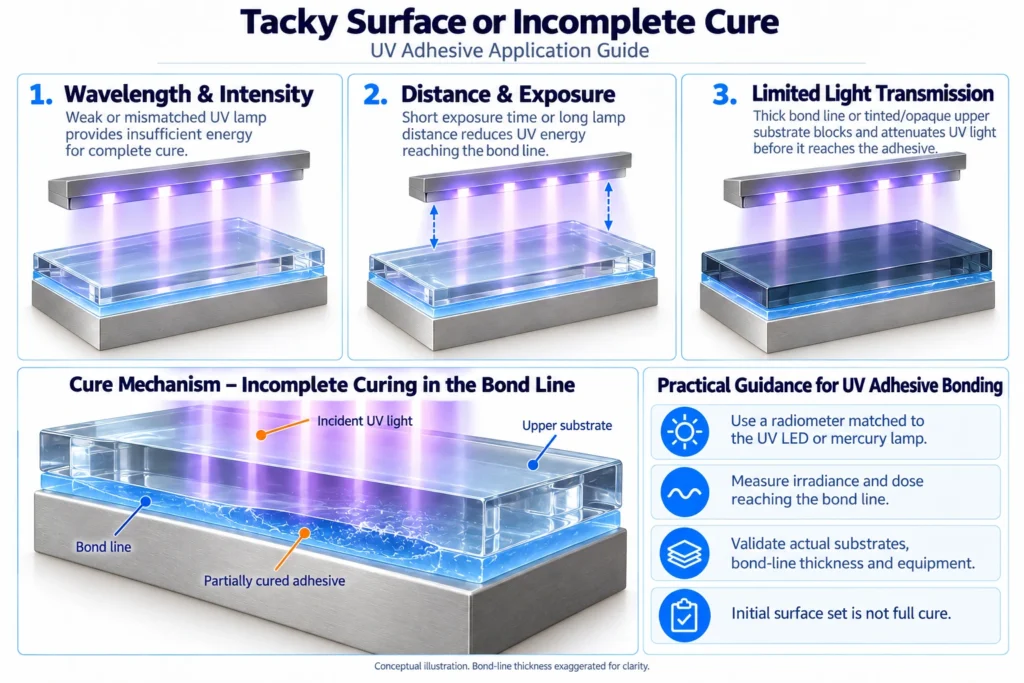
1. Tacky Surface or Incomplete Cure
Possible causes:
mismatched source wavelength, insufficient intensity, excessive distance, short exposure, thick bond line, low substrate transparency or aged equipment output.
Suggestion:
use a radiometer matched to your UV LED or mercury lamp to measure the energy actually reaching the bond line; validate curing with your real materials, bond-line thickness and equipment; do not treat initial surface set as full cure.
2. Shadowed Areas Do Not Cure
Possible causes:
components, metal parts, dark plastics or the adhesive itself block the light.
Suggestion:
adjust dot placement and irradiation angle; choose transparent or translucent paths; use side irradiation, a second exposure, or a dual-cure system where necessary.

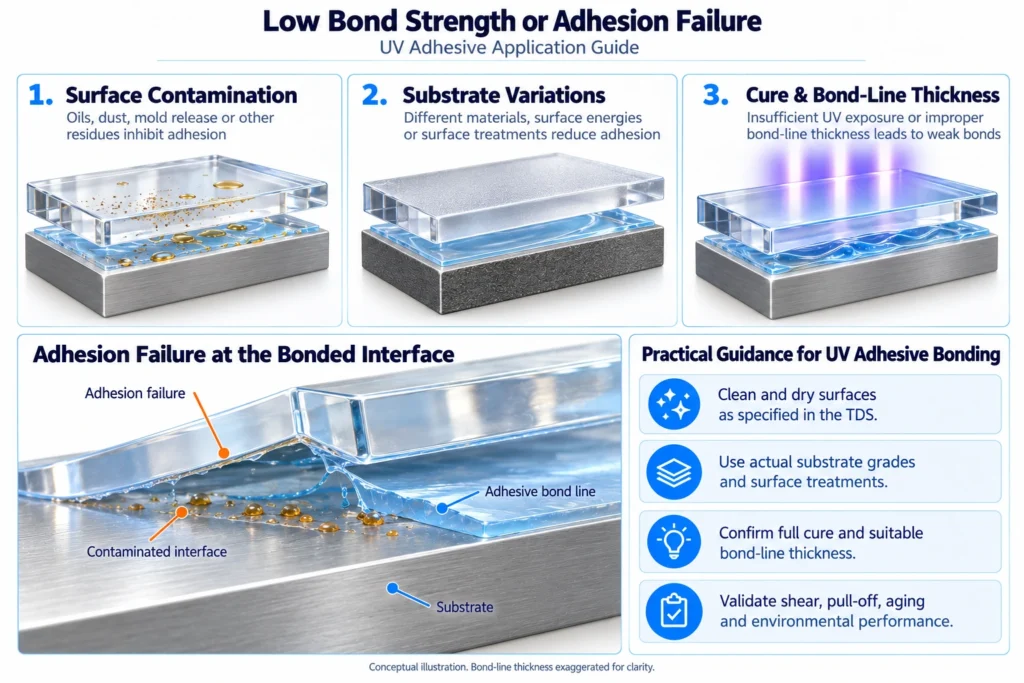
3. Low Bond Strength or Adhesion Failure
Possible causes:
oil, dust, mold release, moisture or other contamination on the surface; plastic grade or surface treatment differs from test samples; incomplete cure; unsuitable bond-line thickness.
Suggestion:
clean and dry surfaces first as the TDS requires, and run shear, pull-off, aging and environmental tests with your actual substrates.
4. Bubbles, Voids or Uneven Bond Lines
Possible causes:
air entrainment during dispensing, unstable shot size, contaminated surfaces, excessive bond-line thickness or unsuitable assembly pressure.
Suggestion:
optimize needle, pressure, speed and dispensing path; control bond-line thickness; degas and run process trials where necessary; inspect shape and coverage before curing.

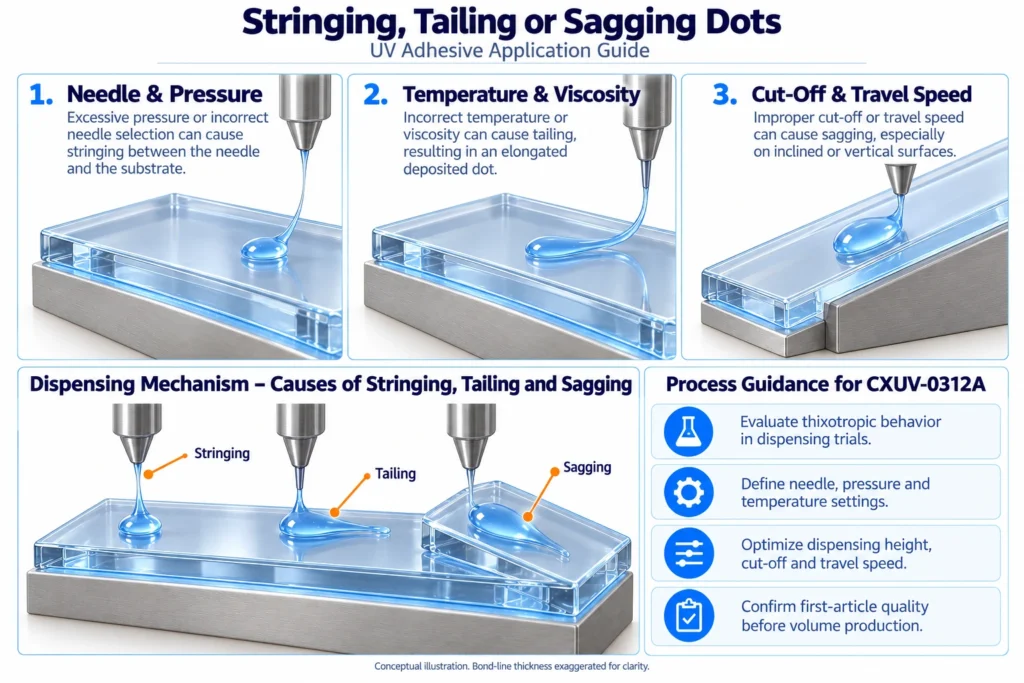
5. Stringing, Tailing or Sagging Dots
Possible causes:
needle gauge, dispensing pressure, temperature, cut-off parameters or travel speed do not match the material viscosity.
Suggestion:
use the thixotropic behavior of CXUV-0312A in equipment window trials to define needle, pressure, temperature, dispensing height and travel speed; establish first-article confirmation before volume production.
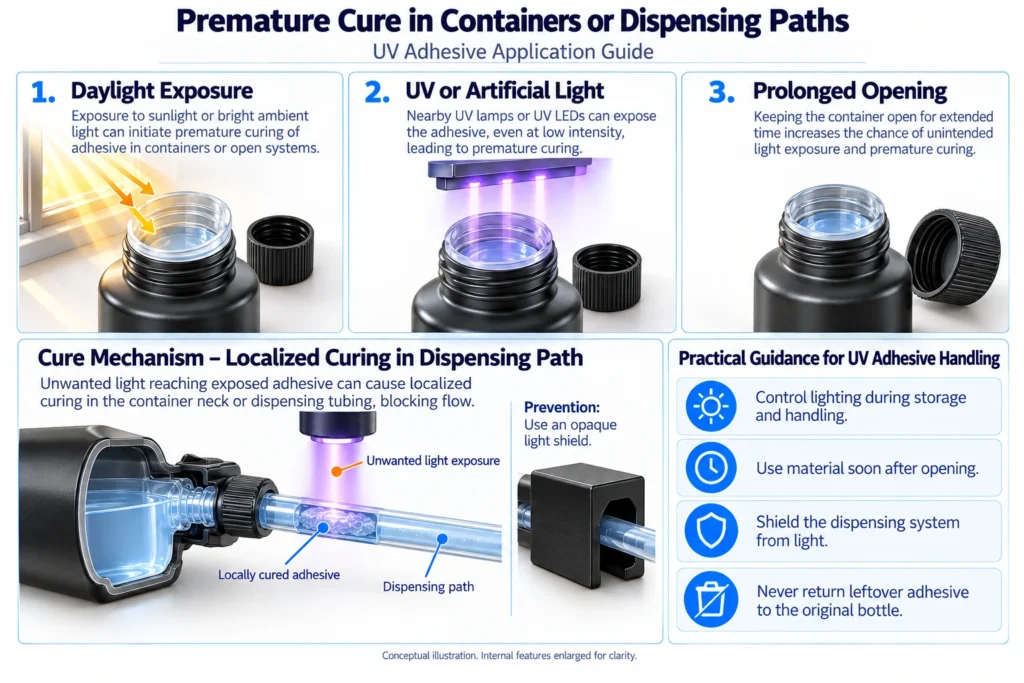
6. Adhesive Cures Early in the Container or Dispensing Path
Possible causes:
daylight, UV light or some artificial lighting reaches the material; long exposure after opening.
Suggestion:
control lighting during storage and handling, use the material soon after opening, shield the dispensing system from light, and never pour leftover adhesive back into the original bottle.
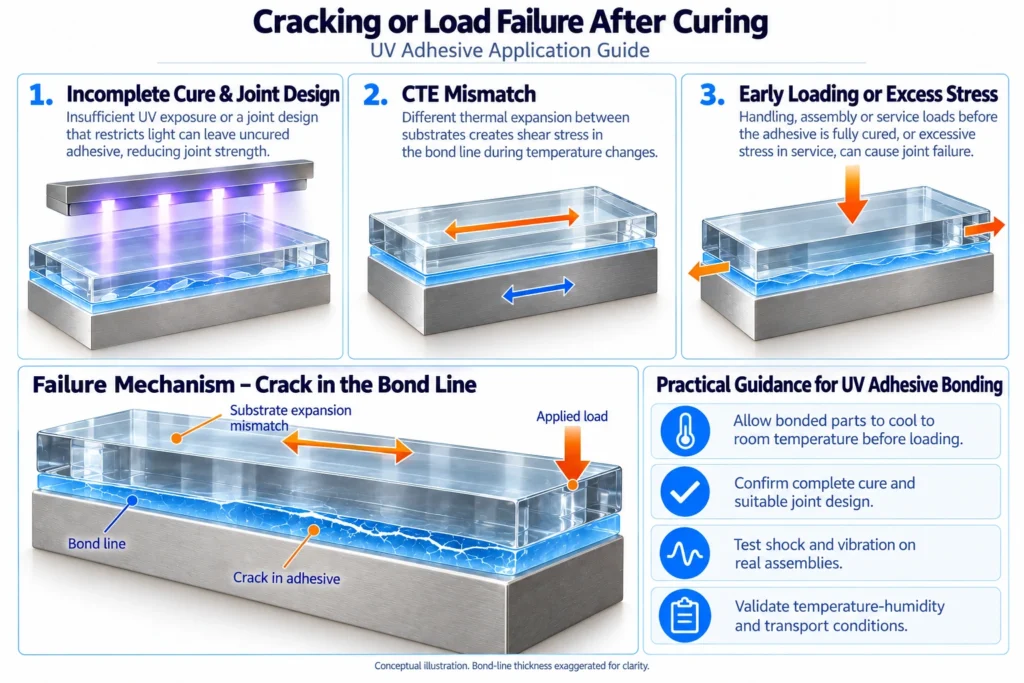
7. Cracking or Load Failure After Curing
Possible causes:
incomplete cure, unreasonable bond-line design, CTE mismatch between substrates, loading before cooling, or actual shock/vibration beyond the validated range.
Suggestion:
let bonded parts cool to room temperature before loading as the TDS requires, and complete shock, vibration, temperature-humidity and transport simulation tests on real assemblies.
UV Adhesive Buying Guide FAQ
Q1: What is a UV adhesive?
A UV adhesive (also called UV glue or UV light adhesive) is an adhesive that cures under ultraviolet or visible light, commonly used in manufacturing steps that need fast positioning, local bonding, sealing and automated dispensing. It suits structures where light can reach the bond line; shadowed areas, thick bond lines or opaque materials need extra validation.
Q2: What is CXUV-0312A used for?
CXUV-0312A is a one-part urethane acrylate UV/visible light curing adhesive for electronic component fixing, wire harness reinforcement, plastic bonding and local sealing. Suitable substrates include PC, PVC and metal; PC/PC and PVC/PVC have documented shear strength, while metal combinations need validation on your actual structure.
Q3: How fast does CXUV-0312A cure?
When a matched light source reaches the bond line and the process is validated, CXUV-0312A supports second-level cure cycles. The TDS provides reference conditions for 365 nm and 395 nm UV LED area sources, but actual curing depends on lamp intensity, distance, spectrum, exposure time, bond-line thickness and substrate transparency. Do not treat initial fixture as full cure.
Q4: Will CXUV-0312A cure in shadowed areas?
The current TDS does not provide a secondary cure mechanism for shadowed areas, so CXUV-0312A should not be described as self-curing in fully shadowed regions. For bond lines blocked by components, metal or opaque plastics, adjust the light path, add irradiation angles, or choose a validated dual-cure system.
Q5: Which substrates can CXUV-0312A bond?
The TDS lists PC, PVC and metal as suitable substrate categories. PC/PC shear strength is >6 MPa and PVC/PVC is >5 MPa; metal can be evaluated as a category, but no metal-specific shear strength data is available. Different plastic grades, colors, additives, surface treatments and metal surface conditions can all affect bonding — test with real samples.
Q6: Is CXUV-0312A suitable for automated dispensing?
Yes. CXUV-0312A is thixotropic and suits machine dispensing, with a viscosity of 10,000±1,500 mPa·s at 25°C. During introduction, confirm needle, pressure, shot size, bond-line thickness, dispensing speed, ambient light and curing parameters through equipment trials.
Q7: Does CXUV-0312A require mixing?
No. CXUV-0312A is a one-part product — no weighing or mixing of resin and hardener. You only need surface cleaning, dispensing, positioning and light curing, but light and moisture exposure must be controlled during storage and handling.
Q8: What bond strength does CXUV-0312A provide?
The TDS reports PC/PC shear strength >6 MPa and PVC/PVC shear strength >5 MPa, tested per GB/T 7124-2008. The data applies to the listed test combinations and cannot be extrapolated to all plastics, all metals or all structures. Validate against your actual substrates, bond-line thickness, curing and aging conditions.
Q9: What mechanical and electrical properties does it provide?
Cured hardness is Shore D 58±3, and the TDS describes a tough bond layer with impact and vibration resistance. Electrical properties: dielectric constant 2.6 (1 MHz), dissipation factor 0.03 (1 MHz), dielectric strength 20 kV/mm, surface resistivity 1.9×10¹³ Ω, volume resistivity 1.1×10¹³ Ω·cm.
Q10: Is CXUV-0312A waterproof or suitable for high-temperature service?
The TDS reports water absorption <4% (100°C, 2 h), which cannot be used to claim waterproofing, long-term immersion resistance or an IP rating. If you have waterproofing, high-temperature, thermal shock or long-term damp-heat requirements, share your operating conditions with us for application validation.
Q11: How should surfaces be prepared before bonding?
Bonding or sealing surfaces should be free of oil, dust, impurities and other contaminants, and kept dry before dispensing. The cleaning method must be compatible with your actual plastic grades, metal surface treatments and nearby components. We recommend bonding, curing and reliability tests on your real production parts.
Q12: Can uncured or cured adhesive be removed?
Per the TDS, uncured adhesive can be removed with suitable organic solvents such as IPA or MEK — confirm substrate compatibility and solvent safety requirements first. Rework methods for fully cured layers are not given in the TDS; if your product needs repair or rework, talk to our engineers.
Q13: Are samples and compliance documents available?
Yes — samples plus TDS, MSDS, RoHS, REACH and California Proposition 65 documents for CXUV-0312A. The RoHS report and REACH SVHC report carry corresponding test conclusions; applicable scope and the latest versions are subject to the documents provided by download or by our sales team.
Q14: What are the packaging, storage and shelf life?
Packaging is 30 g per unit, 225 units per carton, or 50 g per unit, 100 units per carton. The TDS requires storage away from light in a cool, dry place at 8–28°C, with a shelf life of 9 months.
Q15: What information should I provide for selection and quotation?
Please provide substrate types and grades, bonding structure, transparency, bond-line thickness, dispensing method, UV source wavelength/intensity/distance, target cycle time, bond-strength requirements, shock and vibration requirements, electrical requirements, temperature-humidity or chemical environment, target market, monthly/annual usage, packaging requirements, destination, and whether you need TDS, MSDS, RoHS, REACH or Prop 65 documents. The more complete the information, the more accurate the selection and quotation.
Q16: What is the difference between UV adhesive and UV conformal coating?
UV adhesive is mainly used for local bonding, fixing, reinforcement and sealing; UV conformal coating is mainly used for PCB surface protection — moisture, mold, salt spray, insulation and full-board coverage. Both can cure quickly under UV, but they serve different purposes: a UV adhesive page should not carry conformal-coating search intent, and a conformal coating cannot replace structural bonding.

Advantages of Changxian New Material UV Adhesive
· Faster production cycles: one-part, no mixing; under the right wavelength, intensity, distance and bond-line conditions, this UV curing adhesive supports second-level cure cycles and shorter waiting time.
· Suitable for automated dispensing: CXUV-0312A is thixotropic, with a viscosity of 10,000±1,500 mPa·s at 25°C, helping you control dots, beads and local reinforcement placement.
· Documented PC/PVC data: the TDS reports PC/PC shear strength >6 MPa and PVC/PVC shear strength >5 MPa, supporting bonding evaluation for plastic electronic assemblies.
· Tough cured layer: after curing it forms a tough bond line with impact and vibration resistance, suitable for electronic assemblies exposed to mechanical disturbance.
· Electrical reference data: dielectric strength 20 kV/mm and volume resistivity 1.1×10¹³ Ω·cm support material selection and electrical evaluation of electronic assemblies.
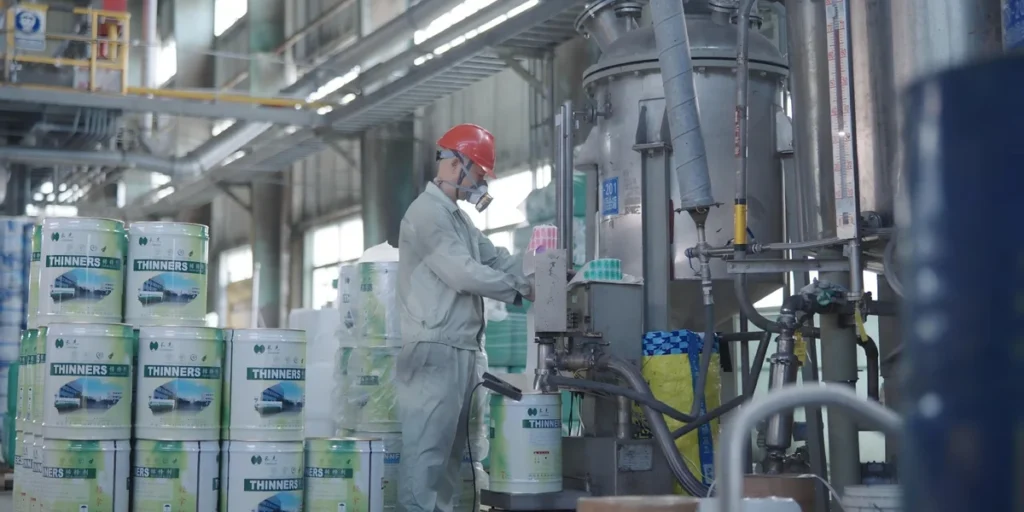
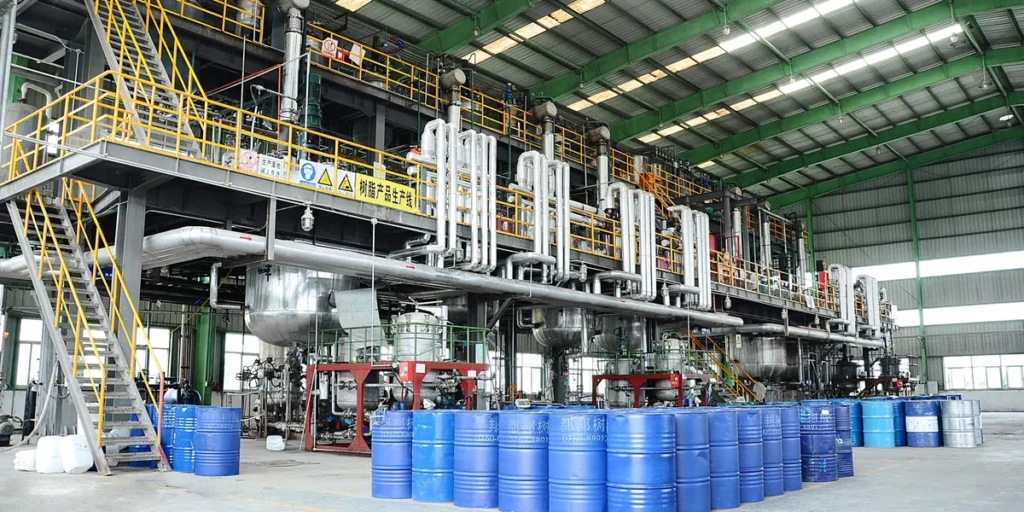
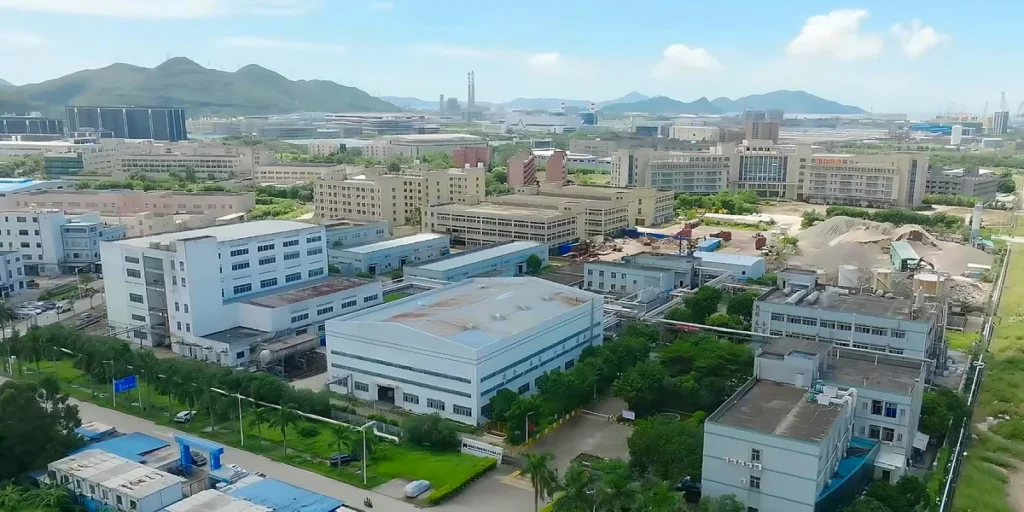
· China factory advantage: a 40,000 m² production base, a mature electronic chemicals supply chain and export support capability give you stable, efficient delivery.
· Factory-direct cost advantage: in-house resin synthesis, 20,000-ton annual capacity and a factory-direct model help you control purchasing and introduction costs while keeping quality.
· Compliance and introduction support: TDS, MSDS, RoHS, REACH and California Proposition 65 documents are available, with sample testing and engineering selection support.
Whether your priority is increasing electronics assembly throughput, eliminating mixing steps, improving dispensing stability, or finding a verifiable UV cure bonding solution for PC, PVC and selected metal structures, Changxian New Material can support your evaluation across six dimensions: material chemistry, curing equipment, light-path design, process validation, compliance documents and total cost.
Contact us
Not sure whether CXUV-0312A fits your electronics assembly structure?
Send Changxian New Material your substrates, structure drawings or photos, bond-line thickness, dispensing method, UV equipment parameters, target cycle time, and strength and reliability requirements.
Our engineers can help evaluate the light path, dispensing window, curing conditions and test items, and provide samples, TDS, MSDS, RoHS, REACH and Prop 65 documents for introduction validation.
Technical Support & OEM Inquiries
Related Products