

Insulating Varnish HS Code: 5 Classification Checks Before Shipment
Abstract: An insulating varnish HS code cannot be determined from the English product name alone. Before classification, you need to...
Insulating Varnish Philippines: 6 Checks Before Import Qualification
Abstract: Insulating varnish Philippines procurement should not be based only on quotations and delivery times. For a formulated chemical product...
Insulating Varnish Formulations: 4 Variables Behind TDS Performance
Abstract: Insulating varnish formulations should not be evaluated only through labels such as polyester, epoxy, or waterborne. Information that is...

Fan Winding Varnish: 4 TDS Checks for Small Motor Production
Abstract: Fan winding varnish selection should start with the actual construction and production conditions of your fan motor rather than...

Electrical Varnish: 5 Resin Systems and Their Processing Differences
Abstract: Electrical varnish selection should not be based on dielectric strength or thermal class alone. A comparison of five Changxian...
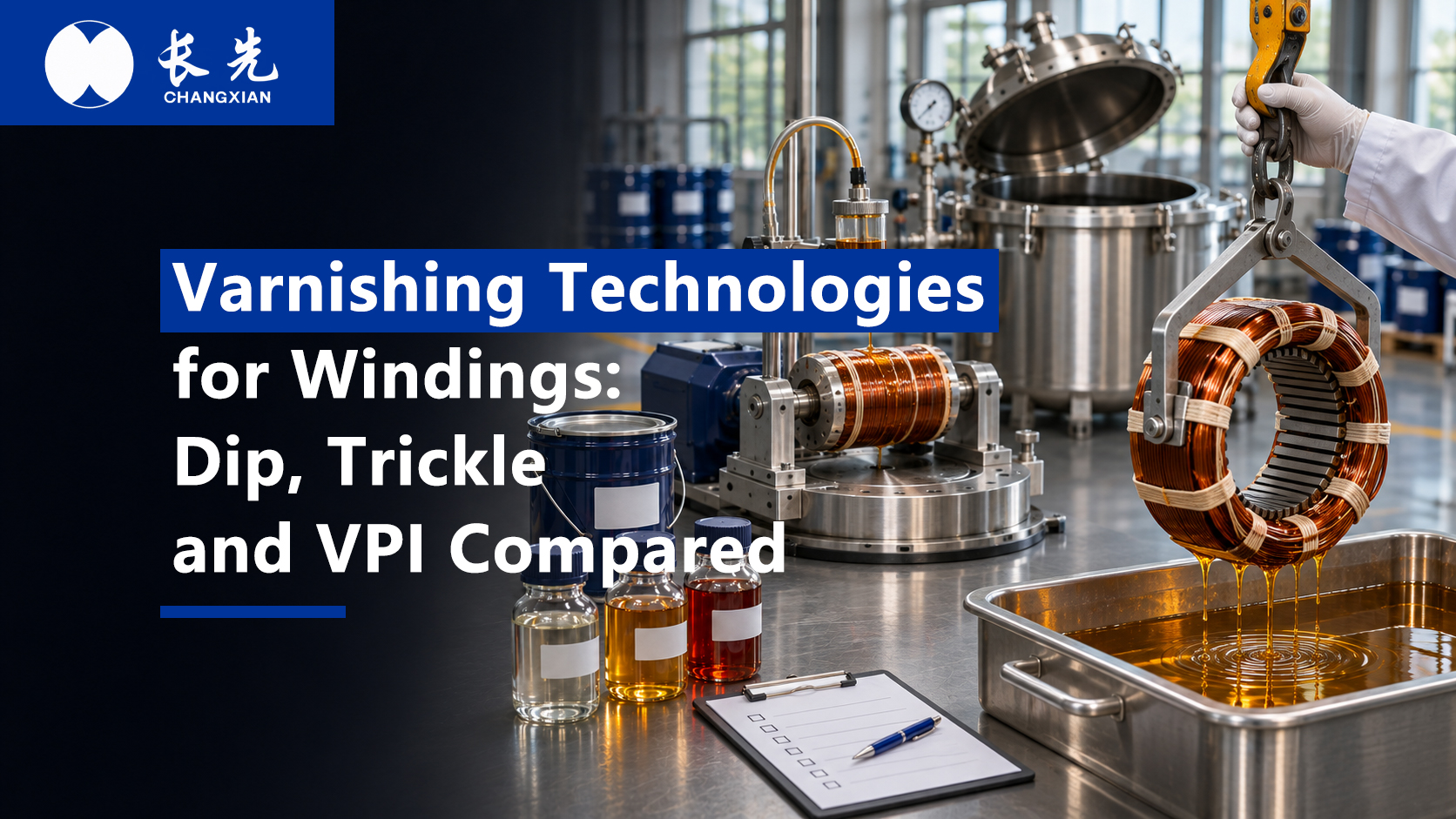
Varnishing Technologies for Windings: Dip, Trickle and VPI Compared
Abstract: Varnishing technologies for windings should be compared according to winding design, material characteristics, equipment capabilities, and acceptance requirements rather...

Epoxy Varnish for Motor Winding: 3 TDS Checks and Impregnation Guide
When selecting an epoxy varnish for motor winding, you first need to identify the specific resin system, then review the...
High Voltage Insulating Varnish: 5 Selection Checks Beyond Dielectric Strength
When selecting a high voltage insulating varnish, dielectric strength is an important specification, but it cannot alone demonstrate that a...
Class H Insulation Varnish vs Class F: 3 TDS Options Compared
The main difference between Class F and Class H is the thermal class: Class F corresponds to 155°C, while Class...
Electrical Insulating Varnish Manufacturers: 8 Pre-Purchase Audit Checks
When screening electrical insulating varnish manufacturers, you should not rely only on product catalogs, certification logos or unit prices. What...

Copper Wire Insulation Varnish: Wire Enameling vs Winding Impregnation Guide
When you search for copper wire insulation varnish, your requirement may belong to two different production stages: forming an insulation...
Electrical Insulation Paint vs Insulating Varnish: 4 Selection Checks
When you search for electrical insulation paint, you may need a material for surface coating or an insulating varnish for...

Coil Winding Varnish Guide: 3 Options by Coil Design, Thermal Class and Curing Process
Selecting a coil winding varnish involves more than checking its thermal class. Inductive coils, relay coils, small electromagnetic coils and...
Fast Drying Insulating Varnish Guide: Top Air-Dry Options by TDS Data
Abstract: A fast drying insulating varnish is an insulating varnish that cures at ambient temperature without high-temperature baking, serving on-site...
Insulating Varnish Price Guide: 5 Cost Factors That Matter
Abstract: Insulating varnish price cannot be compared by "price per kg" alone: solids content ranges from 20% to 100% across...
Clear Insulating Varnish Guide: Top 5 Options Compared by TDS Data
Abstract: Clear insulating varnish is the most widely used type of impregnating varnish in the insulation treatment of motors, transformers...
Transformer Varnish Selection Guide: 5 Options Compared by TDS Data
Abstract: Choosing the right transformer varnish directly determines a transformer's temperature rise, noise level, and service life. Based on the...
Motor Winding Varnish Selection Guide: A Data-Based Framework from Five Production Varnishes
Abstract: Choosing the wrong motor winding varnish is one of the leading causes of premature motor winding failure. This article...