
E57-89H H–C Grade Solventless Epoxy-Polyester Insulating Varnish for Motor Windings
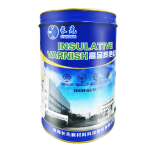
E57-89H is a single-component, solventless epoxy-polyester insulating varnish designed for motor winding and electrical coil impregnation. Its heat-resistant formulation delivers good penetration, strong mechanical bonding and electrical insulation at elevated temperatures.
With a thermal grade of H–C (≥180°C), E57-89H combines low viscosity, enameled-wire compatibility and thermal conductivity for automotive motors, industrial motors, stator windings, selected rotor coils and electrical reactors.
- Description
- Technical Data
- FAQ
Description
Product Overview:
E57-89H is a heat-curing electrical insulating varnish formulated with modified heat-resistant epoxy-polyester resin, an accelerator and a curing system. Its single-component formulation simplifies material preparation and provides a practical solution for winding impregnation in electrical equipment manufacturing.
The varnish has a viscosity of 40–80 seconds at 25 ± 1°C, measured with a Tu-4 cup. Its low viscosity and good penetration help distribute resin through suitable winding structures. After curing, the resin forms an insulating structure that combines toughness with rigidity, providing mechanical bonding and electrical protection.
E57-89H maintains electrical and bonding performance at elevated temperatures. Its dielectric strength reaches at least 20 MV/m at 155 ± 2°C, while its bonding force remains at least 50 N at 180 ± 2°C. These properties support winding applications that require insulation and mechanical stability under thermal load.
A thermal conductivity of at least 0.4 W/(m·K) supports heat transfer through the impregnating resin. The cured material also retains specified electrical properties after water immersion and withstands the stated exposure tests with selected motor oils.
This low-odor, solventless insulating varnish contains 100% active ingredients. It is designed for motor manufacturers and electrical equipment producers seeking a combination of heat resistance, winding penetration, electrical insulation and mechanical bonding.
Key Features and Benefits:
· Heat-Resistant Epoxy-Polyester Resin: A modified resin system with a stated thermal grade of H–C (≥180°C), developed for electrical winding insulation at elevated temperatures.
· Single-Component Formulation: Simplifies production preparation by eliminating separate resin-and-hardener mixing.
· Solventless, Low-Odor Formulation: Contains 100% active ingredients and provides a low-odor option for winding impregnation.
· Good Winding Penetration: A viscosity of 40–80 seconds at 25 ± 1°C supports resin penetration and distribution within suitable winding assemblies.
· Strong Mechanical Bonding: Provides a bonding force of at least 140 N under normal conditions and at least 50 N at 180 ± 2°C, measured using the helical coil method.
· Elevated-Temperature Electrical Insulation: Maintains dielectric strength of at least 20 MV/m at 155 ± 2°C and volume resistivity of at least 1.2 × 10⁹ Ω·m at 180 ± 2°C.
· Thermal Conductivity: A thermal conductivity of at least 0.4 W/(m·K) supports heat transfer through the cured resin within an impregnated assembly.
· Electrical Performance After Water Immersion: Retains dielectric strength of at least 22 MV/m and volume resistivity of at least 1 × 10¹² Ω·m after 24 hours of water immersion at 20 ± 5°C.
· Enameled-Wire Compatibility: Offers good compatibility with enameled winding wire for motor and coil impregnation.
· Oil Resistance: Meets the specified film requirements after 24 hours at 180 ± 2°C in BOT805CEV, BOT790 and SL3767 oils, with a smooth, even surface and no blisters or cracking.
· RoHS, REACH and Halogen-Free: Meets the RoHS and REACH requirements stated in the product documentation and features a halogen-free formulation.
Typical Applications:
E57-89H insulating varnish is designed for winding impregnation across the following applications:
· Industrial Motors: Electrical insulation and bonding of windings in three-phase induction motors and permanent magnet motors.
· Automotive Motors: Impregnation of automotive motor winding assemblies requiring heat resistance, electrical insulation and mechanical bonding.
· Wind Power Motors: Winding impregnation for motors used in wind power equipment.
· Nuclear Power Motors: Insulation treatment of motor winding assemblies used in nuclear power equipment, within the equipment manufacturer’s qualification requirements.
· Marine and Shipboard Motors: Impregnation of motor windings used in marine electrical equipment.
· Water Pump Motors: Electrical insulation and mechanical bonding of pump motor winding assemblies.
· Fractional-Horsepower Motors: Heat-curing impregnation insulation for small motor windings.
· High-Power Electric Tools: Winding insulation for motors used in high-power electric tools.
· Motor Stators and Rotor Coils: Stator winding impregnation and insulation treatment of bare flat-wire motor rotor coils.
· Round-Wire and Flat-Wire Coils: Impregnation of small and medium-sized coil assemblies using round or flat conductors.
· Electrical Reactors: Insulation and bonding of small and medium-sized round-wire and flat-wire reactor windings.
Physical Properties:
The following physical, electrical, thermal, and mechanical properties are reported in the TDS. Test methods reference GB/T 15022.2-2017 unless otherwise indicated.
| Property | Test Conditions | Specification |
| Appearance | Test tube method, visual | Pale yellow transparent liquid, free of mechanical impurities |
| Viscosity | Ford cup No. 4, 25±1°C | 40-80″ |
| Specific gravity | 25°C | 1.075±0.05 |
| Curing time | 135–150°C | ≥2 h |
| Gel time | 120±2°C | 5–15 min |
| Thick-layer curing ability | 10 g of resin in a 45×45×25 mm aluminum box, 135°C for 3 h | No worse than S1-U1-I2.2,uniform |
| Storage thickening coefficient | 60°C constant temperature / 96 h, sealed method | <20% |
| Electric strength | At ambient temperature | ≥24 MV/m |
| After immersion in water at 20±5°C for 24 h | ≥22 MV/m | |
| 155±2°C | ≥20 MV/m | |
| Bond strength (helical coil method) | At ambient temperature | ≥140 N |
| 180±2°C | ≥50 N | |
| Volume resistivity | At ambient temperature | ≥1×10¹³ Ω·m |
| After immersion in water at 20±5°C for 24 h | ≥1×10¹² Ω·m | |
| 180±2°C | ≥1.2×10⁹ Ω·m | |
| Thermal conductivity | W/(m·K) | ≥0.4 |
| Oil resistance | 180±2°C for 24 h (engine oil BOT805CEV/BOT790/SL3767) | Film smooth and flat, no blisters or cracking |
| TGA temperature index | GB/T 27761-2011 | ≥265°C |
| Thinner | X-101 | |
Technical Notes:
· Viscosity is expressed as cup flow time in seconds. Specific gravity is dimensionless, and volume resistivity is expressed in Ω·m.
· Dielectric strength of 1 MV/m is equivalent to 1 kV/mm.
Application Guidance:
· Preparation and Thinning
Use the specified X-101 thinner when viscosity adjustment is required. Determine the dilution ratio through trials based on winding geometry, component size and the required impregnation result.
E57-89H is supplied as a single-component insulating varnish with a viscosity of 40–80 seconds at 25 ± 1°C, measured with a Tu-4 cup. Adjust the working viscosity to achieve suitable penetration and resin retention.
Verify compatibility with the actual wire enamel, insulation paper and other assembly materials before introducing E57-89H into production.
· Coating and Impregnation
Use E57-89H electrical insulating varnish for impregnation of suitable motor windings, stator assemblies, rotor coils and reactor windings. Establish application parameters through trials to achieve the required resin distribution, adhesion and insulation performance.
After impregnation, allow excess varnish to drain while maintaining adequate resin retention within the winding. Select the draining time and component orientation to control pooling and uneven accumulation.
For winding assemblies, confirm adequate internal penetration and complete curing before approving the production process.
· Reference Oven-Drying Conditions
After impregnation, allow excess varnish to drain for more than 30 minutes, then follow the two-stage baking schedule below.
| Drying Stage | Drying Temperature | Reference Drying Time |
|---|---|---|
| Initial Baking | 120–130°C | 30–60 minutes |
| Final Curing | 135–150°C | 2–4 hours, or until the motor winding resistance stabilizes |
First heat the workpiece to 120–130°C and bake for 30–60 minutes. Then raise the temperature to 135–150°C and hold for 2–4 hours, or until the motor winding resistance stabilizes.
Provide ventilation and dedicated exhaust ducting to collect and discharge emissions during baking.
· Humidity Considerations
E57-89H may absorb moisture and develop a whitish appearance under high-humidity conditions. Performance remains unaffected after baking.
Control application humidity and verify the coating appearance and drying condition before accepting finished components.
Precautions:
· Determine the dilution ratio, baking temperature, and baking time experimentally based on product shape, size, and specific requirements.
· The product may absorb moisture and turn whitish under high humidity; performance remains unaffected after baking.
Packaging, Storage/Transport & Shelf Life:
· Packaging:
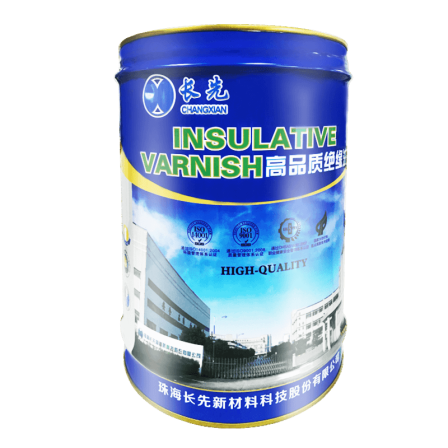
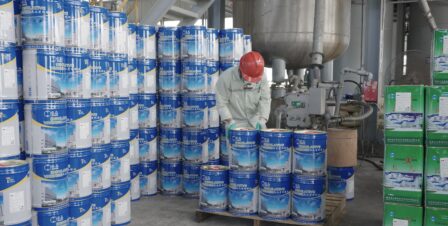
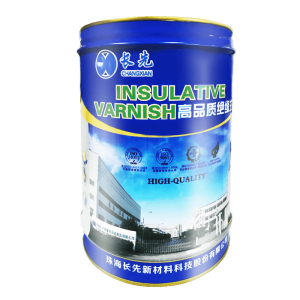
20 KG/pail; 200 KG/drum.
· Storage and Transportation:
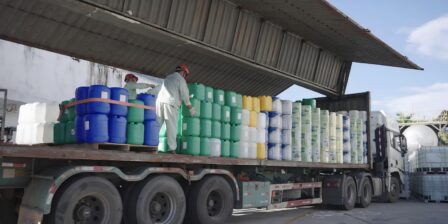
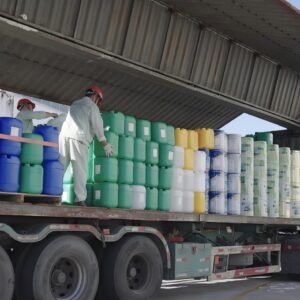
Keep away from ignition sources and heat. Handle and transport in accordance with applicable regulations.
Protect the varnish from sunlight and ultraviolet light during storage and use. Store in a cool, well-ventilated area below 40°C.
During use, avoid leaving the product sealed and undisturbed for prolonged periods. Gentle circulation or stirring helps extend storage life.
Viscosity may increase slightly during storage. Before use, adjust to the required application viscosity with the designated thinner.
· Shelf Life:
Six months when stored in sealed containers at temperatures below 40°C.
Please Note:
· As our products are continuously improved, the information in this manual may be updated from time to time without prior notice. Please feel free to contact our sales team for the latest version.
· Do not mix this product with other products.
· We strictly control product quality and supply products in accordance with applicable product standards. Custom products are supplied according to mutually agreed specifications. Application conditions vary and are beyond our control. You should therefore test and evaluate the product and the information provided in this manual, together with the recommended application procedures, to determine suitability for your specific use.