
E57C Baking Insulating Varnish for Transformer Impregnation
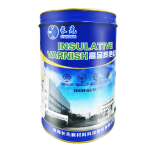
E57C is a solvent-based, heat-curing insulating varnish formulated with an alkyd-amino resin system. Designed for transformer impregnation and network transformer potting, it provides strong binding and is formulated to resist bubble formation during baking. The TDS lists B–F thermal classes and a dielectric strength of ≥70 kV/mm under normal conditions.
- Description
- Technical Data
- FAQ
Description
Product Overview:
E57C is an electrical insulating varnish that crosslinks during heating to form a bonded insulating structure. Its alkyd-amino resin system is designed to secure transformer components while providing electrical insulation.
For transformer impregnation, E57C combines binding performance with resistance to bubble formation during baking. This characteristic is useful when developing a process that requires both insulation and a consistent cured result. Actual bubble formation depends on application thickness, solvent removal, component geometry, and the heating schedule.
E57C is also suitable for network transformer potting. Its solvent-based formulation requires controlled filling depth and baking conditions to ensure effective solvent release and complete curing.
This pale yellow, transparent insulating varnish has a viscosity of 60–90 seconds at 25°C, measured with a Tu-4 cup. It is designed for Class B and Class F electrical insulation applications.
Key Features and Benefits:
· Heat-Activated Crosslinking: The alkyd-amino resin system crosslinks during baking to form an insulating structure.
· Strong Binding Performance: Helps secure components within impregnated transformer assemblies.
· Resistance to Bubble Formation During Baking: Formulated to reduce the tendency to form bubbles under suitable processing conditions.
· Transformer Impregnation and Potting Applications: Intended for transformer impregnation and network transformer potting, with processing conditions validated for the actual assembly.
· Electrical Insulation Performance: Specified dielectric strength is ≥70 kV/mm under normal conditions.
· Resistivity After Water Exposure: Volume resistivity is ≥1 × 10¹⁴ Ω·m under normal conditions and ≥1 × 10¹³ Ω·m after 24 hours of water immersion.
· Defined Oven-Drying Performance: On galvanized iron sheet at 120°C, the TDS reports surface drying in ≤30 minutes and through-drying in ≤120 minutes.
· Application Viscosity Adjustment: The specified X-7F and X-7H thinners allow viscosity adjustment according to the component and process requirements.
Typical Applications:
E57C insulating varnish is intended for:
· Transformer Impregnation: Insulation treatment and binding of transformer winding assemblies.
· Network Transformer Potting: Filling and insulation of network transformer assemblies using a validated application and baking process.
Select the dilution ratio, impregnation conditions, and potting depth according to the actual component design. Confirm compatibility with wire enamel, housings, and other insulation materials before production use.
Physical Properties:
| Item | Specification | |
| Varnish Properties | Appearance | Light yellow transparent liquid |
| Viscosity (25℃, Tu-4 Cup, s) | 60-90 | |
| Specific Gravity (25℃) | 0.98±0.03 | |
| Non-Volatile Content (120℃/2h, %) | 50±2 | |
| Drying Time (galvanized iron sheet) | Surface dry (120℃, min) | ≤30 |
| Full cure (120℃, min) | ≤120 | |
| Volume Resistivity | Normal state (Ω·m) | ≥1×10¹⁴ |
| After 24h Water Immersion (Ω·m) | ≥1×10¹³ | |
| Dielectric Strength | Normal State (kV/mm) | ≥70 |
| Thermal Class | Class B-F | |
| Matching Thinner | X-7F, X-7H | |
Technical Notes:
· Viscosity is expressed as cup flow time in seconds.
· Specific gravity is dimensionless.
· Volume resistivity is reported in Ω·m.
Application Guidance:
· Preparation and Thinning
Use the specified X-7F or X-7H thinner when viscosity adjustment is required. Determine the dilution ratio through trials based on component geometry, application method, and the required insulation result.
Confirm thinner selection and compatibility with the actual assembly materials before production use.
· Transformer Impregnation
Apply E57C electrical insulating varnish using an impregnation process suited to the transformer design. Establish application parameters through trials to achieve adequate penetration, component binding, and complete drying.
For densely wound assemblies, verify solvent removal and curing within the winding structure.
· Network Transformer Potting
Validate the filling depth and baking process using the actual network transformer assembly. Allow for solvent release during heating, and inspect trial components for bubbles, voids, and incomplete curing.
Adjust the potting depth and baking cycle to suit the component, allowing sufficient solvent release and complete curing.
· Reference Baking Conditions
| Test Substrate | Baking Temperature | Surface-Dry Time | Through-Dry Time |
|---|---|---|---|
| Galvanized iron sheet | 120°C | ≤30 min | ≤120 min |
These values are laboratory references. Actual drying and curing depend on varnish thickness, solvent retention, component size, airflow, and oven loading.
Account for the time required for the assembly to reach the target temperature. Confirm complete curing before electrical testing or service.
· Humidity Considerations
E57C may absorb moisture and develop a whitish appearance under high-humidity conditions. Performance remains unaffected after baking.
Control application humidity and verify the appearance and curing condition before accepting finished components.
Precautions:
· Determine the dilution ratio, baking temperature, and baking time experimentally based on product shape, size, and specific requirements.
· The product may absorb moisture and turn whitish under high humidity; performance remains unaffected after baking.
Packaging, Storage/Transport & Shelf Life:
· Packaging:
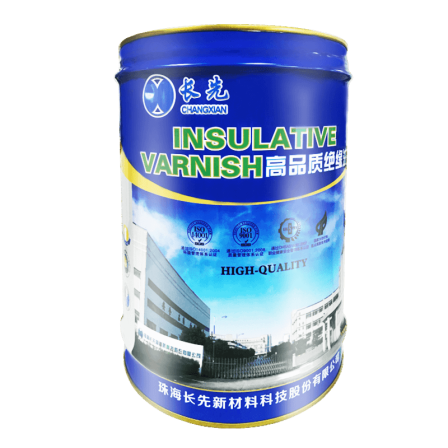
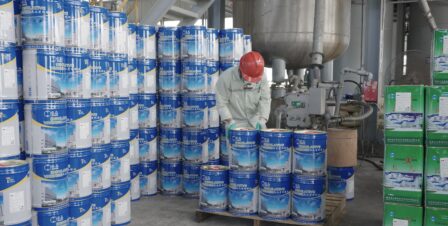
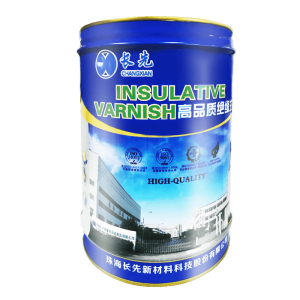
20 KG/pail; 200 KG/drum.
· Storage and Transportation:
Keep away from ignition sources and heat. Handle and transport in accordance with applicable regulations.
Protect the varnish from sunlight and ultraviolet light during storage and use. Store in a cool, well-ventilated area below 40°C.
During use, avoid leaving the product sealed and undisturbed for prolonged periods. Gentle circulation or stirring helps extend storage life.
Viscosity may increase slightly during storage. Before use, adjust to the required application viscosity with the designated thinner.
· Shelf Life:
Six months when stored in sealed containers at temperatures below 40°C.
Please Note:
· As our products are continuously improved, the information in this manual may be updated from time to time without prior notice. Please feel free to contact our sales team for the latest version.
· Do not mix this product with other products.
· We strictly control product quality and supply products in accordance with applicable product standards. Custom products are supplied according to mutually agreed specifications. Application conditions vary and are beyond our control. You should therefore test and evaluate the product and the information provided in this manual, together with the recommended application procedures, to determine suitability for your specific use.
Frequently Asked Questions About E57C Insulating Varnish
1. What is E57C insulating varnish used for?
E57C is an alkyd-amino electrical insulating varnish designed for transformer impregnation and network transformer potting. It crosslinks during heating to form a bonded insulating structure that helps secure transformer components.
Confirm compatibility with wire enamel, housings, and other insulation materials before production use.
2. Can E57C be used for network transformer potting?
Yes. The E57C TDS identifies network transformer potting as an intended application. Because the varnish contains solvents, the filling depth and baking process must allow adequate solvent release and complete curing.
The TDS does not specify a maximum potting depth or a dedicated potting cure schedule. Confirm these parameters with our technical team and validate them on actual assemblies, checking for bubbles, voids, and incomplete curing.
3. Does E57C help prevent bubbles during baking?
E57C is formulated to resist bubble formation during baking under suitable processing conditions. This supports transformer applications requiring consistent insulation and component binding.
Bubble formation still depends on application thickness, retained solvent, component geometry, and the heating schedule. Validate the process on representative components rather than assuming a bubble-free result at every filling depth.
4. What baking temperature and curing time does E57C require?
On galvanized iron sheet at 120°C, the E57C TDS reports surface drying in no more than 30 minutes and through-drying in no more than 120 minutes.
These sheet-test results do not establish a two-hour cure schedule for impregnated or potted transformers. Validate the actual baking cycle according to varnish thickness, solvent retention, component heating, airflow, and oven loading.
5. Can E57C cure at room temperature?
E57C is designed to crosslink during heating, and the supplied TDS provides oven-drying data at 120°C. It does not specify an ambient-temperature cure schedule.
Use a validated baking process and confirm complete curing throughout the assembly before electrical testing or service.
6. What is the thermal classification of E57C?
Changxian lists E57C as thermal class B–F. Confirm the applicable class for the intended transformer insulation system before selecting the product.
The listed classification does not automatically establish the operating temperature rating of every finished assembly. Thermal suitability depends on the complete insulation system and service conditions, and is separate from the baking temperature.
7. What electrical insulation performance does E57C provide?
E57C has a specified dielectric strength of at least 70 kV/mm and volume resistivity of at least 1 × 10¹⁴ Ω·m under normal conditions.
These material test values support insulation selection but do not directly establish a finished transformer’s allowable operating voltage. Assembly design, impregnation quality, and curing condition must also be evaluated.
8. How does E57C perform after water exposure?
E57C maintains a specified volume resistivity of at least 1 × 10¹³ Ω·m after the stated 24-hour water immersion test.
The supplied TDS does not report dielectric strength after water immersion. The resistivity result does not establish a waterproof rating or suitability for continuous underwater service.
9. Which thinner should be used with E57C?
Use the specified X-7F or X-7H thinner when adjusting E57C’s application viscosity. The supplied varnish has a specified flow time of 60–90 seconds at 25°C, measured with a Tu-4 cup.
Confirm thinner selection and determine the dilution ratio through trials based on component geometry, application method, and the required impregnation or filling result.
10. Why can E57C turn whitish during application?
E57C may absorb moisture and develop a whitish appearance under high-humidity conditions. The TDS states that performance is not affected after baking.
Control application humidity and verify the finished coating’s appearance and curing condition after the validated baking cycle.
11. What safety and compliance documents are available for E57C?
Our Insulating Varnish downloads section lists an MSDS, RoHS documentation, and a VOC content test report. Specify E57C when requesting documents so the applicable report or declaration and its product coverage can be confirmed.
The Thinners section separately lists RoHS documentation and a halogen content test report. Request documents for the exact X-7F or X-7H thinner used, and review them separately from the varnish documentation.
12. How is E57C packaged, and what is its shelf life?
E57C is supplied in 20KG and 200KG metal pails. The product has a stated shelf life of six months when kept sealed and stored below 40°C.
Store the varnish in a cool, dark, dry location away from fire and heat sources. E57C is flammable; follow the applicable safety data sheet for handling, storage, and transport.
13. What information should I provide when requesting an E57C quotation?
Specify whether the application is transformer impregnation or network transformer potting. Include assembly dimensions, winding and housing materials, intended filling depth where applicable, available baking conditions, and electrical insulation requirements.
For pricing and delivery, provide the required quantity, delivery destination, target delivery date, and any trial-material or compliance-document requirements.