
CX936-5 Water-Based Insulating Varnish for Transformers
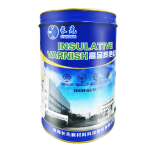
CX936-5 is a low-odor, low-VOC water-based insulating varnish formulated with modified epoxy resin. Particularly suited to high-frequency transformers, it combines strong adhesion, good wetting, and a smooth, flexible film. This Class B varnish supports atmospheric and vacuum impregnation of transformer and motor windings, with specified electrical performance after water and humid-heat exposure.
- Description
- Technical Data
- FAQ
Description
Product Overview:
CX936-5 is a waterborne epoxy insulating varnish designed for motor and transformer impregnation, with a particular emphasis on bonding performance in high-frequency transformers. Its modified epoxy formulation wets component surfaces and forms a smooth, flexible insulating film after proper drying and curing.
The product combines electrical insulation with mechanical bonding. Its specified bond force of ≥70 N, measured by the helical coil method under normal conditions, provides a reference for winding reinforcement. The TDS also specifies dielectric strength of ≥60 MV/m under normal conditions.
For applications exposed to humidity, CX936-5 retains at least 80% of its electrical strength after 48 hours at 50 ± 2°C and 90% relative humidity under the stated test conditions. This result provides useful selection data for manufacturers evaluating insulation performance in humid environments.
CX936-5 is rated Class B, with a stated use-temperature range of −45°C to 130°C. Suitability for the finished equipment depends on the complete insulation system, component design, and operating conditions.
The formulation uses water as its main carrier and is diluted with deionized water according to application requirements.
Key Features and Benefits:
· Designed for High-Frequency Transformers: Recommended for high-frequency transformer impregnation requiring strong bonding between components.
· Water-Based Modified Epoxy Formulation: Provides a water-dilutable option for motor and transformer insulation processes.
· Strong Winding Adhesion: Specified bond force is ≥70 N using the helical coil method under normal conditions, supporting evaluation of mechanical reinforcement.
· Good Wetting and Film Flexibility: Helps establish contact with component surfaces and forms a smooth, flexible film after drying and curing.
· Class B Heat Resistance: Rated Class B in the TDS, with a stated use-temperature range of −45°C to 130°C.
· Electrical Insulation Performance: Specified dielectric strength is ≥60 MV/m under normal conditions.
· Performance Under Humid Heat: Retains ≥80% of electrical strength after 48 hours at 50 ± 2°C and 90% relative humidity.
· Resistivity After Water Exposure: Volume resistivity is ≥1 × 10¹² Ω·m under normal conditions and ≥1 × 10¹⁰ Ω·m after two hours of water immersion.
· Low Odor and Low VOC: Described by Changxian as a low-odor, low-VOC formulation. Suitable ventilation remains necessary during application and baking.
· Atmospheric and Vacuum Impregnation Options: Supports process selection according to winding structure, component size, and production requirements.
Typical Applications:
CX936-5 insulating varnish is intended for:
· High-Frequency Transformers: Winding impregnation requiring electrical insulation and strong adhesion.
· Other Transformer Assemblies: Insulation treatment and bonding of suitable transformer coils.
· Electric Motor Windings: Impregnation where a waterborne epoxy formulation and oven-drying process are appropriate.
· Class B Electrical Winding Systems: Applications requiring compatible materials within a validated Class B insulation system.
· Water-Based Process Conversion Trials: Evaluation by manufacturers seeking to reduce organic thinner use in existing motor or transformer production.
Confirm compatibility with wire enamel, insulation paper, bobbins, metal surfaces, and other assembly materials before production use.
Physical Properties:
| Test Item | Test Condition | Unit | Specification |
| Appearance | Visual | — | Milky white liquid, free of mechanical impurities |
| Viscosity | Tu-4 Cup, 25±1℃ | S | 11-15 |
| Specific Gravity | 20℃ | 1.030±0.03 | |
| Solid Content | 1 g of varnish in an open aluminum box of 45mm×45mm×25mm, 125℃, 1h | % | 25±3 |
| Drying Time (tinplate) | 105℃ | min | Surface dry: 5-10 Full cure: ≤120 |
| Dielectric Strength | Normal state | MV/m | ≥60 |
| Bond Strength (helical coil method, normal state) | ≥70 N | ||
| Volume Resistivity | Normal state | Ω·m | ≥1×10¹² |
| After 2h water immersion | Ω·m | ≥1×10¹⁰ | |
| Humidity test (50℃±2℃, RH90%, after 48h) – Electric strength retention rate | ≥80% | ||
| Temperature Class | Class B | ||
| Operating Temperature | -45 to 130℃ | ||
Technical Notes:
· Viscosity is expressed as cup flow time in seconds.
· Specific gravity is dimensionless, and volume resistivity is reported in Ω·m.
· Bonding performance is reported as force in N, not stress in MPa.
Application Guidance:
· Preparation and Dilution
The TDS recommends the following reference dilution:
· CX936-5 : Deionized Water = 1 : 0.5–1
Adjust dilution according to workpiece size, geometry, and performance requirements. The document does not specify whether the ratio is by weight or volume; confirm the basis with our technical team before preparing a production batch.
Mix thoroughly and allow the prepared varnish to stand for approximately 20 minutes before use.
Additional water changes working viscosity, solids content, resin pickup, and drying requirements. Validate the chosen dilution on the actual component.
· Workpiece Preheating
Preheat the workpiece at approximately 100°C until it is heated throughout. Allow it to cool to 50–60°C before placing it in the varnish bath, as recommended in the TDS.
These temperatures refer to the workpiece, not a recommendation to heat the entire varnish bath to 50–60°C.
· Impregnation
| Application Method | Reference Impregnation Time |
|---|---|
| Atmospheric impregnation | 5–15 min |
| Vacuum impregnation | 3–8 min |
Select the method and duration according to winding construction and penetration requirements. The TDS does not specify a numerical vacuum setpoint; establish it with our technical team and validate it on the actual assembly.
After impregnation, allow a standing period of 15–30 minutes before baking.
· Reference Baking Options
| Baking Option | Temperature | Reference Time |
|---|---|---|
| Single-stage option 1 | 90–95°C | 3–4 h |
| Single-stage option 2 | 110°C | 2–3 h |
| Preferred staged cycle: stage 1 | 80–90°C | 1 h |
| Preferred staged cycle: stage 2 | 100–120°C | 2–3 h |
For the staged cycle, complete stage 1 followed by stage 2.
Determine the final schedule through trials based on component shape, size, equipment conditions, and required degree of cure. Provide suitable airflow and exhaust for removal of water and other volatile components.
Do not release components based only on surface dryness. Verify drying and curing within the winding assembly before electrical testing or service.
· Bath and Process Management
Prevent contamination by unknown substances, other varnishes, or foreign matter. Maintain consistent dilution and mixing practices, and follow first-in, first-out stock rotation.
When converting from a solvent-based varnish, assess tank cleanliness, equipment compatibility, resin pickup, and oven performance before changing over production.
Water-Based vs. Solvent-Based Insulating Varnish Advantages and Limitations:
Water-based and solvent-based insulating varnishes can both provide electrical insulation and mechanical bonding. The main differences concern their liquid carriers, emissions, handling requirements, drying behavior, and compatibility with the production process.
Waterborne electrical insulation formulations can reduce VOC emissions and fire risk compared with conventional solvent-based products. However, the extent of these benefits depends on the specific formulation; water-based does not automatically mean solvent-free or zero-VOC. Axalta: Waterborne Impregnating Resins.
| Comparison Factor | Water-Based Insulating Varnish | Solvent-Based Insulating Varnish |
|---|---|---|
| VOC and odor | Often reduces organic-solvent emissions and odor. Some formulations, including CX936-5, still contain co-solvents. | Often produces more organic-solvent vapor and odor. Actual emissions depend on the solvent blend and processing conditions. |
| Fire risk | Water-rich formulations can reduce liquid-handling fire risk. Product-specific safety data remain necessary. | Many formulations are flammable and require controls for ignition sources, vapor accumulation, and static electricity. |
| Dilution | Uses water when specified; deionized water may be required. Dilution and water quality must be controlled. | Requires a compatible organic thinner. Incorrect thinner selection can affect stability, drying, or material compatibility. |
| Drying | Requires effective water removal. Airflow, temperature, humidity, and winding geometry influence the drying cycle. | Requires solvent removal. Some grades air-dry, while others need baking; surface dryness does not ensure complete internal drying. |
| Wetting and adhesion | Well-formulated products can provide effective wetting and strong bonding. CX936-5 specifies ≥70 N by the helical coil method. | Can also provide effective wetting and bonding. Results depend on resin chemistry, substrate condition, and curing. |
| Electrical performance | Can provide strong insulation after complete drying and curing. Retained moisture and contamination must be controlled. | Can provide strong insulation, but retained solvent and incomplete curing can impair performance. |
| Heat and moisture resistance | Determined by the cured resin and insulation system. Water as the carrier does not automatically mean poor moisture resistance after curing. | Also formulation-dependent. A solvent carrier does not automatically provide a higher thermal class or better water resistance. |
| Storage and bath control | Requires attention to temperature limits, contamination, water quality, and formulation stability. | Requires attention to flammability, solvent loss, viscosity drift, and formulation stability. |
| Cleanup and waste | May reduce organic cleaning-solvent use, but wash water containing resin and additives still requires treatment. | Cleaning often uses compatible solvents, adding solvent handling and waste-management requirements. |
| Conversion and operating cost | May reduce organic thinner use, but drying capacity, water quality, equipment changes, and wastewater treatment must be included. | May fit an established solvent-based line with fewer changes, but thinner use, ventilation, fire controls, and waste handling contribute to cost. |
Temperature and humidity are recognized processing considerations for waterborne coatings. Their effect should be evaluated on the actual production line rather than assuming a fixed drying advantage for either system. U.S. EPA: Pollution Prevention in the Paints and Coatings Industry
Main Advantages of Water-Based Insulating Varnish
· Potentially lower VOC emissions and workplace odor.
· Reduced reliance on organic solvent thinners.
· Potentially lower liquid-handling fire risk.
· Suitable formulations can deliver strong adhesion and electrical insulation.
Main Limitations of Water-Based Insulating Varnish
· Requires effective water removal, particularly within dense windings.
· Dilution and water quality can affect processing consistency.
· Conversion may require changes to equipment cleaning and drying cycles.
· Lower solvent use does not automatically mean lower total production cost.
Main Advantages of Solvent-Based Insulating Varnish
· Can fit established solvent-based coating and impregnation processes.
· Offers a range of air-drying and baking formulations.
· Can provide effective wetting, bonding, and insulation when correctly selected.
· May avoid some water-carrier compatibility concerns in sensitive assemblies.
Main Limitations of Solvent-Based Insulating Varnish
· Many formulations introduce flammable vapors and stronger odor.
· Requires compatible thinners and appropriate exposure controls.
· Solvents may affect plastics, wire enamel, or other assembly materials.
· Solvent removal, emissions, and waste handling add process requirements.
How CX936-5 Fits the Selection
CX936-5 is particularly relevant when a manufacturer needs a water-based insulating varnish for high-frequency transformers and values documented bonding and humid-heat performance. Its TDS provides three useful evaluation points: ≥70 N bond force, ≥60 MV/m dielectric strength, and ≥80% electrical strength retention after 48 hours at 50 ± 2°C and 90% RH.
These results support application testing but do not establish superiority over a solvent-based varnish tested under different conditions. Compare candidates using the same component, dry resin pickup, conditioning, and acceptance criteria.
For a production decision, evaluate penetration, adhesion, electrical performance, drying time, reject rate, and cost per accepted component. CX936-5 should be selected where its Class B rating and validated water-based process meet the finished equipment’s requirements.
Precautions:
· Determine the dilution ratio, baking temperature, and baking time experimentally based on product shape, size, and specific requirements.
· The product may absorb moisture and turn whitish under high humidity; performance remains unaffected after baking.
Packaging, Storage/Transport & Shelf Life:
· Packaging:
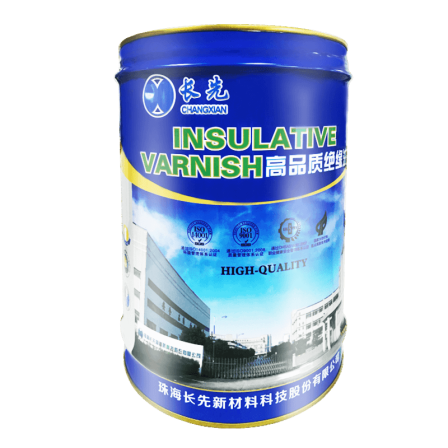
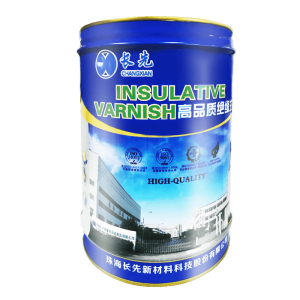
20 KG/pail; 200 KG/drum.
· Storage and Transportation:
Keep away from ignition sources and heat. Handle and transport in accordance with applicable regulations.
Protect the varnish from sunlight and ultraviolet light during storage and use. Store in a cool, well-ventilated area below 40°C.
During use, avoid leaving the product sealed and undisturbed for prolonged periods. Gentle circulation or stirring helps extend storage life.
Viscosity may increase slightly during storage. Before use, adjust to the required application viscosity with the designated thinner.
· Shelf Life:
Six months when stored in sealed containers at temperatures below 40°C.
Please Note:
· As our products are continuously improved, the information in this manual may be updated from time to time without prior notice. Please feel free to contact our sales team for the latest version.
· Do not mix this product with other products.
· We strictly control product quality and supply products in accordance with applicable product standards. Custom products are supplied according to mutually agreed specifications. Application conditions vary and are beyond our control. You should therefore test and evaluate the product and the information provided in this manual, together with the recommended application procedures, to determine suitability for your specific use.
Frequently Asked Questions About CX936-5 Insulating Varnish
1. What is CX936-5 insulating varnish used for?
CX936-5 is a waterborne modified epoxy insulating varnish designed for high-frequency transformers, other transformer coils, and motor windings. It provides electrical insulation and mechanical bonding after proper drying and curing.
The TDS specifically recommends it for high-frequency transformer impregnation where winding adhesion is important. Confirm compatibility with wire enamel, insulation paper, bobbins, and other assembly materials before production use.
2. How strong is the winding bond provided by CX936-5?
CX936-5 has a specified bond force of at least 70 N, measured using the helical coil method under normal conditions. This provides reference data for evaluating reinforcement of impregnated winding assemblies.
Actual bonding depends on material compatibility, varnish penetration, resin pickup, dilution, and curing.
3. What is the thermal class of CX936-5?
CX936-5 is rated Class B, with a stated use-temperature range of −45°C to 130°C.
Suitability for finished equipment depends on the complete insulation system, component design, and operating conditions. The listed range does not independently establish the operating temperature rating of every impregnated motor or transformer.
4. Is CX936-5 solvent-free or zero-VOC?
CX936-5 uses water as its main carrier but also contains co-solvents. Changxian describes it as low odor and low VOC; it should not be described as solvent-free or zero-VOC.
5. How should CX936-5 be diluted?
The TDS gives a reference ratio of one part CX936-5 to 0.5–1 part deionized water. It does not specify whether this ratio is by weight or volume, so confirm the basis with our technical team before preparing a production batch.
Mix thoroughly and allow the prepared varnish to stand for approximately 20 minutes before use. Validate dilution on the actual component because additional water changes viscosity, working solids content, resin pickup, and drying requirements.
6. Does CX936-5 support atmospheric and vacuum impregnation?
Yes. CX936-5 supports atmospheric impregnation with a reference duration of 5–15 minutes and vacuum impregnation with a reference duration of 3–8 minutes.
Select the method and duration according to winding construction and penetration requirements. The TDS does not specify a numerical vacuum setpoint; confirm it with our technical team. After impregnation, allow a standing period of 15–30 minutes before baking.
7. Should components be preheated before impregnation with CX936-5?
The TDS recommends preheating the workpiece at approximately 100°C until heated throughout, then allowing it to cool to 50–60°C before immersion.
These temperatures refer to the workpiece, not the varnish bath. Validate the heating and cooling procedure for the actual transformer or motor assembly.
8. What baking schedule is recommended for CX936-5?
The preferred reference schedule is a staged cycle: 80–90°C for one hour, followed by 100–120°C for two to three hours.
The TDS also provides single-stage alternatives of 90–95°C for three to four hours or 110°C for two to three hours. Validate the selected cycle for component size, winding geometry, oven loading, and removal of water and other volatile components. Confirm internal drying and curing before electrical testing or service.
9. Do the reported tinplate drying times apply to complete transformers?
No. CX936-5’s reported surface-dry time of 5–10 minutes and full-cure time of no more than 120 minutes at 105°C were measured on tinplate.
These values do not establish a curing schedule for an impregnated transformer or motor. Complete winding assemblies require a validated process that accounts for component heating and internal moisture removal.
10. What electrical insulation performance does CX936-5 provide?
CX936-5 has a specified dielectric strength of at least 60 MV/m, equivalent to 60 kV/mm, and volume resistivity of at least 1 × 10¹² Ω·m under normal conditions.
These values describe the processed insulating material, not the wet varnish. Evaluate finished components after complete drying and curing, using the electrical requirements of the intended assembly.
11. How does CX936-5 perform in humid conditions?
CX936-5 retains at least 80% of its electrical strength after 48 hours at 50 ± 2°C and 90% relative humidity under the stated test conditions.
In a separate two-hour water immersion test, its specified volume resistivity is at least 1 × 10¹⁰ Ω·m. These results support evaluation for moisture exposure but do not establish a waterproof rating or suitability for continuous underwater service.
12. Can CX936-5 replace a solvent-based transformer varnish?
CX936-5 can be evaluated as a water-based alternative where its Class B rating, bonding performance, and electrical properties meet the application requirements.
Before changing production, assess tank cleanliness, equipment compatibility, dilution control, penetration, cured resin pickup, and oven performance. Compare candidates on the same components and acceptance criteria, including drying time and cost per accepted assembly.
13. Are RoHS and REACH documents available for CX936-5?
The product’s download section lists RoHS and REACH documentation, an MSDS, a VOC content test report, and a halogen content test report.
14. How is CX936-5 packaged, and what is its shelf life?
CX936-5 is supplied in 20KG and 200KG metal pails. The product has a stated shelf life of six months when kept sealed and stored below 40°C.
Store the varnish in a cool, dark, dry location, prevent contamination, and follow first-in, first-out stock rotation. Consult the applicable MSDS for handling, storage, and transport requirements.
15. What information should I provide when requesting a CX936-5 quotation?
Include your transformer or motor type, winding materials, required thermal class, impregnation method, and available baking conditions. For high-frequency transformer applications, also describe your bonding and humidity-performance requirements.
Provide the required quantity, delivery destination, target delivery date, and any trial-material or compliance-document requirements so the relevant documentation, availability, and lead time can be confirmed.