
E57-81 Class H Solventless Polyester Insulating Varnish for Motors & Transformers
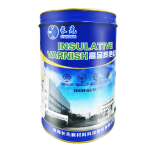
E57-81 is a single-component, solvent-free insulating varnish based on heat-resistant modified unsaturated polyester resin. Designed for vacuum and atmospheric impregnation of motors, dry-type transformers, and reactors, it combines strong adhesion, good penetration, and moisture-resistant electrical performance. Its Class H formulation also offers thermal shock resistance and refrigerant resistance.
- Description
- Technical Data
- FAQ
Description
Product Overview:
E57-81 is a heat-curing electrical insulating varnish formulated with modified unsaturated polyester resin, reactive diluent, stabilizers, and additives. It penetrates winding assemblies and forms a bonded insulating structure after curing, providing electrical insulation and mechanical reinforcement.
Strong adhesion between winding and insulation components helps reduce electromagnetic vibration and associated noise. A degree of flexibility in the cured film helps accommodate differential thermal expansion between metal and insulating materials, reducing stress on the winding assembly during temperature changes.
This solvent-free insulating varnish is suitable for vacuum and atmospheric impregnation processes. Its combination of moisture resistance, mold resistance, and refrigerant resistance supports applications in motors, generators, transformers, and other electrical equipment.
E57-81 is a Class H insulating resin designed for electrical insulation applications requiring heat resistance up to 180°C.
Key Features and Benefits:
· Class H Heat Resistance: Designed for electrical winding applications requiring elevated-temperature insulation performance.
· Single-Component Formulation: Simplifies preparation without a separate two-component resin and hardener mixing step.
· Strong Adhesion and Winding Reinforcement: Helps secure winding components and reduce electromagnetic vibration and associated noise.
· Good Penetration: Supports impregnation of winding assemblies through vacuum and atmospheric processes.
· Electrical Performance After Water Exposure: Specified dielectric strength is ≥22 MV/m under normal conditions and ≥20 MV/m after 24 hours of water immersion.
· Moisture and Mold Resistance: Supports insulation applications where humidity resistance is an important selection requirement.
· Thermal Shock Resistance: Cured-film flexibility helps accommodate movement caused by temperature changes and differences in material expansion.
· Refrigerant Resistance: Offers excellent refrigerant resistance in a 96-hour test. Verify compatibility with the refrigerant used in your application.
· Heat-Activated Curing: A specified gel time of 6 ± 3 minutes at 140 ± 2°C indicates gel formation under the stated laboratory conditions. Full curing requires the appropriate baking cycle.
Typical Applications:
E57-81 insulating varnish is intended for vacuum and atmospheric impregnation of:
· Dry-Type Power Transformers: Winding insulation and bonding of transformer components.
· Electrical Reactors: Impregnation of coils requiring electrical insulation and mechanical support.
· Electric Vehicle Motors: Winding insulation for new energy vehicle motor applications.
· Large Generators: Insulation treatment of generator winding assemblies.
· Hoisting and Crane Motors: Impregnation of motor windings used in lifting equipment.
· Inverter-Duty Motors: Insulation treatment of windings in variable-frequency motor systems.
· Refrigerant-Resistant Motors and Electrical Equipment: Applications requiring compatibility with the intended refrigerant environment.
Verify suitability using the actual winding materials, operating conditions, and complete insulation system before production use.
Physical Properties:
The following properties of E57-81 insulating varnish were tested according to GB/T 15022.2-2017.
| Test Item | Specification |
| Appearance: | Pale yellow to light brown transparent liquid, free of mechanical impurities |
| Viscosity: Ford Cup No.4 viscometer, 23±2℃ (s) | 45±15 |
| Density: (g/cm³) at 25℃ | 1.05±0.03 |
| Gel time: Test tube method, 140±2℃ (min) | 6±3 |
| Thick-layer curing capability: 140±5℃, ≥2h | S₁, U₁, I₂.₁ |
| Dielectric strength: (MV/m)Normal state: After 24h water immersion: |
≥ 22 ≥ 20 |
| Volume resistivity: (Ω·m)Normal state: After 24h water immersion: |
≥ 1×10¹³ ≥ 1×10¹² |
| Refrigerant resistance: 96h | Excellent |
| Storage stability: (Closed cup method) 75±2℃, 24h (no gelation) | Pass |
| (1) The storage life of this product is 6 months. (2) Curing conditions for items 6 and 7: 140±5℃ for 6h. (3) Reactive diluent: X-68. | |
Technical Notes:
· Specimens for dielectric strength and volume resistivity testing were cured at 140 ± 5°C for 6 hours.
· Viscosity is expressed as cup flow time in seconds, not dynamic viscosity in mPa·s.
· Volume resistivity is reported in Ω·m.
Application Guidance:
· Working Viscosity
Select the working viscosity according to component size, winding structure, and impregnation requirements. Reference ranges:
| Application Category | Reference Working Viscosity |
|---|---|
| General applications | 20–40 s |
| Applications with higher performance requirements | 45 ± 15 s |
| Small electrical components | 12–18 s |
Confirm measurement conditions and the viscosity adjustment procedure with our technical team. Use the specified X-68 reactive diluent according to our TDS instructions.
· Reference Impregnation and Curing Process
| Process Step | Reference Temperature | Reference Time |
|---|---|---|
| Workpiece preheating | 110–120°C | 2–4 h |
| Impregnation | 40–50°C | 15–30 min |
| Draining | Not specified | 20–40 min |
| Oven curing | 145–150°C | 4–8 h |
For applications with higher performance requirements, recommends extending the baking time by 2–10 hours or using an alternative schedule of 160°C for 8 hours.
These parameters are starting points for process development. Validate the cycle using the actual component geometry, thermal mass, impregnation equipment, and required insulation performance.
Laboratory gel time must not be used as the full curing time. Confirm complete curing throughout the winding assembly before electrical testing or service.
· Impregnation Bath Maintenance
For continuous operation, recommends adding more than 10% fresh insulating resin approximately monthly, with the interval adjusted to actual use. Confirm the replenishment basis with our technical team.
Filter the resin regularly during prolonged use and monitor its condition to maintain a consistent impregnation process.
Precautions:
· Determine the dilution ratio, baking temperature, and baking time experimentally based on product shape, size, and specific requirements.
· The product may absorb moisture and turn whitish under high humidity; performance remains unaffected after baking.
Packaging, Storage/Transport & Shelf Life:
· Packaging:
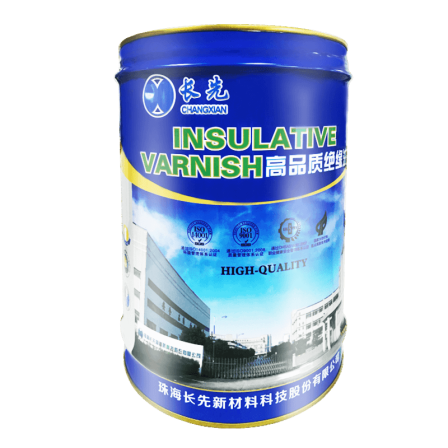
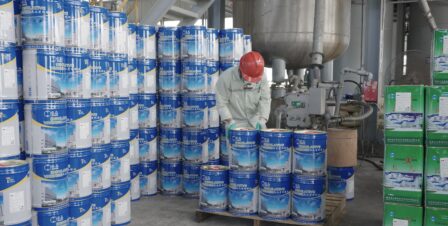
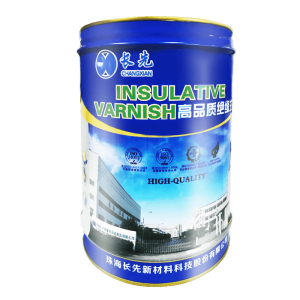
20 KG/pail; 200 KG/drum.
· Storage and Transportation:
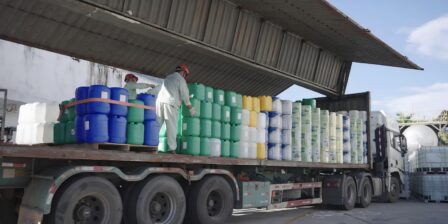
Keep away from ignition sources and heat. Handle and transport in accordance with applicable regulations.
Protect the varnish from sunlight and ultraviolet light during storage and use. Store in a cool, well-ventilated area below 40°C.
During use, avoid leaving the product sealed and undisturbed for prolonged periods. Gentle circulation or stirring helps extend storage life.
Viscosity may increase slightly during storage. Before use, adjust to the required application viscosity with the designated thinner.
· Shelf Life:
Six months when stored in sealed containers at temperatures below 40°C.
Please Note:
· As our products are continuously improved, the information in this manual may be updated from time to time without prior notice. Please feel free to contact our sales team for the latest version.
· Do not mix this product with other products.
· We strictly control product quality and supply products in accordance with applicable product standards. Custom products are supplied according to mutually agreed specifications. Application conditions vary and are beyond our control. You should therefore test and evaluate the product and the information provided in this manual, together with the recommended application procedures, to determine suitability for your specific use.
Frequently Asked Questions About E57-81 Insulating Varnish
1. What is E57-81 insulating varnish used for?
E57-81 is a single-component, heat-curing modified unsaturated polyester insulating varnish for electrical winding impregnation. Typical applications include dry-type power transformers, reactors, electric vehicle motors, large generators, crane motors, and inverter-duty motors.
It provides electrical insulation and mechanical reinforcement after curing. Compatibility with winding materials and the complete insulation system should be verified before production use.
2. What is the thermal class of E57-81?
Changxian identifies E57-81 as a Class H insulation resin. It is intended for winding applications requiring elevated-temperature insulation performance.
The finished equipment’s operating temperature rating depends on the complete insulation system and service conditions. The thermal classification should not be confused with the oven temperature used to cure the varnish.
3. Does E57-81 require a separate hardener?
E57-81 is supplied as a single-component formulation and does not require a separate two-component resin and hardener mixing step. It cures through heating under a validated baking cycle.
If viscosity adjustment is needed, use the specified X-68 reactive diluent according to our TDS instructions.
4. Does solvent-free E57-81 mean zero VOC or nonflammable?
No. E57-81 is described as solvent-free but contains a reactive diluent. This designation does not establish zero VOC content, zero processing emissions, or nonflammability.
The supplied handling guidance identifies E57-81 as flammable. Consult the applicable MSDS and VOC content test report, and provide appropriate ventilation during impregnation and curing.
5. Can E57-81 be used for vacuum and atmospheric impregnation?
Yes. E57-81 supports both vacuum and atmospheric impregnation of suitable winding assemblies.
The TDS gives a reference impregnation condition of 40–50°C for 15–30 minutes, followed by draining for 20–40 minutes. Confirm temperature measurement points and equipment settings with our technical team, and validate penetration on the actual winding design.
6. What curing temperature and time are recommended for E57-81?
The reference production process specifies oven curing at 145–150°C for 4–8 hours. It also includes workpiece preheating at 110–120°C for 2–4 hours before impregnation.
For higher performance requirements, the TDS recommends extending baking by 2–10 hours or using an alternative schedule of 160°C for eight hours. Select the cycle together with our engineers and validate it against component geometry, thermal mass, oven loading, and material temperature limits.
7. Does E57-81 fully cure in six minutes?
No. The specified gel time of 6 ± 3 minutes at 140 ± 2°C describes gel formation under laboratory conditions, not complete curing of an impregnated winding.
Likewise, the thick-layer curing test at 140 ± 5°C for at least two hours is a separate material test. Use a validated assembly baking cycle and confirm complete internal curing before electrical testing or service.
8. What working viscosity should be used for E57-81?
The supplied E57-81 varnish has a specified flow time of 45 ± 15 seconds, measured with a Ford No. 4 cup at 23 ± 2°C.
The TDS gives working-viscosity references of 20–40 seconds for general applications, 45 ± 15 seconds for higher performance requirements, and 12–18 seconds for small electrical components. Confirm the measurement conditions for these working ranges and adjust only with the specified X-68 reactive diluent.
9. How does E57-81 help reduce winding vibration and noise?
E57-81 bonds winding and insulation components after curing, helping limit movement associated with electromagnetic vibration and noise.
Its cured-film flexibility also helps accommodate differences in thermal expansion between metal and insulating materials. Actual performance depends on assembly design, varnish penetration, material compatibility, and curing quality.
10. What electrical insulation and moisture resistance does E57-81 provide?
E57-81 has specified dielectric strength of at least 22 MV/m under normal conditions and at least 20 MV/m after 24 hours of water immersion. These values are equivalent to 22 kV/mm and 20 kV/mm, respectively.
Specified volume resistivity is at least 1 × 10¹³ Ω·m under normal conditions and at least 1 × 10¹² Ω·m after 24 hours of water immersion. The electrical test specimens were cured at 140 ± 5°C for six hours. These results do not establish suitability for continuous underwater service.
11. Is E57-81 suitable for refrigerant-resistant motor applications?
The E57-81 TDS rates refrigerant resistance as “Excellent” after a 96-hour test. This makes it a candidate for electrical equipment requiring refrigerant compatibility.
However, the supplied TDS does not identify the refrigerant or detailed acceptance criteria. Confirm the test medium and evaluate compatibility with the intended refrigerant, lubricant, and operating conditions before selection.
12. How should an E57-81 impregnation bath be maintained?
Filter the resin regularly during prolonged use and monitor its condition to maintain consistent impregnation performance.
For continuous operation, the TDS recommends adding more than 10% fresh resin approximately monthly, with the interval adjusted to actual usage. Confirm the percentage basis and replenishment procedure with our technical team before adopting this practice.
13. What safety and compliance documents are available for E57-81?
Our Insulating Varnish downloads section lists an MSDS, RoHS documentation, and a VOC content test report. Specify E57-81 when requesting documents so the applicable report or declaration and its product coverage can be confirmed.
The Thinners section separately lists RoHS documentation and a halogen content test report.
14. How is E57-81 packaged, and what is its shelf life?
E57-81 is supplied in 20KG and 200KG metal pails. The product has a stated shelf life of six months when kept sealed and stored below 40°C.
Keep it away from fire and heat sources and follow the applicable MSDS. The accelerated storage-stability test at 75 ± 2°C for 24 hours is a laboratory test, not a recommended storage condition.
15. What information should I provide when requesting an E57-81 quotation?
Include your equipment type, winding materials, required thermal class, impregnation method, and available curing conditions. For refrigerant-exposed equipment, specify the refrigerant, lubricant, and service conditions.
Provide the required quantity, delivery destination, target delivery date, and any requirements for X-68 reactive diluent, trial material, or compliance documents.