Motor Winding Varnish Selection Guide: A Data-Based Framework from Five Production Varnishes
Abstract: Choosing the wrong motor winding varnish is one of the leading causes of premature motor winding failure. This article first analyzes the typical failure modes caused by misselection and their root causes, then establishes a three-dimensional selection framework — thermal class × impregnation process × chemistry — based on the technical data sheets (TDS) and UL certification files of five production varnishes covering alkyd-amino, modified polyester, solventless epoxy-polyester, unsaturated polyester, and waterborne epoxy systems. All parameters are cited with measured values and can be independently verified.
1. What Happens When Selection Goes Wrong: Failure Modes and Root Causes
A motor winding varnish rarely fails because the product itself is “defective” — more often, the varnish specification is misaligned with the motor’s actual operating conditions. Four typical mismatches and their consequences:
① Underestimated thermal class → accelerated thermal aging Thermal aging of insulating materials follows the Arrhenius law. The industry rule of thumb: for every ~10°C the operating temperature exceeds the insulation class limit, insulation life is roughly halved. If a motor designed for Class F (155°C) is impregnated with a Class B (130°C) varnish, the winding insulation may harden, crack and delaminate within thousands of hours instead of the expected years. Motors for new-energy vehicles and variable-frequency drives are frequent victims of thermal class misselection, because compact design and harmonic heating cause real temperature rise to be underestimated.
② Mismatched impregnation process → poor filling and air voids When varnish viscosity and gel time do not match the impregnation process, the winding interior cannot be fully filled. Residual air voids cause two problems: in high-voltage motors, partial discharge occurs inside the voids and progressively carbonizes the insulation; and the voids block heat transfer — air has a thermal conductivity of only ~0.026 W/(m·K), versus ≥0.4 W/(m·K) for a cured solventless varnish. Filling rate directly determines motor temperature rise. A typical mistake is using a high-solids solvent-borne varnish on a VPI line, where volatiles blister under vacuum.
③ Insufficient bond strength → vibration abrasion Motor windings endure continuous electromagnetic vibration and rotor centrifugal force. When the varnish’s bond strength is inadequate, turns loosen and abrade against each other; once the enameled wire film is worn through, turn-to-turn short circuits follow. Measured by the helical coil method, the solventless varnish tested here delivers ≥140 N at ambient temperature and retains ≥50 N at 180°C — hot-state bond strength is the figure that matters for high-speed, high-temperature motors. Room-temperature data does not represent running conditions.
④ Mismatched environmental protection → moisture uptake and chemical attack In humid environments, moisture uptake can drop a film’s volume resistivity by orders of magnitude, leading to leakage and electrolytic erosion. In refrigerant-cooled motors, a general-purpose varnish will swell and peel under refrigerant exposure. The varnishes tested here retain volume resistivity ≥1×10¹² Ω·m after 24 h water immersion (E57-89H, E57-81H), and E57-81H achieves an “excellent” rating in 96 h refrigerant resistance testing — these properties exist only in purpose-designed grades, not in general-purpose varnishes.
Root-cause summary: All four failures trace back to misaligned selection criteria — selecting by price instead of thermal class, by room-temperature data instead of hot-state data, and by nominal performance instead of compatibility with the process and materials. The framework below is built specifically against these three misalignments.
2. The Four Functions of Winding Impregnation
The role of motor winding varnish goes beyond electrical insulation. The full functional set:
- Electrical insulation — fills winding gaps and raises turn-to-turn and turn-to-ground dielectric strength (ambient electric strength of the tested varnishes: 22–70 MV/m);
- Heat conduction — displaces air trapped in the winding (air: ~0.026 W/(m·K)); the tested solventless varnish reaches ≥0.4 W/(m·K), directly reducing motor temperature rise;
- Mechanical securing — bonds the winding after cure against electromagnetic vibration and centrifugal force (helical coil bond strength of the tested varnish: ≥140 N ambient, ≥50 N at 180°C);
- Environmental protection — blocks moisture, dust and chemical media; volume resistivity remains ≥1×10¹² Ω·m after 24 h water immersion (measured on E57-89H and E57-81H).
3. Selection Dimension 1: Thermal Class
Thermal class is the first constraint when selecting a motor winding varnish, and it should follow the design temperature of the motor’s insulation system(IEC 60085). Coverage across the five tested varnishes:
4. Selection Dimension 2: Impregnation Process
Different impregnation processes impose different requirements on a motor winding varnish:
| Process | Typical Use | Requirements on the Varnish | Suitable Models |
| Atmospheric dip | Small/medium batches, repair shops | Low viscosity, good penetration | E57-81H, E57-89H, E962 |
| Vacuum pressure impregnation (VPI) | Medium/large, high-voltage, wind-power and marine motors | Solventless; qualified thick-layer cure; storage stability | E57-89H (thick-layer cure no worse than S1-U1-I2.2; storage thickening coefficient <20% at 60°C/96h) |
| Trickle impregnation | Universal motors, power tool rotors, flow lines | Controllable gel time | E57-89H (gel time 5–15 min at 120°C) |
| Air-dry / fast-dry coating | Field repair, no oven available | Air-drying capability | E962 (tack-free 10–15 min at 25°C), E962F (low-odor air-drying) |
| Baking cure | Volume production | Wide curing window | E57A (alkyd-amino baking system), E57-89H (cure ≥2h at 135–150°C) |
5. Selection Dimension 3: Chemistry and Environmental Constraints
| System | Representative Models | Strengths | Limitations |
| Solvent-borne (alkyd-amino / polyester) | E57A, E962 | Mature process, low cost; E962 is solder-through and air-drying | Contains volatile solvents; ventilation and explosion-proofing required |
| Solventless | E57-89H, E57-81H | Theoretical VOC = 0; flash point >96°C, non-flammable and non-explosive; good penetration and thermal conductivity | Requires heated curing equipment |
| Waterborne | CX936 | Low odor, low VOC; non-flammable and non-explosive; rust-preventive | Lower solids (20±2%); drying energy higher than solventless systems |
For motor products exported to the EU and North America subject to VOC and EHS review, the solventless (E57-89H) and waterborne (CX936) systems directly meet RoHS, REACH and halogen-free requirements.
6. Measured Electrical and Physical Data of the Five Models
| Parameter | E57-89H | E57-81H | E57A | E962 | CX936 |
| Electric strength (ambient) | ≥24 MV/m | ≥22 MV/m (cured 140°C×6h) | ≥60 kV/mm | ≥40 kV/mm | ≥70 MV/m |
| Electric strength (after 24h water immersion) | ≥22 MV/m | ≥20 MV/m | — | ≥30 kV/mm | — |
| Electric strength (hot state) | ≥20 MV/m (155°C) | — | — | — | — |
| Volume resistivity (ambient) | ≥1×10¹³ Ω·m | ≥1×10¹³ Ω·m | ≥1×10¹⁴ Ω·m | ≥1×10¹⁴ Ω·cm | ≥1×10¹² Ω·m |
| Volume resistivity (after water immersion) | ≥1×10¹² Ω·m (24h) | ≥1×10¹² Ω·m (24h) | ≥1×10¹³ Ω·m (24h) | ≥1×10¹³ Ω·cm (24h) | ≥1×10¹¹ Ω·m (2h) |
| Bond strength (helical coil method) | ≥140 N ambient; ≥50 N at 180°C | — | — | — | — |
| Thermal conductivity | ≥0.4 W/(m·K) | — | — | — | — |
| Viscosity (Tu-4 cup, 25°C) | 40–80 s | — | 40–60 s | 40–60 s | 11–15 s |
| Non-volatile content | 100% (solventless) | Solventless | 45–55% | 40±2% | 20±2% |
| Special properties | High heat distortion temperature | Refrigerant resistant (96h, excellent); moisture and mildew resistant | Fast through-drying, good securing | Solder-through; dielectric constant 2.7 | Wetting and rust-preventive; non-flammable |
Note: “—” means the item is not listed in that model’s TDS. E962 volume resistivity is expressed in Ω·cm while the others use Ω·m — mind the unit conversion when comparing.
7. Selection Recommendations by Application Scenario
- Motor repair shops (on-site rewinding): Rewinding involves small batches, mixed specifications, and usually no large ovens. Without baking equipment, choose the air-drying E962; with a small oven available, the baking-type E57A delivers more complete through-drying of the film.
- New-energy vehicle motors, variable-frequency motors, refrigerant-resistant compressor motors: These motors run hot under severe duty; compressor motors must also withstand refrigerant attack. Choose Class H E57-81H (refrigerant resistance 96h, rated excellent) or Class H–C E57-89H.
- Wind-power, nuclear, marine motors and large generators: Large windings, long design life, demanding hot-state performance, typically on VPI lines. Choose E57-89H with VPI processing; its hot-state electric strength (≥20 MV/m at 155°C) and hot-state bond strength (≥50 N at 180°C) are the critical indicators for this scenario.
- Export-oriented volume lines under strict EHS review: VOC emissions and fire/explosion-proofing approvals directly affect plant compliance costs. Choose the waterborne CX936 or the solventless E57-89H — both directly meet RoHS, REACH and halogen-free requirements.
FAQ
Q: What is the difference between an electrical insulating varnish (motor winding varnish) and ordinary varnish?
A: Electrical insulating varnish is a functional product designed and tested against specifications such as insulation class (IEC 60085), electric strength and volume resistivity, and must be accompanied by a TDS and UL documentation. Ordinary varnish is a decorative/protective coating with no guaranteed electrical performance. Non-electrical-grade products must not be used on motor windings.
Q: What is the red insulating varnish often seen on motors?
A: Red is a pigment added by some manufacturers to make coating coverage easier to inspect; the color itself is unrelated to insulation performance. Changxian insulating varnishes are normally transparent to pale yellow; if a red appearance is required, it can be evaluated on request — please confirm with our engineers.
Q: How to choose between air-drying and baking types?
A: It depends on curing equipment and throughput. Air-drying types (E962) suit repair work and ovenless conditions; volume production should use baking types (E57A, E57-89H) — oven-cured films dry more thoroughly through the interior, with more stable electrical and bond performance.
Q: What does “zero VOC” mean for a solventless varnish?
A: E57-89H contains 100% active ingredients with a theoretical VOC of 0 and a flash point above 96°C — classified as non-flammable and non-explosive, which substantially reduces compliance costs in export shipping, warehousing and plant EHS management.
Conclusion
Where motor winding varnish selection is uncertain, motor type, insulation class, impregnation process and production conditions can be submitted to Changxian engineers for a TDS-based selection comparison and process parameter recommendations; free samples are available for suitability testing.
About Changxian
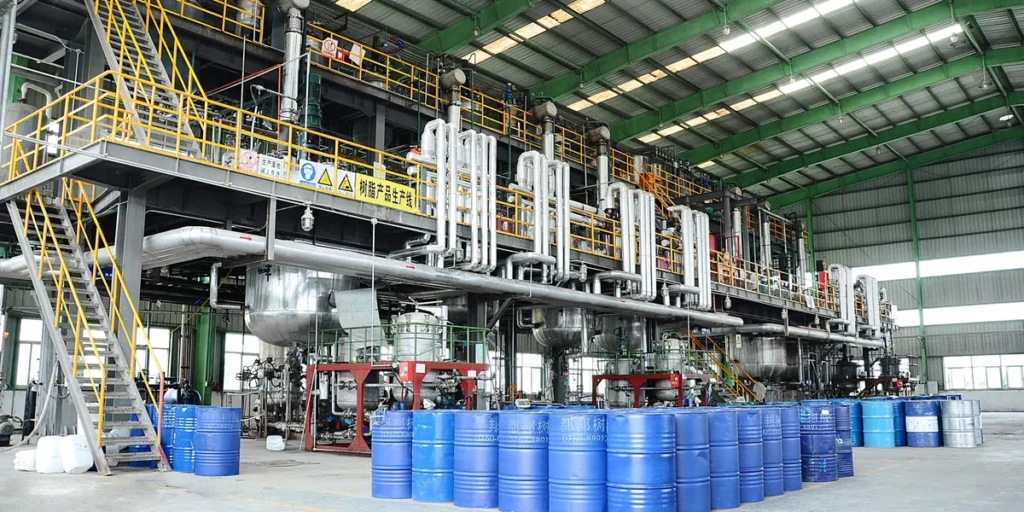
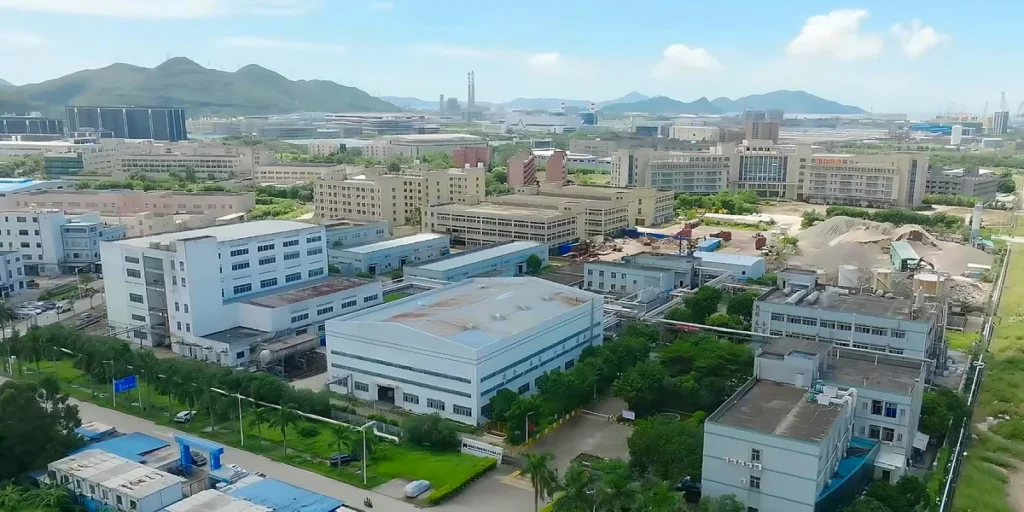
Zhuhai Changxian New Material Technology Co., Ltd. has specialized in electronic chemicals for over 30 years. Listed on China’s NEEQ stock exchange (stock code: 831323) and recognized as a national-level “Little Giant” enterprise, Changxian operates a 40,000 m² production base in Zhuhai’s Gaolan Port Economic Zone with in-house resin synthesis, certified to ISO 9001, ISO 14001, ISO 45001 and IATF 16949, with UL-recognized insulating varnish and conformal coating lines.
Spec-by-spec parity with international brands, at factory-direct pricing — that is Changxian’s commitment. For TDS documents, selection comparisons or free samples, talk to our engineers.
Contact us
Not sure which grade fits your parts and line?
Send Changxian New Material your part type (motor / transformer / coil / PCB), thermal class requirement, impregnation process (atmospheric / vacuum / VPI), baking conditions, production tempo and compliance requirements.
Our engineers can help you pick the right varnish for electric motors, transformers or coils — with impregnation parameter confirmation and compatibility verification — and provide samples, TDS, MSDS, RoHS, REACH, halogen-free and VOC documents for your qualification.