Insulating Varnish Philippines: 6 Checks Before Import Qualification
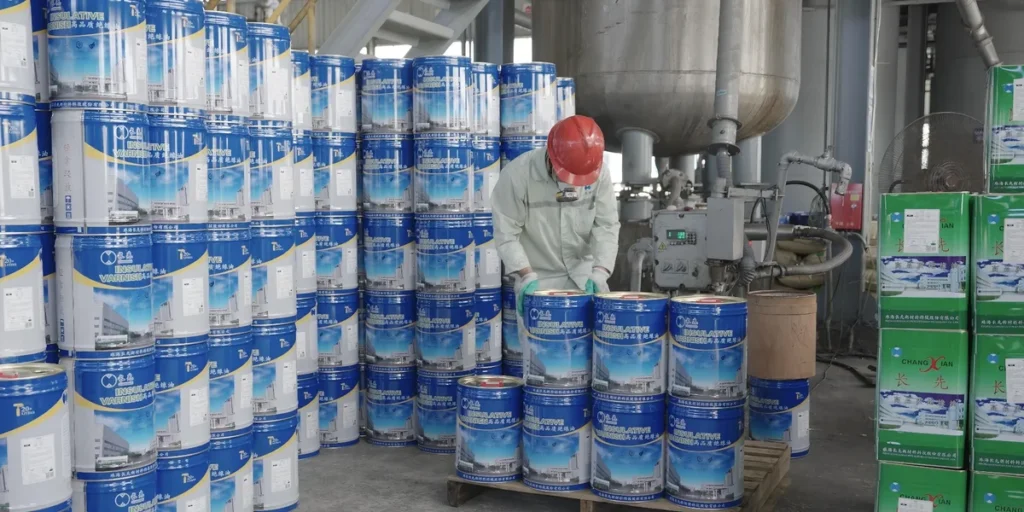
Abstract: Insulating varnish Philippines procurement should not be based only on quotations and delivery times. For a formulated chemical product such as insulating varnish, you should first define the application and resin system, review the technical and safety documents for the exact model, and have your Philippine importer or customs broker confirm the applicable chemical, customs, and product-compliance requirements. Transportation conditions, sample validation, and the scope of the quotation should also be documented before purchasing. The following six checks help you combine technical evaluation, import review, and sample qualification in one process.
Why Insulating Varnish Philippines Procurement Should Not Compare Price Alone
Insulating varnish Philippines search results can include local distributors, importers, maintenance products, and industrial impregnation materials. Even when products share the same general name, their resin systems, solids content, application methods, packaging, and compliance documents can differ.
For industrial winding applications, a purchasing decision involves at least three connected questions:
- Is the material suitable for your motor, transformer, coil, or other workpiece?
- Have the product and its components completed the applicable Philippine import review?
- Does the quotation clearly define packaging, transportation, documentation, and delivery responsibilities?
Comparing only the price per kilogram can omit processing differences, import-review requirements, and actual validation costs. A more reliable sequence is to define the technical requirements, confirm the import pathway, and then compare quotations with equivalent boundaries.
Check 1: Define the Application and Material Specification First
Before requesting a quotation, prepare technical information that can support material screening rather than sending only the general product name “insulating varnish.”
| Information Group | Recommended Information |
| Application | Motor, transformer, coil, circuit board, or other specific workpiece |
| Resin system | Your current system, or the alkyd-amino, polyester, epoxy-polyester, waterborne, or acrylic system you need to evaluate |
| Thermal class | Target material thermal class and complete insulation-system requirements |
| Process | Atmospheric impregnation, vacuum impregnation, trickle impregnation, brushing, or another application method |
| Curing | Air-drying, heated drying, or baking conditions and available equipment |
| Validation | TDS items requiring comparison and acceptance requirements for actual workpieces |
This information helps exclude products with similar names but incompatible processes. It can also reduce repeated sample shipments.
If you are uncertain about the appropriate resin system, provide your current product model, TDS, and production conditions for technical review instead of selecting a replacement solely by the lowest quotation. You can also review the Electrical Varnish resin-system comparison before defining your candidate range.
Check 2: Confirm That Every Document Corresponds to the Same Model
Technical documents should be matched to the specific product model. A company profile or generic certificate does not establish coverage for every insulating varnish product.
Documents to Review
| Document | Main Purpose | Review Points |
| TDS | Review the resin system, performance specifications, application method, and reference curing conditions | Model, version, test conditions, and units |
| MSDS/SDS | Review hazards, handling, storage, and transportation-related information | Whether the model matches and whether the content applies to the current product |
| RoHS, REACH, and related documents | Support review against your material specifications or downstream requirements | Whether the report corresponds to the model; these reports should not automatically be treated as general Philippine import requirements |
| UL file | Review the applicable coverage when required by your application | File number, covered models, and rating scope, subject to the applicable certificates |
| Batch quality documents | Confirm the delivered batch according to the purchasing agreement | Whether the batch, model, and agreed inspection items match |
RoHS and REACH documents can support the corresponding material-compliance review, but their availability does not demonstrate that all Philippine import procedures have been completed.
Likewise, a UL file is not a universal mandatory requirement for every insulating varnish purchase. Whether it is required and which coverage is relevant should be determined by your application and technical specifications.
For a broader document and factory-review framework, see Electrical Insulating Varnish Manufacturers: 8 Pre-Purchase Audit Checks.
Check 3: Have Your Philippine Importer Confirm the Chemical and Product-Compliance Pathway
Chemical review in the Philippines can involve the specific composition rather than only the commercial name of a mixture. Before a first import or a change in material source, your local importer should confirm the applicable requirements using the actual product documents.
PICCS and Related Chemical Requirements
The Chemical Management Section of DENR-EMB maintains the Philippine Inventory of Chemicals and Chemical Substances (PICCS) and covers programs including the Priority Chemicals List (PCL), Pre-Manufacture and Pre-Importation Notification (PMPIN), and Chemical Control Orders (CCO).
DENR-EMB’s PICCS guidance states that mixtures themselves are exempt from the inventory, while their individual components must be checked against PICCS. For chemical substances listed in PICCS and not subject to requirements such as PCL or CCO, the guidance also sets out the corresponding notification-exemption conditions.
- PICCS status cannot be determined from the product name “insulating varnish” alone;
- A unilateral statement that every component has completed Philippine compliance should not be assumed;
- Your importer needs to confirm the review pathway using the actual composition and current requirements;
- If confidential formulation information is involved, the relevant parties should discuss an appropriate confidential-submission method rather than replacing necessary review with incomplete public documents.
Product-Certification Requirements
The Philippine Bureau of Product Standards implements certification schemes such as PS and ICC for products covered by mandatory certification. Applicability should be confirmed against the specific product and the current mandatory-product list. Not every industrial insulating varnish should be described generically as either requiring or not requiring ICC.
Customs Classification and Other Import Matters
HS classification, duties and taxes, and import declarations should be confirmed by your Philippine importer or customs broker using the actual composition, application, and declaration documents. Do not adopt an unverified online code directly in a purchase contract.
The purpose of this check is to establish who will perform the review, which documents are required, and when the review should be completed before ordering and shipment. The article does not replace local compliance advice.
Check 4: Confirm That Transportation, Packaging, and Storage Conditions Are Compatible
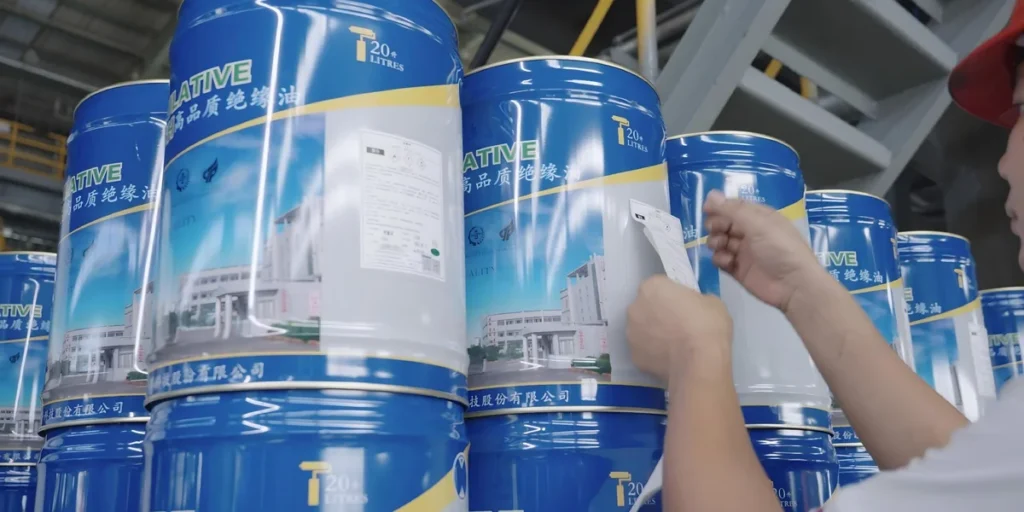
Hazard and transportation conditions can differ between insulating varnish products. Transportation classification should not be determined only from descriptions such as waterborne, solventless, or environmentally friendly. Use the model-specific SDS, transportation documents, and carrier review.
The TDS documents for different Changxian products illustrate why these checks are necessary:
| Model Example | Relevant TDS Information | Purchasing and Transportation Review Points |
| E57A | Identified as flammable; 20 L/pail and 200 L/drum; storage below 40°C | Confirm packaging, carriage, and storage conditions using the corresponding SDS and transportation requirements |
| E57-89H | Identified as nonflammable and non-explosive; 20 kg/pail and 200 kg/drum | Confirmation using the SDS and carrier requirements is still necessary; do not classify it independently from one description |
| CX936 | Waterborne epoxy; identified as nonflammable and non-explosive; 20 kg/pail and 200 kg/drum | Check that the waterborne system, packaging, storage conditions, and actual transportation documents are consistent |
When comparing delivery options, confirm:
- Packaging specification and quantity;
- Net weight, gross weight, and measurement units;
- SDS and transportation-assessment documents;
- Whether the forwarder or carrier accepts the product;
- Port of loading, destination port, and transportation method;
- Storage-temperature, ventilation, and sunlight-protection requirements;
- The trade term and each party’s responsibilities.
A nonflammable statement in a TDS does not guarantee that every carrier will accept the product as general cargo, and a flammable product does not mean that every route is unavailable. Actual arrangements should be confirmed by the forwarder using complete documents.
Check 5: Complete Sample and Actual-Workpiece Validation First
For a first purchase or a change in material system, sample validation should be completed before determining the commercial order quantity.
Information to Keep Consistent During Sampling
- The sample model matches the model in the subsequent quotation;
- The same versions of the TDS and SDS are used;
- Whether the sample represents the current production formulation is documented;
- Sample-batch or identification information is recorded;
- Test items and acceptance conditions are agreed in advance.
Records Required for Actual-Workpiece Validation
- Working viscosity and measurement temperature;
- Dilution ratio, where applicable;
- Workpiece preheating condition;
- Impregnation, trickling, draining, or coating conditions;
- Drying and curing schedule;
- Appearance, internal condition, and electrical and mechanical tests required by the product.
Material dielectric strength, thermal conductivity, or bond strength cannot replace complete-equipment validation. If a material change affects temperature rise, noise, durability, or other complete-equipment indicators, comparative testing should be conducted under defined operating conditions.
For process-specific validation records, see Varnishing Technologies for Windings.
Check 6: Make the Quotation Clearly Define the Delivery Scope
A comparable insulating varnish quotation should contain more than a unit price. Confirm whether the following information is stated:
| Quotation Item | Details to Define |
| Product | Complete model and material system |
| Quantity | Order quantity, packaging specification, and pricing unit |
| Documents | TDS, SDS, and agreed quality documents supplied with the shipment or separately |
| Delivery | Place of origin, destination, trade term, and expected delivery arrangement |
| Transportation | Whether the quotation includes freight, insurance, or other explicitly listed charges |
| Validity | Quotation validity and conditions that may affect price or delivery |
| Ongoing support | Samples, technical review, and trial-validation arrangements |
Even when a quotation uses CIF or another trade term, it should not automatically be interpreted as including every local charge and responsibility in the Philippines. The exact scope should follow the agreed trade-term version, contract, and quotation details.
Consolidated Checklist Before Ordering
Complete these six checks before combining the technical, compliance, and commercial information in your purchasing decision:
- [ ] Application, resin system, thermal class, and processing conditions have been defined;
- [ ] The TDS, SDS, and other reports correspond to the exact model;
- [ ] Your Philippine importer has confirmed the applicable chemical, customs, and product-review pathway;
- [ ] Packaging, transportation, storage, and delivery responsibilities have been defined;
- [ ] Sample and actual-workpiece validation has been completed;
- [ ] Quotation scope, documents, validity, and ongoing support have been confirmed in writing.
This checklist is not an official Philippine import-permit checklist. It is intended to help you organize the information that different responsible parties need to confirm before purchasing.
FAQ
Must insulating varnish be purchased through a local distributor in the Philippines?
There is no universal technical purchasing requirement of this kind. You can evaluate factory-direct supply or a local channel, but the Philippine importing entity, import review, transportation arrangements, and ongoing technical-support responsibilities must be clearly assigned.
If a product has RoHS and REACH reports, can it be imported into the Philippines directly?
That cannot be assumed. These reports support the corresponding material-compliance review, but they do not complete Philippine customs, chemical, or other applicable requirements. Your local importer should confirm the pathway using the actual product.
Does PICCS review the commercial mixture name or its components?
DENR-EMB’s PICCS guidance lists mixtures as exempt from the inventory while requiring their individual components to be checked. Your importer should conduct the actual review using the formulation and current requirements.
Does every insulating varnish require a UL file?
A UL file is not a universal requirement for every purchase. Whether UL coverage is needed and which models must be covered should be determined by your application, insulation system, and downstream specifications. It should not be treated as a substitute for Philippine import review.
Does a CIF quotation already include every local charge in the Philippines?
That should not be assumed automatically. Costs and responsibilities depend on the agreed trade-term version, contract, and quotation details. Destination-port charges, customs clearance, duties and taxes, and local transportation should be reviewed item by item.
Can you place a bulk order first and test the material during use?
For a first purchase or material replacement, a bulk order should not replace sample validation. Testing actual workpieces first can reduce the risks of material incompatibility, process adjustments, and inventory disposal.
Conclusion
Insulating varnish Philippines procurement requires technical screening, model-specific documents, local import review, transportation arrangements, sample validation, and quotation boundaries to be managed in one process. A low-price quotation or a generic compliance report alone cannot cover all six checks.
A more effective sequence is to define the application and process, prepare the model-specific TDS and SDS, have your Philippine importer confirm local requirements, complete sample validation, and then finalize the order against written quotation and delivery conditions.
If you provide your application type, target resin system, order quantity, destination port, and current processing conditions, our engineers can help you prepare candidate Changxian models, TDS and SDS documents, and sample-validation items. Your importer or customs broker should then confirm the applicable Philippine import and customs-clearance matters.
About Changxian
Zhuhai Changxian New Material Technology Co., Ltd. has specialized in electronic chemicals for more than 30 years. We are listed on China’s NEEQ under stock code 831323 and recognized as a national-level specialized and innovative “Little Giant” enterprise. Our approximately 40,000 m² production base in Zhuhai’s Gaolan Port area supports in-house resin synthesis. Our management systems include ISO 9001, ISO 14001, ISO 45001, and IATF 16949. We also hold relevant UL files for insulating varnishes and conformal coatings; coverage for specific models is subject to the applicable certificates.
Changxian’s position is straightforward: performance benchmarked item by item against international brands, with factory-direct pricing. You can contact our engineers for TDS documents, selection comparisons, and free sample support for evaluation under your actual application and process conditions.
Sources
- E57A Baking Insulating Varnish Product Instruction
- E57-89H Environmentally Friendly Solventless Insulating Varnish Product Instruction
- CX936 Waterborne Insulating Varnish Product Instruction
- DENR-EMB: Chemical Management Section
- DENR-EMB: Philippine Inventory of Chemicals and Chemical Substances
- DTI-BPS: Product Certification Schemes
- DTI-BPS: List of Products Under Mandatory Certification
Contact us
Not sure which grade fits your parts and line?
Send Changxian New Material your part type (motor / transformer / coil / PCB), thermal class requirement, impregnation process (atmospheric / vacuum / VPI), baking conditions, production tempo and compliance requirements.
Our engineers can help you pick the right varnish for electric motors, transformers or coils — with impregnation parameter confirmation and compatibility verification — and provide samples, TDS, MSDS, RoHS, REACH, halogen-free and VOC documents for your qualification.