Clear Insulating Varnish Guide: Top 5 Options Compared by TDS Data
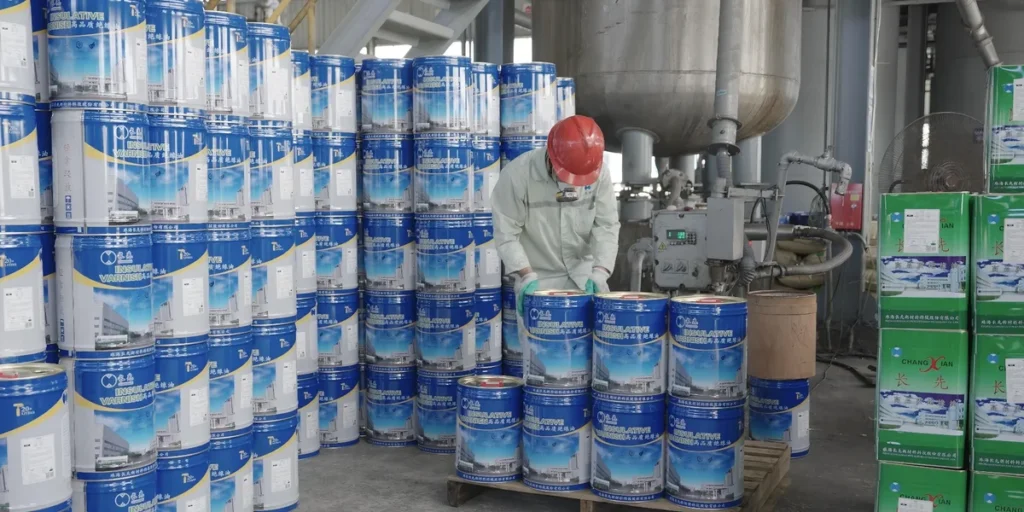
Abstract: Clear insulating varnish is the most widely used type of impregnating varnish in the insulation treatment of motors, transformers and coils. Based on the technical data sheets (TDS) of five Changxian clear insulating varnishes, this guide explains the relationship between clear and red varnishes, provides a selection framework across three dimensions — thermal class, chemistry and impregnation process — and compares five grades by dielectric strength, bond strength, thermal conductivity and rotational viscosity, as a data reference for winding insulation.
1. What Is Clear Insulating Varnish
Clear insulating varnish is an impregnating varnish with no added pigments; the cured film remains transparent to pale yellow and translucent. Varnishes leave the factory clear by default: the resin, curing agent and solvent system itself is colorless to pale yellow, and color contributes nothing to electrical performance.
A clear film delivers two practical benefits:
1.1 Visual inspection of impregnation quality. Through a clear film you can directly observe the winding — enamel wire color, solder joints, whether binding tapes are fully covered, and whether voids or dry (unimpregnated) zones exist. Repair and rewinding work relies heavily on this visual check.
1.2 Appearance as a quality indicator. Cloudiness, separation or suspended particles in the liquid are direct signals of storage failure or expired shelf life; a clear varnish allows preliminary incoming inspection without destructive testing.
2. Clear vs. Red: Color Determines Neither Performance Nor Thermal Class
The North American repair market carries many red insulating varnishes (red aerosol cans in particular), leading many buyers to assume that “insulating varnish is supposed to be red” — or even that “red means higher temperature resistance.” Both are misconceptions:
- The red color comes from pigments added afterwards (typically iron oxide red), and its purpose is visual coverage inspection — a red film contrasts sharply with copper wire and insulation paper, making missed spots visible at a glance. Manufacturers state explicitly in their product literature that the red pigment has no effect on dielectric strength, arc resistance or temperature rating;
- There is no correspondence between red color and thermal class: commercially available red varnishes span Class B (130°C), Class F (155°C) and Class H (180°C). The class is determined by the resin system, not by color;
- A clear pattern exists in actual product distribution: air-dry repair products (aerosol cans, small brush-on packs) are commonly red, because repair work depends on visual checks; impregnating OEM products (atmospheric dipping, VPI) are predominantly clear, because impregnation quality is controlled by process parameters and sampling, with no need for color assistance.
Selection conclusion: choose by the thermal class and performance data on the TDS, not by color. If red is genuinely needed (customer audit habits, coverage inspection habits), a clear-varnish producer can evaluate a pigmented version on request. Changxian insulating varnishes are clear to pale yellow as standard; red can be evaluated on request.
3. Core Functions in Brief
A clear insulating varnish performs four functions in a winding: electrical insulation (filling turn-to-turn and layer-to-layer gaps, suppressing partial discharge), mechanical fixing (resisting electromagnetic vibration, reducing noise), heat transfer (film conductivity approx. 0.2–0.4 W/m·K, far above air at approx. 0.026 W/m·K), and environmental protection (blocking moisture and corrosive gases). Detailed failure analysis appears in the motor and transformer guides of this series and is not repeated here.
4. Three Selection Dimensions
Thermal class: choose based on the winding’s maximum hot-spot temperature plus at least a 10°C margin (IEC 60085: Class B 130°C / Class F 155°C / Class H 180°C / Class C >180°C).
Chemistry:
| Chemistry | Strengths | Limitations | Best For |
| Solventless epoxy-polyester | High solids, high fill in one impregnation, near-zero VOC | Requires heat curing | VPI lines, Class H products |
| Unsaturated polyester | Good heat resistance, low cure shrinkage | Contains styrene monomer; odor control needed | Class H impregnation |
| Alkyd-amino | Air-dry / low-temperature bake, forgiving process window | Thermal ceiling at Class B–F | Small products, repair |
| Waterborne epoxy | Non-flammable, lowest VOC | Water must be fully driven off during cure | Sites with strict environmental requirements |
| Modified polyester air-dry | Fast drying, low odor, repair-friendly | Mainly Class B | On-site repair |
Impregnation process: VPI accepts high-viscosity solventless varnishes (viscosity reduced by heating); atmospheric dipping requires a low-viscosity varnish that penetrates directly — below 250 mPa·s rotational viscosity for fine-wire windings; air-dry types need no baking and suit on-site repair.
5. Five Clear Insulating Varnishes Compared (TDS Data)
The clear insulating varnish data below are taken from each model’s TDS. All five grades are clear to pale yellow as standard. Viscosity values have been converted from Tu-4 cup efflux time to kinematic viscosity per GB/T 1723-93, then multiplied by each model’s TDS specific gravity to obtain rotational viscosity in mPa·s. Converted values are approximate references; for incoming inspection, verify with a rotational viscometer.
| Parameter | E57-89H (Solventless Epoxy-Polyester) | E57-81H (Unsaturated Polyester) | E57A (Alkyd-Amino) | E962 (Modified Polyester, Air-Dry) | CX936 (Waterborne Epoxy) |
| Thermal class | H–C | H | B–F | B | B–F\* |
| Dielectric strength (as supplied) | ≥24 MV/m | ≥22 MV/m | ≥60 kV/mm | ≥40 kV/mm | ≥70 MV/m |
| Bond strength | ≥140 N (ambient) / ≥50 N (180°C) | — | — | — | — |
| Thermal conductivity | ≥0.4 W/m·K | — | — | — | — |
| Rotational viscosity (25°C, converted) | approx. 165–355 mPa·s (Tu-4 cup 40–80s, SG 1.075) | — | approx. 150–235 mPa·s (Tu-4 cup 40–60s, SG 0.98) | approx. 145–230 mPa·s (Tu-4 cup 40–60s, SG 0.95) | approx. 3–30 mPa·s (Tu-4 cup 11–15s; large conversion error in the low-viscosity range — verify by measurement) |
| Solids content | Solventless system | — | 45–55% | — | 20±2% |
| Curing | Heat cure | Heat cure | Air-dry / low-temp bake | Air-dry | Heat cure |
| Volume resistivity | — | — | — | ≥1×10¹² Ω·cm (note: Ω·cm differs from Ω·m by a factor of 100 — convert before comparing) | — |
| Refrigerant resistance | — | Excellent after 96 h | — | — | — |
*The B–F rating of CX936 is based on product literature; please confirm suitability for your duty conditions with our engineers before ordering.
6. Selection Recommendations by Application
The clear insulating varnish recommendations below are grouped by application scenario.
Large motors and dry-type transformers on VPI lines: E57-89H is the first choice. The solventless clear system fills in a single impregnation, and the clear film allows direct inspection of winding penetration; its thermal conductivity of ≥0.4 W/m·K lowers the hot-spot rise, and bond strength of ≥50 N at 180°C keeps the winding tight at high operating temperatures. Verified on production VPI lines.
Class H duty and refrigeration equipment windings: E57-81H — Class H thermal rating with excellent 96-hour refrigerant resistance, suitable for refrigerant-contact applications such as compressor motors.
Small products and repair rewinding (Class B–F): E57A — an alkyd-amino system that air-dries or bakes at low temperature, with a forgiving process window for repair shops without large ovens; the clear film makes post-repair visual acceptance easy.
Fast on-site repair: E962 air-dry type — no baking, low odor, the first choice for urgent jobs with short outage windows; once dry, the clear film allows immediate visual coverage checks.
Environmentally sensitive sites: CX936 waterborne epoxy — viscosity adjusted with deionized water, and its dielectric strength of ≥70 MV/m is the highest of the five. Its solids content is 20±2%: plan multiple dips or vacuum processing to ensure fill, and drive off water thoroughly during curing.
7. FAQ
Q1: Is there any performance difference between clear and red insulating varnish? No. The color comes from pigments added for coverage inspection; thermal class is determined by the resin system, and commercially available red products span Class B to H. Choose by TDS data, not by color.
Q2: Will clear insulating varnish yellow over time? Pale yellow is the inherent tint of the resin system, and the film darkens slowly under long-term high-temperature operation — a normal thermal aging phenomenon that does not affect electrical performance. If the film darkens markedly or turns brittle within a short period, the operating temperature exceeds the varnish’s thermal class: upgrade the thermal class rather than change the color.
Q3: How do you judge impregnation quality through a clear film? Visual inspection after curing: the film should be continuous, free of bubbles and dry zones; enamel wire and binding tapes should be fully covered. Any dry zone found requires a second impregnation.
Q4: Can you supply red insulating varnish? Changxian products are clear to pale yellow as standard. If you need a colored (e.g., red) varnish for coverage inspection or customer audit habits, it can be evaluated on request — talk to our engineers about your specific conditions.
8. Conclusion
Clear insulating varnish is the default form of winding insulation — the clear film compromises no electrical performance while providing visual inspection of both impregnation quality and incoming material condition. Selection is a three-dimensional match of thermal class, chemistry and impregnation process, decided from TDS data. Changxian’s five clear insulating varnishes cover the full range from Class B to C and from atmospheric dipping to VPI. If you need a technical comparison against your application, together with free samples, contact us — we reply within 24 hours.
About Changxian
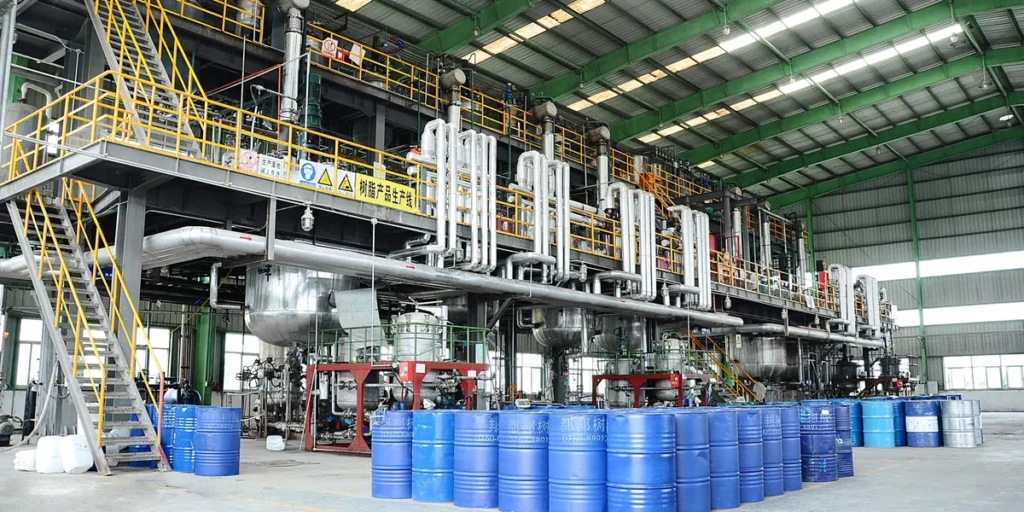
Changxian New Material has specialized in electronic chemicals for over 30 years. Listed on China’s NEEQ (stock code 831323) and recognized as a national-level “Little Giant” enterprise, we operate a 40,000 m² production base in Zhuhai’s Gaolan Port Economic Zone with in-house resin synthesis. Our quality system is certified to ISO 9001, ISO 14001, ISO 45001 and IATF 16949, and our insulating varnishes and conformal coatings hold UL product certifications. Our positioning is straightforward: Equal Quality, Factory Price. Send us your TDS or application requirements, and our engineers will respond within 24 hours with a technical comparison and free samples.
Contact us Not sure which grade fits your parts and line? Send Changxian New Material your part type (motor / transformer / coil / PCB), thermal class requirement, impregnation process (atmospheric / vacuum / VPI), baking conditions, production tempo and compliance requirements. Our engineers can help you pick the right varnish for electric motors, transformers or coils — with impregnation parameter confirmation and compatibility verification — and provide samples, TDS, MSDS, RoHS, REACH, halogen-free and VOC documents for your qualification.