Electrical Insulation Paint vs Insulating Varnish: 4 Selection Checks
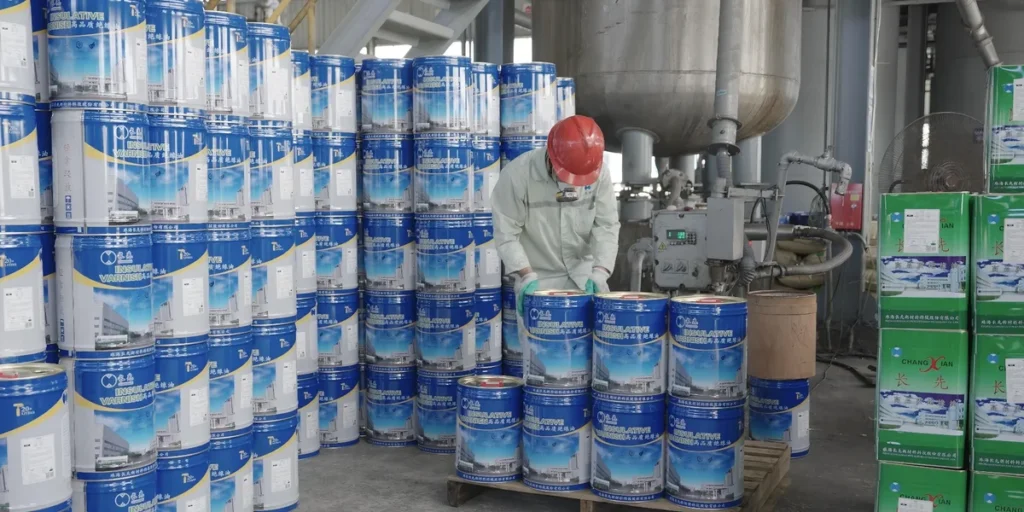
When you search for electrical insulation paint, you may need a material for surface coating or an insulating varnish for impregnating motor, transformer or coil windings. Product names such as paint, varnish and enamel alone cannot tell you whether a material is suitable for your workpiece and production process.
IEC 60464 divides the application of electrical insulating varnishes into finishing and impregnating, covering drying or curing at ambient or elevated temperatures. You should therefore confirm the application area, application process, thermal requirements and TDS specifications before selection rather than comparing product names alone.
This guide uses four selection checks to help you narrow your options. It also compares Changxian E962, E57A and E57-89H to illustrate the differences between air-drying, baking and solventless impregnating options.
1. Can Paint, Varnish and Enamel Be Treated as the Same Product?
You should not treat electrical insulation paint, insulating varnish and enamel as interchangeable product names. Different technical documents may use different naming conventions, and the general term “insulating varnish” may refer to surface coating, winding impregnation or wire insulation applications.
| Name in Search Results or Technical Documents | What to Check During Selection | What You Cannot Assume from the Name Alone |
| Electrical insulation paint | Is it intended for surface coating or winding impregnation? What are its application and curing conditions? | It is not automatically suitable for every type of electrical equipment |
| Insulating varnish | Does the TDS list finishing, impregnating or both applications? | Different products do not necessarily have the same viscosity, solid content or curing process |
| Impregnating varnish | Is it suitable for your coil structure, impregnation equipment and wire type? | It is not automatically suitable for surface brushing or every impregnation process |
| Finishing varnish | Is it intended for additional coating over an established insulation structure? | It cannot automatically replace impregnation within the winding |
| Wire enamel | Is it intended for insulating conductors during magnet wire production? | It cannot be treated directly as the same product as an impregnating varnish for finished windings |
These terms can help you start your search, but they cannot replace the TDS. Your purchasing document should specify the application, process method, curing conditions and properties requiring verification instead of providing only a general product name.
2. Check 1: Do You Need Surface Coating or Winding Impregnation?
Before selecting an electrical insulation paint, determine where the material needs to be applied.
Surface Coating
Check whether the TDS explicitly lists finishing, coating or a corresponding surface-protection application. Confirm whether brushing, spraying or another application method is included in the specified process.
If your actual requirement is circuit board protection, you should also distinguish it from conformal coating selection. A product should not be treated as a conformal coating for every circuit board solely because it provides electrical insulation.
Winding Impregnation
Check whether the TDS explicitly lists impregnating and the corresponding winding applications. Also confirm whether atmospheric dipping, vacuum impregnation, trickle impregnation or another process matches your production line.
The E962 TDS explicitly lists applications including inductive coils. E57-89H explicitly covers small and medium-sized round-/flat-wire coils and reactor windings. Compared with the general term “insulating varnish,” this application information provides a more direct basis for initial selection.
3. Check 2: Does the Product Match Your Available Curing Conditions?
The product name cannot tell you whether your workpiece can be cured with your existing equipment. Curing conditions should be treated as a separate screening criterion.
| Available Process Conditions | Option to Evaluate First | What to Confirm |
| No oven, on-site repair or air-drying process | E962 | Air drying does not mean the coil can be energized as soon as its surface feels dry; complete drying must be confirmed under actual process conditions |
| Baking facilities with a Class B–F target | E57A | Determine the dilution ratio and baking time through testing according to the product’s shape, dimensions and requirements |
| Vacuum or trickle impregnation with a Class H–C target | E57-89H | Determine impregnation, draining and curing conditions according to the TDS and your actual workpiece |
Even when a product is air-drying, a surface that feels dry to the touch should not be used as the basis for energization. For a baking product, the curing time established for one workpiece should not be applied directly to a different coil or winding.
4. Check 3: Does the Thermal Class Meet Your Insulation System Design?
The thermal class should be confirmed together with your insulation system design. The material name, color or a single temperature statement should not be used as the sole selection criterion.
IEC 60085 provides a reference for the thermal evaluation and designation of electrical insulation: IEC 60085 official page.
| Product | Thermal Class in the TDS | How to Use It During Selection |
| E962 | Class B, 130°C | A candidate for Class B designs requiring an air-drying process |
| E57A | Class B–F, 130–155°C | A candidate for Class B–F designs where baking facilities are available |
| E57-89H | Class H–C, ≥180°C | A candidate for higher thermal requirements and solventless impregnating processes |
The thermal class stated in a material TDS does not automatically demonstrate that the complete insulation system of a motor, transformer or other equipment has received the same thermal classification. The complete equipment or insulation system still needs to be evaluated according to the applicable standards.
5. Check 4: Which TDS Specifications Should Be Included in the Comparison?
After screening by application, process and thermal class, compare the specific TDS specifications. The following electrical insulation paint comparison includes only items confirmed in the respective TDS documents. Items not listed are marked “—.”
| Comparison Item | E962 | E57A | E57-89H |
| Resin system | Modified polyester | Alkyd-amino | Solventless epoxy-polyester |
| Thermal class | Class B | Class B–F | Class H–C |
| Primary process route | Air drying | Baking | Curing after vacuum or trickle impregnation |
| Dielectric strength | ≥40 kV/mm | ≥60 kV/mm | ≥24 MV/m |
| Solid content / active ingredients | — | 45–55% | 100% active ingredients |
| Rotational viscosity | Approx. 145–230 mPa·s | Approx. 150–235 mPa·s | Approx. 165–355 mPa·s |
| SG | 0.95 | 0.98 | 1.075 |
| Volume resistivity | ≥1×10¹² Ω·cm | — | — |
| Bonding strength at room temperature | — | — | ≥140 N |
| Bonding strength at 180°C | — | — | ≥50 N |
| Thermal conductivity | — | — | ≥0.4 W/m·K |
Unit note: 1 kV/mm is numerically equivalent to 1 MV/m. However, you should still review the test conditions in each TDS when comparing different products. The volume resistivity unit for E962 is Ω·cm and must not be written as Ω·m.
This table cannot replace validation on your actual workpiece. A product with a higher dielectric strength value is not automatically suitable for every coil. Viscosity, impregnation process, curing conditions and application scope must also match your requirements.
6. What Information Should You Provide Before Requesting a Quotation?
To avoid selecting the wrong electrical insulation paint because of differences in product terminology, provide the following information when requesting a quotation or samples:
1. Application: Motor, transformer, inductive coil, relay coil, reactor winding or another workpiece.
2. Treatment method: Surface coating or winding impregnation.
3. Structural information: Round or flat wire, together with the basic workpiece dimensions.
4. Target thermal class: Class B, F, H or another design requirement.
5. Current process: Air drying, baking, atmospheric dipping, vacuum impregnation or trickle impregnation.
6. Verification requirements: Dielectric strength, bonding strength, thermal conductivity or other design requirements.
7. Production conditions: Available equipment, production cycle and planned sample tests.
This information makes it easier to develop a verifiable selection than asking only which product is the “best” general-purpose insulation material.
7. Related Selection Guides
Different applications also require a review of their specific structures and process conditions. You can continue with these related guides:
Motor Winding Insulating Varnish Selection Guide
Transformer Insulating Varnish Selection Guide
Coil Winding Varnish Guide
Fast Drying Insulating Varnish Guide
Clear Insulating Varnish Guide
Insulating Varnish Price Guide
8. Frequently Asked Questions
Q1: Are electrical insulation paint and insulating varnish exactly the same?
You cannot assume that electrical insulation paint and insulating varnish are exactly the same based on their names alone. Different documents may use different naming conventions. Check the TDS to determine whether the product is intended for surface coating, winding impregnation or another application, and confirm its application and curing conditions.
Q2: Can an impregnating varnish be used for every surface-coating application?
No. Impregnation and surface coating are different application routes. Follow the uses and application methods listed in the TDS. If the TDS does not list your intended application, obtain technical confirmation and conduct sample trials first.
Q3: Is an air-drying varnish suitable for every repair?
No. Air-drying products suit conditions such as production without an oven, but you still need to check the thermal class, electrical properties and complete drying condition. Workpieces with access to baking facilities and different design requirements may need other options.
Q4: Can you select an insulating varnish by dielectric strength alone?
No. Dielectric strength is only one specification. You also need to check the application scope, viscosity, thermal class, impregnation process and curing conditions. Final suitability should be validated on your actual workpiece.
Q5: Are wire enamel and impregnating varnish for finished coils the same?
They should not be treated as the same product. Magnet wire production and impregnation of finished windings are different processing stages. Check the applicable standards and TDS application scope separately for each requirement.
9. Conclusion
When selecting an electrical insulation paint, the product name is only the starting point for your search. A more effective selection sequence is to confirm surface coating or winding impregnation first, then check curing conditions, thermal class and TDS specifications, and finally validate the material on your actual workpiece.
If you are still unsure which material category you need, send our engineers your application, treatment method, target thermal class and available curing conditions. We can help you define the selection route and provide TDS documents, grade comparisons and free samples for testing.
About Changxian
Zhuhai Changxian New Material Technology Co., Ltd. has specialized in electronic chemicals for more than 30 years. Changxian is listed on China’s National Equities Exchange and Quotations (stock code: 831323) and recognized as a national-level Specialized, Sophisticated, Distinctive and Innovative “Little Giant” enterprise. Our approximately 40,000 m² production base in Zhuhai’s Gaolan Port area includes in-house resin synthesis capabilities. We have achieved ISO 9001, ISO 14001 and ISO 45001 management system certification, together with IATF 16949 certification. Relevant insulating varnish and conformal coating products are covered by UL files; specific grade coverage is subject to the applicable certification.
Changxian’s position is straightforward: specifications benchmarked item by item against international brands, with factory-direct pricing — Equal Quality, Factory Price. If you need insulating varnish TDS documents, application-specific grade comparisons or free samples for testing, contact our engineers. We will provide targeted support based on your workpiece structure and production conditions.
Source basis for this article: The public preview of IEC 60464-1, the official IEC 60085 page, and product TDS documents for E962, E57A and E57-89H. Test items not listed in the applicable TDS are marked “—” and have not been estimated.
Contact us
Not sure which grade fits your parts and line?
Send Changxian New Material your part type (motor / transformer / coil / PCB), thermal class requirement, impregnation process (atmospheric / vacuum / VPI), baking conditions, production tempo and compliance requirements.
Our engineers can help you pick the right varnish for electric motors, transformers or coils — with impregnation parameter confirmation and compatibility verification — and provide samples, TDS, MSDS, RoHS, REACH, halogen-free and VOC documents for your qualification.