Electrical Insulating Varnish Manufacturers: 8 Pre-Purchase Audit Checks
When screening electrical insulating varnish manufacturers, you should not rely only on product catalogs, certification logos or unit prices. What affects selection and production is whether the TDS covers your application, whether the specifications are traceable, whether certification covers the specific grade, whether samples pass validation on your actual workpieces, and whether subsequent batches can be supplied under the confirmed conditions.
The following eight checks can be used during quotation requests, sample testing and supplier evaluation. Wherever possible, each item should be supported by downloadable, verifiable or testable evidence rather than verbal statements alone.
1. Check Whether the TDS Covers Your Actual Application
Start with the application scope rather than price. Surface coating, finished coil impregnation, motor winding insulation and transformer insulation are different applications. You cannot determine suitability from the general term “insulating varnish” alone.
| Audit Item | What to Check in the TDS | Questions to Ask |
| Application | Motors, transformers, inductive coils, round-/flat-wire windings or other electrical products | Is your specific workpiece explicitly listed? If not, how should suitability be validated? |
| Application method | Air drying, baking, atmospheric dipping, vacuum impregnation or trickle impregnation | Does the process match your available equipment and production conditions? |
| Conductor structure | Round wire, flat wire or another structure | Is there corresponding application information or sample validation guidance? |
| Curing conditions | Drying method and process items requiring trial confirmation | Which parameters must be reconfirmed for your actual workpiece? |
If the TDS does not separately list your coil type, the phrase “other electrical products” should not be interpreted as confirmation that the application has already been validated. A more reliable approach is to treat the grade as a candidate and test it on your actual workpiece.
This application-first review gives you a more reliable basis for comparing electrical insulating varnish manufacturers.
2. Check Whether Specifications, Units and Test Methods Are Complete
When comparing electrical insulating varnish manufacturers, place equivalent test items in one comparison table. However, you should not assume that test conditions are identical across different products.
Check the following:
- Dielectric strength and its unit.
- Volume resistivity and its unit.
- Viscosity type, unit and test method.
- Solid content or active ingredient content.
- Thermal class.
- Bonding strength and test temperature.
- Thermal conductivity.
- Test methods and data notes.
For example, 1 kV/mm is numerically equivalent to 1 MV/m, but the test conditions in each TDS still need to be reviewed. For volume resistivity, pay particular attention to the difference between Ω·cm and Ω·m. The unit must not be changed during transcription.
Where an item is not listed in the TDS, retain “—” or “Not listed in the TDS” rather than estimating a value from the resin chemistry.
3. Check Whether the UL File Covers the Specific Grade
A UL assessment should not stop at a file number or a company-level statement. You need to verify:
- Whether the file number can be found in the public search system.
- Which product series or specific grades the file covers.
- The corresponding thermal class or application scope.
- Whether the grade you intend to purchase is actually within that scope.
You can conduct a public search through UL Product iQ.
For Changxian insulating varnishes, UL file E335405 covers E962 at Class 130 and the E57-(n) unsaturated polyester series at Class 155. Other grades cannot be included automatically because of similar names. Specific coverage remains subject to the applicable certification and public file.
4. Check the Scope and Validity of Management Systems
ISO or IATF certificates should be reviewed together with the company entity, production address, certification scope and validity period. The presence of a certificate does not mean that every product or performance property has received third-party product certification. Management system certification and product certification should be evaluated separately.
| Changxian Management System | Confirmed Information | How to Use It During an Audit |
| ISO 9001:2015 | Certificate No. 130062 | Check the quality management system and its current validity |
| ISO 14001:2015 | Certificate No. 130063 | Check the environmental management system and its current validity |
| ISO 45001:2018 | Certificate No. 130064 | Check the occupational health and safety management system |
| IATF 16949:2016 | DEKRA certificate 160824165, IATF No. 0538572 | Check the certification scope and validity; the scope includes the design and production of insulating varnishes, conformal coatings and fluxes |
The same approach can be applied when auditing other companies: request the certificate, verify the entity and scope, and do not use a management system certificate as a substitute for product performance specifications.
5. Check Whether Sample Validation Uses Your Actual Workpieces
Sample testing should involve more than receiving a liquid-material test report. You need to confirm the process and performance on your own coils, windings or other workpieces.
Record at least the following:
- Workpiece type, dimensions and conductor structure.
- Product grade and sample batch.
- Application viscosity.
- Impregnation and draining conditions.
- Curing method and actual curing conditions.
- Appearance and coverage.
- Electrical properties and other tests required by your design.
- Process confirmation on production equipment.
If only general process parameters are provided, ask which items need to be re-established according to the workpiece’s shape, dimensions and requirements. General parameters do not automatically become fixed production conditions for every workpiece.
Sample records also make later discussions with electrical insulating varnish manufacturers more specific and traceable.
6. Check Batch Consistency and Quality Traceability
Production audits of electrical insulating varnish manufacturers should cover batch management rather than only the first sample.
Confirm the following in your quality agreement or purchasing documents:
- How each batch is identified.
- How TDS versions are controlled.
- Which key properties are controlled and to what requirements.
- Which batch test documents can be provided.
- How specification or process changes are communicated.
- How nonconforming batches are traced and handled.
- How retained samples and records are maintained.
A single document format is not mandatory. The key requirement is that every batch you receive can be linked to a specific grade, batch identity and the technical requirements effective at the time of supply.
7. Check Packaging, Storage and Safety Documentation Against Your Purchasing Conditions
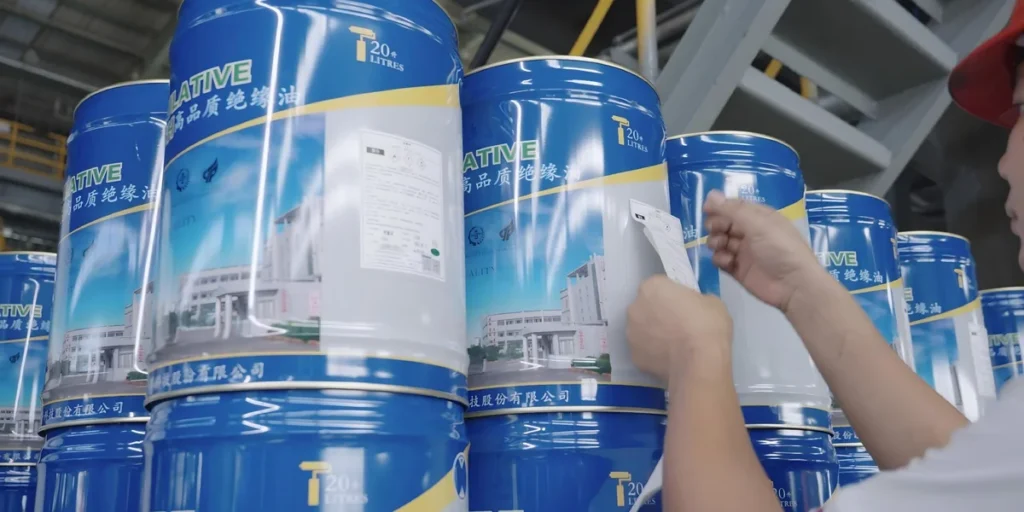
Review the TDS, MSDS and packaging/storage instructions before purchasing. This helps you avoid discovering after delivery that the material does not match your storage or handling conditions.
| Audit Item | What to Confirm |
| Packaging size | Whether it matches your consumption, equipment and on-site material management |
| Storage conditions | Temperature, protection from light, ventilation and other TDS requirements |
| Shelf life | How it is calculated, its storage prerequisites and batch identification |
| Viscosity adjustment | Whether adjustment is permitted, which designated thinner is required and how application viscosity is confirmed |
| Safety documentation | Whether the MSDS corresponds to the specific grade and whether safe-handling requirements reach the production site |
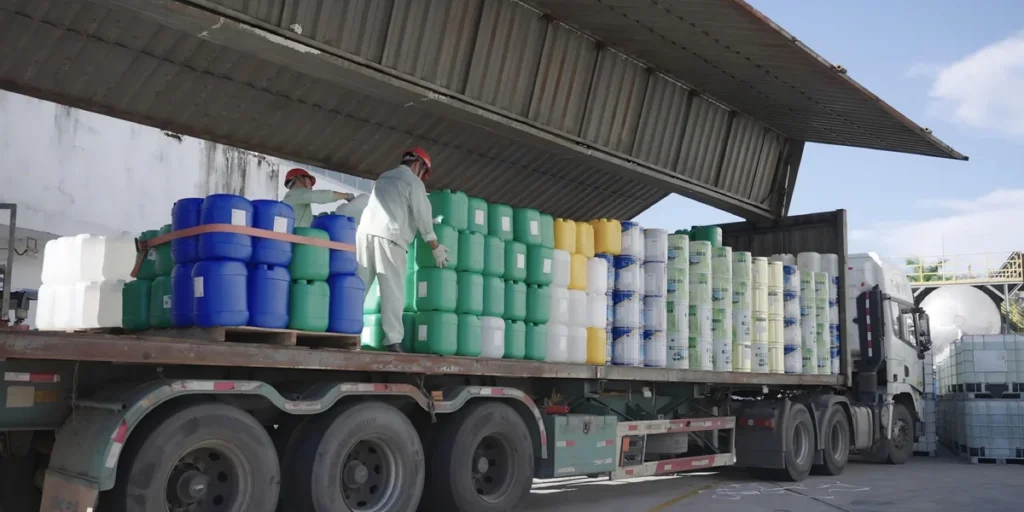
| Transport requirements | Confirm according to the product’s actual hazards and applicable transport rules rather than its general product name |
Safety and transport requirements must be based on the TDS, MSDS and applicable regulations for the specific grade. Documentation for another grade should not be used as a substitute.
8. Check Whether Technical Support Covers Selection and Validation
When evaluating electrical insulating varnish manufacturers, effective technical support should answer specific application questions rather than only provide a quotation.
You can test this with the following questions:
- Can suitable grades be screened according to your workpiece structure, thermal class and curing equipment?
- Can the latest TDS and MSDS for the corresponding grade be provided?
- Can the support team distinguish between specifications taken from the TDS and items requiring actual trials?
- Can samples be provided with assistance in defining verification items?
- Can batch, process and abnormal-condition questions continue to be reviewed after production starts?
Changxian’s position is to support your selection through item-by-item comparison of documented specifications and factory-direct conditions, rather than replacing sample validation with performance claims that are not supported by the TDS.
9. Manufacturer Audit Record
When auditing electrical insulating varnish manufacturers, you can use the following table to retain evidence and conclusions.
| Audit Item | Evidence to Retain | Audit Result |
| Application scope | TDS and version for the corresponding grade | Pass / Validation required / Not applicable |
| Specifications and units | Specification comparison and test methods | Pass / Additional information required |
| UL coverage | Public file search result and specific grade scope | Pass / Not applicable / Confirmation required |
| Management systems | Certificates, scope and validity | Pass / Update required |
| Sample validation | Process and test records for actual workpieces | Pass / Testing required |
| Batch management | Batch identification, testing and traceability method | Pass / Additional information required |
| Packaging and safety | Packaging, storage, shelf life and MSDS | Pass / Confirmation required |
| Technical support | Selection, sampling and abnormal-condition handling records | Pass / Evaluation required |
“Validation required” does not automatically mean rejection. However, a sample grade should not be treated as approved for production before the critical open items are closed.
10. Related Selection Guides
Manufacturer audits should be combined with application-specific selection. You can continue with these related guides:
Motor Winding Insulating Varnish Selection Guide
Transformer Insulating Varnish Selection Guide
Copper Wire Insulation Varnish Guide
Electrical Insulation Paint Guide
Insulating Varnish Price Guide
11. Frequently Asked Questions
Q1: Does a UL file mean that every insulating varnish from a company is certified?
No. UL files need to be checked by specific grade, product series and application scope. Other grades from the same company cannot automatically be included in the same file.
Q2: Can an ISO or IATF certificate replace a product TDS?
No. Management system certification and product technical documentation are separate audit items. Product applications and performance still need to be confirmed through the corresponding TDS, certification documents and actual testing.
Q3: Can batch audits be omitted after a sample passes testing?
This is not recommended. A passed sample demonstrates only that the tested sample met your validation conditions. Production still requires batch identification, quality requirements and traceability.
Q4: Can missing TDS specifications be estimated from the resin chemistry?
This is not recommended. Mark unlisted items as “—” or “Not listed in the TDS.” Where necessary, request additional documentation or confirm the property through actual testing.
Q5: Should a manufacturer audit start with price or application?
Start with the application and process. Price comparisons are meaningful only after the candidate products meet your application, thermal class, curing conditions and validation requirements.
12. Conclusion
The purpose of screening electrical insulating varnish manufacturers is not to collect more promotional material. It is to establish a verifiable evidence chain covering application-specific TDS documents, specifications and units, grade-level certification, management systems, validation on actual workpieces, batch traceability, safety documentation and continuing technical support.
If you are building an insulating varnish manufacturer audit checklist, send our engineers your application, target thermal class and current process. We can provide grade-specific TDS documents, certification records, selection comparisons and free samples for testing.
About Changxian
Zhuhai Changxian New Material Technology Co., Ltd. has specialized in electronic chemicals for more than 30 years. Changxian is listed on China’s National Equities Exchange and Quotations (stock code: 831323) and recognized as a national-level Specialized, Sophisticated, Distinctive and Innovative “Little Giant” enterprise. Our approximately 40,000 m² production base in Zhuhai’s Gaolan Port area includes in-house resin synthesis capabilities. We have achieved ISO 9001, ISO 14001 and ISO 45001 management system certification, together with IATF 16949 certification. Relevant insulating varnish and conformal coating products are covered by UL files; specific grade coverage is subject to the applicable certification.
Changxian’s position is straightforward: specifications benchmarked item by item against international brands, with factory-direct pricing — Equal Quality, Factory Price. If you need insulating varnish TDS documents, manufacturer audit records, grade comparisons or free samples for testing, contact our engineers. We will provide targeted support based on your application and validation requirements.
Source basis for this article: Confirmed Changxian management system and UL file records, TDS documents for E962 and the E57 product series, and the public UL Product iQ search portal. Specific product certification coverage is subject to valid certificates and public files.
Contact us
Not sure which grade fits your parts and line?
Send Changxian New Material your part type (motor / transformer / coil / PCB), thermal class requirement, impregnation process (atmospheric / vacuum / VPI), baking conditions, production tempo and compliance requirements.
Our engineers can help you pick the right varnish for electric motors, transformers or coils — with impregnation parameter confirmation and compatibility verification — and provide samples, TDS, MSDS, RoHS, REACH, halogen-free and VOC documents for your qualification.