Insulating Varnish Price Guide: 5 Cost Factors That Matter
Abstract: Insulating varnish price cannot be compared by “price per kg” alone: solids content ranges from 20% to 100% across different chemistries, meaning the effective resin content per kilogram can differ by a factor of five. This guide breaks down the price structure of insulating varnish across five factors — resin system, solids content, thermal class, packaging and MOQ, and brand premium — and provides a TDS-based cost-per-dry-film calculation and a total cost of ownership (TCO) framework, so you can make sourcing decisions on real cost rather than listed unit price.
1. Why Insulating Varnish Price per Kg Is Not the Real Cost
Insulating varnish price is usually quoted in RMB/kg or USD/kg, but this figure assumes that every kilogram of varnish delivers the same amount of cured film. In reality:
- Solventless insulating varnishes have a solids content close to 100%: 1 kg of liquid leaves about 1 kg of dry film after curing;
- Solvent-borne varnishes typically run at 45–55% solids: 1 kg of liquid leaves only about 0.5 kg of dry film, with the rest evaporating during baking;
- Waterborne varnishes can run as low as 20% solids: 1 kg of liquid yields only about 0.2 kg of effective dry film.
The correct unit for comparison is therefore “cost per kg of dry film”, not “cost per kg of liquid”:
Cost per kg of dry film ≈ Liquid price per kg ÷ Solids content
A worked example (illustrative math only, not a quotation): Varnish A at 40 RMB/kg with 50% solids costs 80 RMB per kg of dry film; Varnish B at 60 RMB/kg with 100% solids costs 60 RMB per kg of dry film — the higher-priced B is actually cheaper. This calculation does not yet include the energy and VOC treatment costs of solvent evaporation, which widen the real gap further.
2. Five Factors That Determine Insulating Varnish Price
2.1 Resin system. Alkyd-amino systems use mature raw materials and short synthesis routes, forming the price baseline. Unsaturated polyester and epoxy-polyester systems cost more in raw materials but deliver higher thermal and mechanical performance. Waterborne epoxy systems require additional emulsification and dispersion processes, so formulation cost is not low — but solvent purchasing and VOC treatment costs are saved. Whether the resin is synthesized in-house also directly shapes the cost structure: an in-house producer eliminates one layer of resin trading markup.
2.2 Solids content. As shown in Section 1, solids content determines effective dry-film yield and is the first-weight parameter in any price conversion. High-solids products usually carry a higher unit price but a lower dry-film cost, and they achieve high fill in a single impregnation, reducing the number of dips.
2.3 Thermal class. Class B (130°C) and Class H (180°C) products (thermal classes defined by IEC 60085) use different resin and curing systems, and Class H raw materials cost significantly more. Buy the class you actually need — purchasing Class H varnish for a Class B application is pure budget waste.
2.4 Packaging and MOQ. Unit packaging cost differs clearly between large drums (180–200 kg) and small packs (4–20 kg); small-pack air-dry products for repair typically price above OEM bulk drums. MOQ, mixed-batch policy and hazardous-goods transport arrangements also affect the final delivered price.
2.5 Brand premium and channel layers. Imported brands pass through master distributors and multi-tier resellers, and their pricing includes brand maintenance and the amortized cost of global certification systems. At equivalent TDS data, a structural price gap exists between factory-direct supply and branded distribution. Lead time is also a hidden cost: 8–12 week lead times on imported products mean larger safety stock and more working capital tied up.

3. Solids Content and Specific Gravity of Five Varnishes (TDS Data)
The insulating varnish price data below are taken from each model’s TDS and form the basis for dry-film cost conversion:
| Model | Chemistry | Thermal Class | Solids Content | Specific Gravity | Curing |
| E57-89H | Solventless epoxy-polyester | H–C | Solventless system (approx. 100%) | 1.075 | Heat cure |
| E57-81H | Unsaturated polyester | H | — | — | Heat cure |
| E57A | Alkyd-amino | B–F | 45–55% | 0.98 | Air-dry / low-temp bake |
| E962 | Modified polyester, air-dry | B | — | 0.95 | Air-dry (no baking) |
| CX936 | Waterborne epoxy | B–F* | 20±2% | — | Heat cure |
*The B–F rating of CX936 is based on product literature; please confirm suitability for your duty conditions with our engineers before ordering.
Note: beyond higher dry-film yield, solventless systems also eliminate the baking energy and VOC treatment associated with solvent evaporation; air-dry types (E57A, E962) eliminate baking equipment investment and energy consumption entirely. All of these differences belong in the total cost calculation.
4. Total Cost of Ownership: The Hidden Costs Beyond Insulating Varnish Price
Energy cost: solvent-borne varnishes must first evaporate 45–55% solvent before curing completes, so energy consumption is higher than with solventless systems; air-dry types consume no baking energy at all. The larger your production volume, the more significant this gap becomes.
VOC and environmental compliance cost: solvent-borne and styrene-containing systems require exhaust capture and treatment facilities; waterborne systems use water as diluent, are non-flammable, and can substantially reduce investment in explosion-proof workshops and VOC treatment.
Impregnation cycles and labor: high-solids products reach the required fill in one impregnation; low-solids products (such as a 20%-solids waterborne varnish) require multiple dips, and each dip means labor and equipment time.
Lead time and inventory cost: 8–12 week lead times on imported products demand higher safety stock; factory-direct supply offers shorter lead times and batch-based replenishment, reducing working capital tied up in inventory.
Failure cost: rework and after-sales losses caused by selecting the wrong thermal class far exceed any price difference between varnishes — this is the most expensive item in TCO, and the reason the motor and transformer guides in this series keep stressing TDS-based selection.

5. Cost-Effective Selection by Application
The insulating varnish price recommendations below are grouped by application scenario.
High-volume VPI lines: solventless E57-89H. The strongest option on a dry-film cost basis, saving labor with single impregnation and environmental investment with near-zero VOC; its H–C thermal rating covers the harshest duty and avoids the rework cost of under-specification.
Class H duty at smaller volumes: E57-81H — buy the class you actually need and pay no premium for Class C performance you will not use.
Small/medium batches and repair rewinding: E57A alkyd-amino — a mature raw-material system at the lowest price baseline, with air-dry or low-temperature baking that requires no equipment investment.
Occasional on-site repair: E962 air-dry type — purchase small packs as needed, no baking and no equipment, giving the lowest total cost per repair job.
Environmentally sensitive lines: CX936 waterborne epoxy. Note that its 20±2% solids content means it is not cheap on a dry-film cost basis; the case for choosing it lies in savings on VOC treatment and explosion-proof compliance, not in the liquid unit price — evaluate it on TCO, not unit price.

6. FAQ
Q1: Why do prices vary so much between suppliers for the same Class H varnish? Check three parameters first: solids content (which determines dry-film cost), whether the resin is synthesized in-house (which determines raw-material markup layers), and brand channel (master distributors and resellers each add a margin). When a significant price gap persists at the same class, solids content and performance data, it mostly comes from channel and brand premium rather than any performance difference.
Q2: Waterborne varnish has a low unit price — is it the cheapest option? Not necessarily. Waterborne varnishes have low solids content (CX936 at 20±2%), and dry-film cost = unit price ÷ solids content, which can exceed that of high-solids products; they also require multiple dips and more energy for water evaporation during curing. Their cost advantage sits on the VOC treatment and explosion-proof compliance side — evaluate on total cost of ownership.
Q3: Are imported brands always better than domestic ones? Compare the TDS data item by item: dielectric strength, thermal class, bond strength and thermal conductivity are all quantifiable, verifiable indicators. At equivalent data, factory-direct supply means the same performance at a lower price — Equal Quality, Factory Price.
Q4: How do I get an accurate quotation for my application? Three pieces of information are enough: your product type and thermal class requirement, your impregnation process (atmospheric / vacuum / VPI), and your monthly volume with packaging requirements. Send them to us, and our engineers will reply within 24 hours with selection advice, TDS and a quotation — free samples can also be arranged for verification.
7. Conclusion
The right way to compare insulating varnish price is to switch from “price per kg of liquid” to “cost per kg of dry film”, then add energy, VOC treatment, impregnation labor, and lead-time inventory costs to build the total cost of ownership. At equivalent TDS data, a structural price gap exists between factory-direct supply and branded distribution — select by data, calculate by dry film, decide by TCO. For selection advice and a quotation for your application, contact us — we reply within 24 hours, and free samples can be arranged.
About Changxian
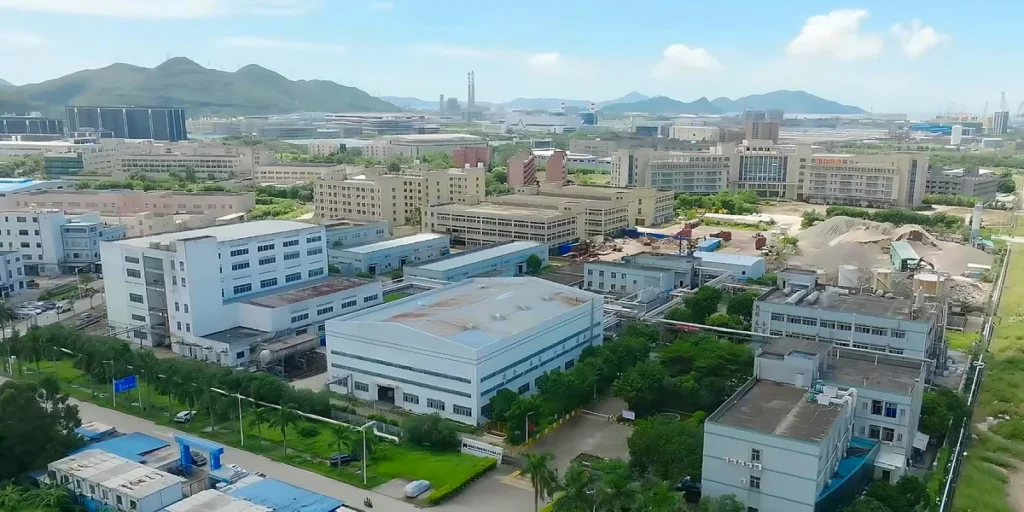
Changxian New Material has specialized in electronic chemicals for over 30 years. Listed on China’s NEEQ (stock code 831323) and recognized as a national-level “Little Giant” enterprise, we operate a 40,000 m² production base in Zhuhai’s Gaolan Port Economic Zone with in-house resin synthesis. Our quality system is certified to ISO 9001, ISO 14001, ISO 45001 and IATF 16949, and our insulating varnishes and conformal coatings hold UL product certifications. Our positioning is straightforward: Equal Quality, Factory Price. Send us your TDS or application requirements, and our engineers will respond within 24 hours with a technical comparison and free samples.
Contact us
Not sure which grade fits your parts and line?
Send Changxian New Material your part type (motor / transformer / coil / PCB), thermal class requirement, impregnation process (atmospheric / vacuum / VPI), baking conditions, production tempo and compliance requirements.
Our engineers can help you pick the right varnish for electric motors, transformers or coils — with impregnation parameter confirmation and compatibility verification — and provide samples, TDS, MSDS, RoHS, REACH, halogen-free and VOC documents for your qualification.