Transformer Varnish Selection Guide: 5 Options Compared by TDS Data
Abstract: Choosing the right transformer varnish directly determines a transformer’s temperature rise, noise level, and service life. Based on the technical data sheets (TDS) of five Changxian insulating varnishes, this guide provides a selection framework across three dimensions — thermal class, impregnation process, and chemistry — and compares key parameters including dielectric strength, bond strength, thermal conductivity, and rotational viscosity, as a data reference for impregnation insulation of oil-immersed and dry-type transformers, in both production and rewinding.
1. What Happens When Transformer Varnish Selection Goes Wrong
A wrong transformer varnish selection typically leads to four failure modes:
1.1 Accelerated thermal aging and drastically shortened insulation life. Transformers are designed for 20+ years of service, with windings running continuously at elevated temperatures. If the varnish’s thermal class is below the actual operating temperature, the film keeps cracking, embrittling, and flaking off. The Arrhenius rule of thumb states that for every 8–10°C above the rated temperature, insulation life is roughly halved. A transformer specified with Class B (130°C) material but running at a 140°C hot spot may see its insulation life decay from 20 years to under 5.
1.2 Partial discharge erodes the film, ending in breakdown. High field strength exists between turns and layers of transformer windings, and voids are where partial discharge starts. If the varnish penetrates poorly (viscosity too high, or process mismatch), voids remain inside the winding; partial discharge then erodes the film continuously, developing into a turn-to-turn short within months to years.
1.3 Excessive magnetostriction noise and vibration. Transformer cores and windings vibrate at twice the grid frequency (100 Hz for 50 Hz grids). If the cured varnish lacks bond strength, the winding loosens; noise can rise by 5–10 dB, accompanied by fastener fatigue.
1.4 Moisture uptake and insulation resistance drop. Transformers operate in environments with wide humidity swings. When the film is not dense enough or curing is incomplete, moisture penetrates the winding; insulation resistance can fall by 1–2 orders of magnitude, triggering flashover and corrosion.
The common root cause of all four failures is mismatch: thermal class vs. operating temperature, viscosity vs. impregnation process, chemistry vs. service environment. Selection must come back to the data.
2. Four Functions of a Transformer Varnish
Electrical insulation: fills turn-to-turn, layer-to-layer, and winding-to-ground clearances, raises dielectric strength, and suppresses partial discharge.
Mechanical fixing: bonds the winding into a solid block, resists electromagnetic vibration, and reduces noise.
Heat transfer: the film’s thermal conductivity (approx. 0.2–0.4 W/m·K) is far above that of air (approx. 0.026 W/m·K); impregnation significantly lowers the winding hot-spot rise.
Environmental protection: blocks moisture, oil, and corrosive gases, maintaining long-term insulation resistance.
3. Selection Dimension 1: Thermal Class
Thermal classes of transformer insulation systems are defined by IEC 60085. Choose a transformer varnish rated no lower than the winding’s maximum hot-spot temperature, with at least a 10°C margin.
| Thermal Class | Max. Temperature | Typical Applications |
| Class B | 130°C | Small distribution transformers, repair and rewinding |
| Class F | 155°C | Medium dry-type / oil-immersed transformers |
| Class H | 180°C | Large dry-type transformers, high-overload duty |
| Class C | >180°C | Special high-temperature transformers |
For oil-immersed transformers, the top-oil temperature rise limit is typically 60–65 K (65 K for windings), so Class B or F is usually sufficient; dry-type transformers are commonly designed for Class F or H; for short-circuit stress or overload requirements, start from Class H.
4. Selection Dimension 2: Impregnation Process
Dip impregnation (atmospheric): simple equipment, suitable for small transformers and repair work. It demands low viscosity and good penetrability; a second dip is usually needed to ensure fill.
Vacuum impregnation (VI) and vacuum pressure impregnation (VPI): the winding is evacuated to remove air, then varnish is forced back under pressure — the highest impregnation quality and the mainstream process for Class H solventless varnishes. VPI-treated windings have the lowest void content, and partial discharge levels are significantly better than with atmospheric dipping. Best for medium and large dry-type transformers.
Trickle impregnation: suits high-volume small parts with fast curing and minimal varnish retention; rarely used for transformers.
Process and viscosity must match: VPI accepts higher-viscosity solventless varnishes (viscosity is reduced by heating before impregnation); atmospheric dipping requires a low-viscosity varnish that penetrates directly. As a rule, varnishes above 300 mPa·s rotational viscosity are not recommended for atmospheric dipping of fine-wire windings.
5. Selection Dimension 3: Chemistry
| Chemistry | Strengths | Limitations | Best For |
| Solventless epoxy-polyester | High solids, high fill in one impregnation, near-zero VOC | Requires heat curing | VPI lines, Class H dry-type transformers |
| Unsaturated polyester | Good heat resistance, low cure shrinkage | Contains styrene monomer; odor control needed | Class H impregnation |
| Alkyd-amino | Air-dry / low-temperature bake, forgiving process window | Thermal ceiling at Class B–F | Small transformers, repair |
| Waterborne epoxy | Water as diluent, non-flammable, lowest VOC | Water must be fully driven off during cure; narrow process window | Sites with strict environmental requirements |
| Modified polyester air-dry | Fast drying, low odor, repair-friendly | Mainly Class B | On-site repair, small units |
6. Five Varnishes Compared (TDS Data)
The transformer varnish data below are taken from each model’s TDS. Viscosity values have been converted from Tu-4 cup efflux time to kinematic viscosity per GB/T 1723-93 (formula: t = 0.223v + 6.0 for 23s ≤ t < 150s; t = 0.154v + 11 for t < 23s), then multiplied by each model’s TDS specific gravity to obtain rotational (dynamic) viscosity in mPa·s. Converted values are approximate references; for incoming inspection, verify with a rotational viscometer.
| Parameter | E57-89H (Solventless Epoxy-Polyester) | E57-81H (Unsaturated Polyester) | E57A (Alkyd-Amino) | E962 (Modified Polyester, Air-Dry) | CX936 (Waterborne Epoxy) |
| Thermal class | H–C | H | B–F | B | B–F |
| Dielectric strength (as supplied) | ≥24 MV/m | ≥22 MV/m | ≥60 kV/mm | ≥40 kV/mm | ≥70 MV/m |
| Bond strength | ≥140 N (ambient) / ≥50 N (180°C) | — | — | — | — |
| Thermal conductivity | ≥0.4 W/m·K | — | — | — | — |
| Rotational viscosity (25°C, converted) | approx. 165–355 mPa·s (Tu-4 cup 40–80s, SG 1.075) | — | approx. 150–235 mPa·s (Tu-4 cup 40–60s, SG 0.98) | approx. 145–230 mPa·s (Tu-4 cup 40–60s, SG 0.95) | approx. 3–30 mPa·s (Tu-4 cup 11–15s; large conversion error in the low-viscosity range — verify by measurement) |
| Solids content | Solventless system | — | 45–55% | — | 20±2% |
| Curing | Heat cure | Heat cure | Air-dry / low-temp bake | Air-dry | Heat cure |
| Volume resistivity | — | — | — | ≥1×10¹² Ω·cm (note: Ω·cm differs from Ω·m by a factor of 100 — convert before comparing) | — |
| Refrigerant resistance | — | Excellent after 96 h | — | — | — |
7. Selection Recommendations by Application
The transformer varnish recommendations below are grouped by application scenario.
Medium/large dry-type transformers (Class F/H, VPI process): E57-89H is the first choice. The solventless system fills winding gaps in a single impregnation; its thermal conductivity of ≥0.4 W/m·K directly lowers the hot-spot rise, and bond strength of ≥50 N at 180°C keeps the winding tight at high operating temperatures. This grade has passed verification on production VPI lines.
Class H oil-immersed / special transformers: E57-81H — Class H thermal rating with excellent 96-hour refrigerant resistance, suitable for refrigerant contact or high-overload duty.
Small distribution transformers and repair rewinding (Class B–F): E57A — an alkyd-amino system with a forgiving process window; air-dries or bakes at low temperature, ideal for repair shops without large ovens.
Fast on-site repair: E962 air-dry type — no baking required, low odor, suitable for urgent jobs with short outage windows.
Environmentally sensitive sites (indoor lines, export orders with VOC limits): CX936 waterborne epoxy — viscosity adjusted with deionized water, and its dielectric strength of ≥70 MV/m is the highest of the five. Note its solids content is only 20±2%: plan multiple dips or vacuum processing to ensure fill, and drive off water thoroughly during curing.
8. FAQ
Q1: Class H or Class F varnish for a transformer? Choose based on the winding’s maximum hot-spot temperature plus at least a 10°C margin. Class F is standard for dry-type units; choose Class H for compact designs or overload requirements. Class H varnish is backward-compatible but costs more.
Q2: Solventless varnishes are viscous — will they fail to penetrate? Under VPI, solventless varnish is heated (typically 40–60°C) to lower its viscosity, then applied with vacuum degassing and pressure. The resulting impregnation quality actually exceeds atmospheric dipping with low-viscosity solvent-borne grades. For atmospheric dipping of fine-wire windings, choose a grade below 250 mPa·s rotational viscosity.
Q3: What is special about curing waterborne insulating varnish? The first curing stage of a waterborne varnish is water evaporation. Ensure sufficient hot-air circulation and stepwise temperature ramping; entering the high-temperature stage before water is fully driven off causes blisters and pinholes. Follow the curing profile in the TDS strictly.
Q4: Can you supply red or other colored insulating varnishes? Changxian insulating varnishes are clear to pale yellow as standard. If you need a colored (e.g., red) varnish for visual coverage checks, it can be evaluated on request — talk to our engineers about your specific conditions.
9. Conclusion
Transformer varnish selection is a three-dimensional matching problem — thermal class, impregnation process, and chemistry. Decisions must start from TDS data and account for winding hot-spot temperature and production line conditions. Changxian’s five insulating varnishes cover the full range from Class B to C and from atmospheric dipping to VPI. If you need a technical comparison against your transformer design, together with free samples, contact us — we reply within 24 hours.
About Changxian
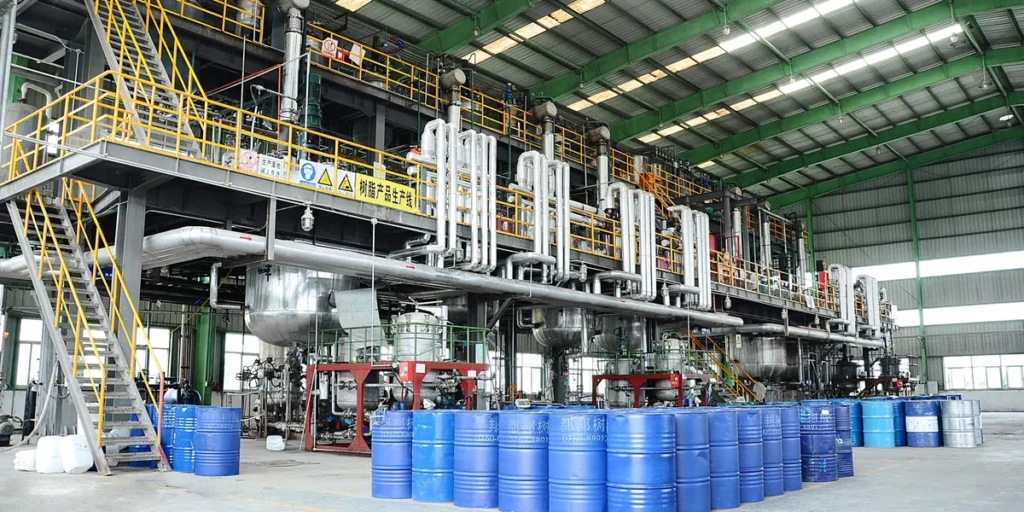
Changxian New Material has specialized in electronic chemicals for over 30 years. Listed on China’s NEEQ (stock code 831323) and recognized as a national-level “Little Giant” enterprise, we operate a 40,000 m² production base in Zhuhai’s Gaolan Port Economic Zone with in-house resin synthesis. Our quality system is certified to ISO 9001, ISO 14001, ISO 45001 and IATF 16949, and our insulating varnishes and conformal coatings hold UL product certifications. Our positioning is straightforward: Equal Quality, Factory Price. Send us your TDS or application requirements, and our engineers will respond within 24 hours with a technical comparison and free samples.
Contact us
Not sure which grade fits your parts and line?
Send Changxian New Material your part type (motor / transformer / coil / PCB), thermal class requirement, impregnation process (atmospheric / vacuum / VPI), baking conditions, production tempo and compliance requirements.
Our engineers can help you pick the right varnish for electric motors, transformers or coils — with impregnation parameter confirmation and compatibility verification — and provide samples, TDS, MSDS, RoHS, REACH, halogen-free and VOC documents for your qualification.