Varnishing Technologies for Windings: Dip, Trickle and VPI Compared
Abstract: Varnishing technologies for windings should be compared according to winding design, material characteristics, equipment capabilities, and acceptance requirements rather than by assuming that one process is inherently more advanced. Dip impregnation, vacuum impregnation, vacuum pressure impregnation, and trickle impregnation differ in how resin enters the winding, the equipment required, and the critical process parameters. Vacuum impregnation should not be confused with VPI, which includes a subsequent pressurization stage. When selecting a process, you need to review the material TDS, your existing equipment capabilities, and validation results obtained with actual workpieces.
Why Varnishing Technologies for Windings Should Not Be Selected by Equipment Name Alone
Varnishing technologies for windings are not intended merely to transfer varnish onto the winding surface. Their purpose is to bring the material into the areas that require treatment under a defined process, followed by controlled draining, gelation, and curing.
The same insulating varnish may require different impregnation times on different workpieces. Likewise, when a different material is used on the same equipment, the original temperature, flow, and curing settings cannot simply be retained. The process name alone cannot guarantee the impregnation result.
At least the following four items should be confirmed before comparing processes:
- Winding design: Workpiece dimensions, winding accessibility, and the internal areas requiring treatment;
- Material conditions: Working viscosity, gelation and curing characteristics, and the application methods supported by the TDS;
- Equipment conditions: Whether vacuum, positive pressure, rotational trickling, and controlled heating capabilities are available;
- Acceptance requirements: Which process parameters must be recorded and how acceptable treatment of the actual workpiece will be determined.
Overview of Four Winding Impregnation Processes
| Process | Basic Method of Resin Entry into the Winding | Main Equipment Requirements | Critical Parameters to Record | Validation Points That Cannot Be Overlooked |
| Dip Impregnation | The workpiece is immersed in a varnish tank at atmospheric pressure, followed by draining and curing | Varnish tank, workpiece handling equipment, and curing equipment | Working viscosity, preheating condition, impregnation time, draining time, and curing schedule | Internal wetting, trapped air, and draining condition cannot be determined from surface coverage alone |
| Vacuum Impregnation (VI) | Vacuum is applied inside a sealed chamber before resin introduction, using the vacuum stage to assist impregnation | Sealed impregnation vessel, vacuum system, resin supply, and curing equipment | Vacuum level, vacuum holding time, impregnation time, draining, and curing schedule | Without a subsequent positive-pressure stage, the process should not be described as VPI |
| Vacuum Pressure Impregnation (VPI) | A controlled positive-pressure stage follows the vacuum stage, allowing further impregnation under pressure | Pressure vessel rated for both vacuum and positive pressure, resin system, and curing equipment | Vacuum, positive pressure, holding time for each stage, resin condition, and curing schedule | Equipment ratings, material suitability, and actual-winding validation must be confirmed together |
| Trickle Impregnation | A metered amount of resin is trickled onto a preheated workpiece, using gravity, capillary action, and workpiece movement to support distribution | Metered trickling system, workpiece positioning or rotating equipment, and heating and curing systems | Preheating temperature, trickling flow rate, trickling time, rotational speed or inclination, gelation, and curing conditions | Local excess resin, dripping, uneven distribution, and excessively rapid gelation must be investigated through samples |
Dip Impregnation: From Tank Immersion to Controlled Draining and Curing
The basic dip impregnation process involves immersing the winding or workpiece in resin or insulating varnish, followed by removal, draining, and curing. Research on electrical-drive insulation manufacturing describes dip impregnation as placing a preheated stator in an impregnation tank so that resin enters the winding, followed by gelation and curing.
The equipment sequence is relatively straightforward, but immersing a workpiece in varnish does not demonstrate that its interior has reached the same condition. Validation should not be limited to checking surface coverage. The following items should be included in the process record:
- Actual workpiece condition at preheating and tank entry;
- Working viscosity and its measurement temperature;
- Start and end times of impregnation;
- Workpiece orientation and draining time after removal;
- Curing temperature, duration, and actual workpiece condition.
Atmospheric and Vacuum Impregnation Examples from the CX936 TDS
CX936 is a waterborne epoxy insulating varnish. Its TDS provides both atmospheric-pressure and vacuum impregnation methods:
| Process Stage | Reference Conditions in the CX936 TDS |
| Preparation | Use as supplied in general; dilute with deionized water if required by the product. Mix thoroughly and allow to stand for 20 minutes |
| Preheating | Preheat the workpiece thoroughly at approximately 100°C and allow it to cool to 50–60°C before placing it in the varnish tank |
| Atmospheric-pressure impregnation | 5–15 minutes |
| Vacuum impregnation | 3–8 minutes |
| Standing | 15–30 minutes |
| Baking | 3–4 hours at 90–95°C, or 2–3 hours at 110°C |
| Reference staged baking | 1 hour at 80–90°C, followed by 2–3 hours at 100–120°C |
These conditions apply only to the reference process in the CX936 TDS. They do not establish that other waterborne products should use the same durations, nor do they demonstrate that vacuum impregnation will always require only half the atmospheric-pressure impregnation time for every workpiece.
Vacuum Impregnation and VPI: The Difference Is More Than an Equipment Name
Both vacuum impregnation and VPI include a vacuum stage, but they are not interchangeable terms.
The critical records for vacuum impregnation include vacuum level, vacuum holding, resin introduction, and the impregnation process. If the workpiece proceeds directly to draining and curing after vacuum impregnation without a controlled positive-pressure stage, the process should be described accurately as vacuum impregnation.
VPI includes two controlled stages: vacuum and pressure. An EPRI guide covering medium-voltage stator winding insulation and VPI describes evacuation, resin introduction, subsequent resin pressurization and holding, followed by transfer, draining, and curing.
Determining whether a production line performs VPI therefore requires confirmation of at least the following:
- Whether a sealed pressure vessel suitable for the process is available;
- Whether an independent, recordable vacuum stage is present;
- Whether a subsequent controlled positive-pressure stage is present;
- Whether pressure, holding time, and resin condition are recorded;
- Whether the material, workpiece, and equipment have been validated together.
The presence of the word “vacuum” in equipment documentation or a TDS does not make the complete process VPI.
Vacuum Impregnation Example from the E57-89H TDS
The E57-89H TDS provides the following reference vacuum impregnation process:
- Vacuum level: 0.08 MPa;
- Maintain immersion for 30 minutes;
- Remove the workpiece and drain for more than 30 minutes;
- Heat to 120–130°C and bake for 30–60 minutes;
- Increase the temperature to 135–150°C and hold for 2–4 hours, or until the winding resistance stabilizes.
The same TDS requires impregnation and curing conditions to be determined through testing according to workpiece shape and size. These parameters should not be treated as a universal VPI program for every stator, nor should it be assumed that other models can use the same vacuum level and duration.
Trickle Impregnation: Controlling Resin Application, Workpiece Movement, and Gelation
Trickle impregnation does not involve immersing the complete workpiece in a varnish tank. Instead, resin is applied to a preheated winding through nozzles. Published process information describes resin being dripped onto the winding end turns and entering the winding through gravity, capillary action, and rotation. Trickle flow, workpiece inclination, rotational speed, temperature, and curing-time programs must be coordinated.
A trickle impregnation process cannot be documented only by recording how much varnish was applied. The following parameters collectively define the actual process conditions:
| Parameter Group | Recommended Records |
| Workpiece condition | Workpiece model, winding design, initial temperature, and positioning direction |
| Resin application | Nozzle position, trickling flow rate, trickling time, and actual material consumption |
| Movement conditions | Rotational speed, inclination, and movement duration, where applicable to the equipment |
| Material condition | Material batch, working viscosity, and gelation-related parameters |
| Curing conditions | Heating method, temperature program, duration, and post-curing workpiece condition |
Lower varnish consumption or a shorter production cycle is not a universal result of trickle impregnation. Changes in workpiece design, nozzle position, or gelation behavior can alter material distribution. Suitability for your production line should be established through actual-workpiece validation rather than equipment-rated speed alone.
How to Review Changxian Product TDS Documents for These Processes
For varnishing technologies for windings, the following table summarizes only the application methods explicitly stated in each TDS. A process that is not listed is not automatically proven impossible, but it requires further technical confirmation and testing. It should not be inferred from another model.
| Model | Impregnation Methods Explicitly Stated in the TDS | Process Information Available for Initial Review |
| CX936 | Atmospheric-pressure and vacuum impregnation | Reference impregnation times of 5–15 minutes and 3–8 minutes, respectively, together with preheating, standing, and baking conditions |
| E57-81H | Vacuum and atmospheric-pressure impregnation | Reference process includes preheating at 110–120°C, impregnation at 40–50°C for 15–30 minutes, draining for 20–40 minutes, and baking at 145–150°C for 4–8 hours |
| E57-89H | Vacuum and trickle impregnation | Vacuum impregnation includes vacuum level, immersion, draining, and staged baking; preheating the workpiece to approximately 50°C is recommended before trickle impregnation |
This table should not be interpreted as universal approval of these three products for every item of equipment and every workpiece. It demonstrates one principle: process discussions should begin with the TDS for each specific model.
Material Conditions That Must Be Evaluated Together with the Process
1. Working Viscosity Cannot Be Discussed Without Temperature
When comparing different materials or batches, record the viscosity value, measurement temperature, cup or instrument used, and whether dilution has occurred. Actual impregnation cannot be predicted from a viscosity value alone.
2. Gelation and Curing Characteristics Must Match the Equipment Cycle
Atmospheric-pressure and vacuum impregnation require attention to material stability in the tank and during workpiece handling. Trickle impregnation requires resin application, workpiece movement, gelation, and curing to be evaluated as one continuous process. Two products with similar viscosities cannot automatically share the same process schedule.
3. Waterborne, Solvent-Based, and Solventless Systems Cannot Share the Same Assumptions
These systems differ in composition, dilution method, and drying or curing requirements. When changing the resin system, review the TDS, MSDS, equipment conditions, and ventilation and exhaust requirements again rather than adjusting only the impregnation time.
4. Material Dielectric Strength Cannot Replace Process Validation
Breakdown strength or electric strength is measured under the test conditions specified for the material. It cannot demonstrate that an actual winding has been adequately impregnated, nor can it replace equipment-level insulation coordination and validation.
Records to Retain During Actual-Workpiece Validation
Validation records should be divided into five groups—material, workpiece, equipment, process, and results—rather than retained only as a final inspection sheet.
| Record Group | Recommended Information |
| Material | Model, batch, date of use, working viscosity and measurement temperature, and dilution details |
| Workpiece | Product model, winding design, critical dimensions, initial condition, and sample identification |
| Equipment | Impregnation equipment, vacuum or pressure system, trickling system, curing equipment, and critical instrument status |
| Process | Actual preheating, vacuum, pressure, impregnation, trickling, draining, and curing parameters |
| Results | Appearance, necessary sectioning or internal inspection, mass change where applicable, and electrical and mechanical validation required by the product |
If sectioning, insulation resistance, withstand-voltage, partial-discharge, or other tests are required, the methods and acceptance values should be determined according to the specific product and insulation-system requirements. A material-level TDS value should not be adopted directly as the acceptance standard for a complete product without defined test conditions.
How to Narrow the Process Selection According to Your Existing Conditions
You Already Have Dip Impregnation and Baking Equipment
Start by checking whether the candidate material explicitly supports atmospheric-pressure impregnation. Then validate the working liquid, impregnation time, draining, and curing conditions. Do not assume that your existing process is inadequate merely because another process has a more complex name.
You Have Vacuum Equipment but No Positive-Pressure Stage
Evaluate and document the process as vacuum impregnation rather than VPI. If the product requires pressure impregnation, further assess equipment modification, material compatibility, and validation costs.
You Have Both Vacuum and Positive-Pressure Systems
VPI can be evaluated, but workpiece dimensions, material condition, vacuum and pressure schedules, and subsequent draining and curing capabilities still require review. Pressure capability alone does not make every process schedule suitable for production.
You Are Planning an Automated Trickle Impregnation Line
Evaluate workpiece consistency, positioning, resin-application control, rotation or inclination conditions, material gelation characteristics, and curing cycle together. Suitability should be determined through complete-line validation rather than resin price alone.
FAQ
Is vacuum impregnation the same as VPI?
No. VPI includes both a vacuum stage and a subsequent controlled positive-pressure stage. A process that uses vacuum impregnation without a positive-pressure stage should be described as vacuum impregnation.
Is trickle impregnation always faster than dip impregnation?
That cannot be assumed. The actual production cycle depends on winding design, material gelation and curing characteristics, equipment automation, and validation requirements. Comparing only resin-application time omits preheating and curing.
Is VPI always better than the other processes?
There is no universal answer independent of the product and process conditions. VPI requires suitable pressure vessels, process control, and material compatibility, as well as equipment and validation investment. The decision should be based on winding design, acceptance requirements, and actual validation results.
Can the same insulating varnish be used directly for dip, vacuum, and trickle impregnation?
That should not be assumed. First check whether the model’s TDS specifies the relevant application method, and then review viscosity, gelation, curing, and equipment conditions. A process that is not listed requires further technical confirmation and testing.
Can the TDS process parameters for one product be applied to another model?
This is not recommended. Even when two products belong to related resin systems, their composition, viscosity, gelation, and curing conditions may differ. The reference process should be reviewed again and actual workpieces should be validated after a model change.
If the winding surface is covered with resin, can impregnation be considered complete?
Surface coverage alone is insufficient. Process records, draining and curing conditions, and internal or performance inspections required by the product must also be considered.
Conclusion
Varnishing technologies for windings should be selected by considering the material, winding, equipment, and acceptance requirements together. Dip impregnation, vacuum impregnation, VPI, and trickle impregnation require different process controls, and results cannot be predicted from the process name alone.
A more reliable implementation sequence is to confirm the application methods supported by the candidate material’s TDS, verify whether the equipment provides the required vacuum, pressure, trickling, or heating capabilities, record the complete process parameters using actual workpieces, and then conduct acceptance testing under defined conditions.
If you provide your winding type, existing impregnation equipment, current material, and curing conditions, our engineers can help you prepare a list of candidate Changxian materials, relevant TDS process information, and sample-validation items.
About Changxian
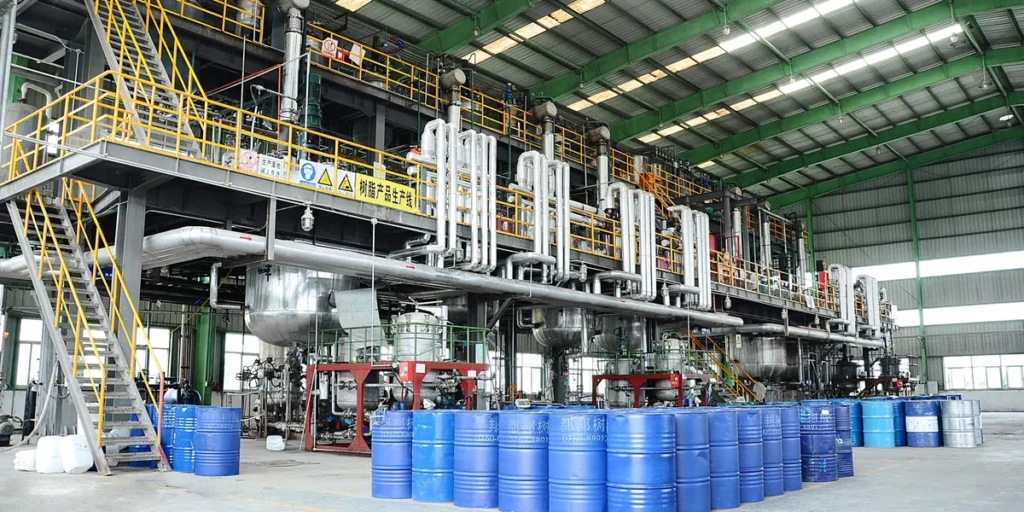
Zhuhai Changxian New Material Technology Co., Ltd. has specialized in electronic chemicals for more than 30 years. We are listed on China’s NEEQ under stock code 831323 and recognized as a national-level specialized and innovative “Little Giant” enterprise. Our approximately 40,000 m² production base in Zhuhai’s Gaolan Port area supports in-house resin synthesis. Our management systems include ISO 9001, ISO 14001, ISO 45001, and IATF 16949. We also hold relevant UL files for insulating varnishes and conformal coatings; coverage for specific models is subject to the applicable certificates.
Changxian’s position is straightforward: performance benchmarked item by item against international brands, with factory-direct pricing. You can contact our engineers for TDS documents, selection comparisons, and free sample support for evaluation under your actual application and process conditions.
Sources
- CX936 Waterborne Insulating Varnish Product Instruction
- E57-81H Environmentally Friendly Heat-Resistant Modified Unsaturated Polyester Resin Product Instruction
- E57-89H Environmentally Friendly Solventless Insulating Varnish Product Instruction
- Improving the Integrated Fabrication of Insulation Systems in Electric Drives by Injection Molding of Thermosets Due to Processing Conditions and Slot Design
- EPRI: Guide for Electric Motor Stator Winding Insulation Design, Maintenance, and Repair
- WACKER: Trickle Impregnation Process and Process-Parameter Information
Contact us
Not sure which grade fits your parts and line?
Send Changxian New Material your part type (motor / transformer / coil / PCB), thermal class requirement, impregnation process (atmospheric / vacuum / VPI), baking conditions, production tempo and compliance requirements.
Our engineers can help you pick the right varnish for electric motors, transformers or coils — with impregnation parameter confirmation and compatibility verification — and provide samples, TDS, MSDS, RoHS, REACH, halogen-free and VOC documents for your qualification.